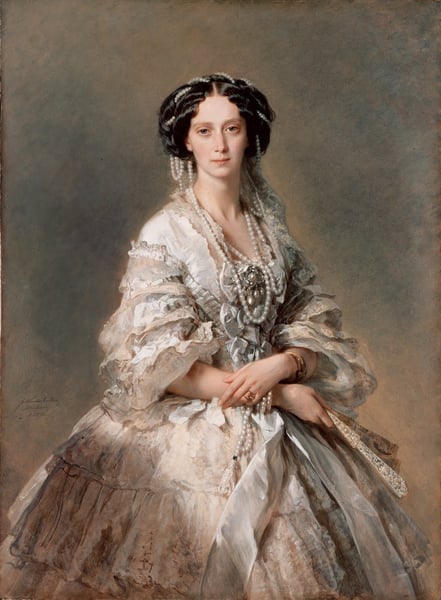
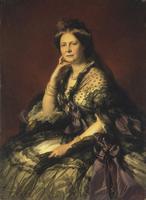
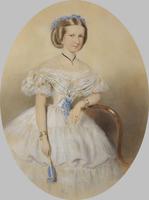
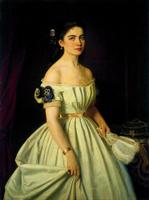
This portrait exemplifies the core principles of the Neo-Rococo style, a 19th-century revival of 18th-century Rococo aesthetics that prized elegance, luxury, and graceful refinement. Winterhalter, the era's premier court portraitist, uses the genre to construct an idealized image of imperial majesty—one that is simultaneously opulent and approachable. The significance lies in how seamlessly the work merges contemporary political portraiture with the playful, ornamental spirit of a bygone aristocratic age. Through soft, flattering brushwork and a delicate palette, Winterhalter transforms Maria Alexandrovna into a symbol of serene authority, her sumptuous silks and pearls echoing the Rococo love for intricate texture and light. The composition balances formal grandeur with intimate charm, a hallmark of Winterhalter's royal commissions. In doing so, the painting not only celebrates the Empress's status but also reaffirms Neo-Rococo as the ideal vehicle for 19th-century sovereigns to project both power and timeless beauty.