Expertenanalyse zu Franz Xaver Winterhalters Portrait of Katarzyna Potocka
Stil: Neo-Rococo · Genre: portrait
Expert Analysis of "Portrait of Katarzyna Potocka" by Franz Xaver Winterhalter
Significance within the Neo-Rococo Style and Genre
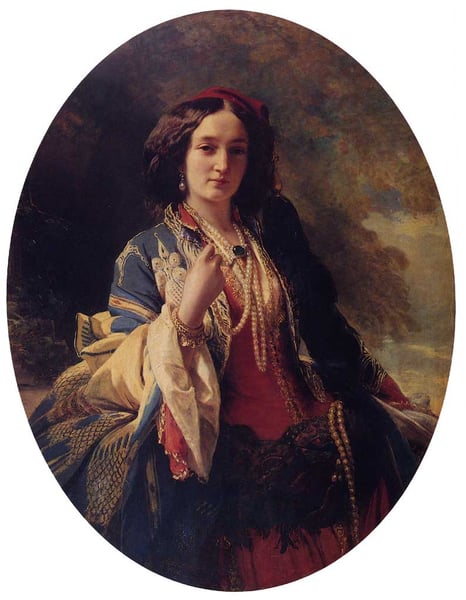
Franz Xaver Winterhalter’s Portrait of Katarzyna Potocka stands as a quintessential example of the Neo-Rococo movement, a 19th-century revival that sought to recapture the decorative grace, sensuousness, and aristocratic elegance of 18th-century French Rococo. Within this revival, Winterhalter distinguished himself by blending Rococo’s playful charm with the polished realism of the academic portrait tradition.
Key Elements That Define the Work's Significance:
-
Revival of Rococo Splendor – Winterhalter reinterprets Rococo’s hallmark lightness and luxury. The sitter’s opulent attire, soft pastel tones (likely whites, pinks, or pale blues), and the implied floral or natural surroundings echo Francois Boucher’s idyllic aristocrats. Yet Winterhalter updates this with a mid-19th-century sense of naturalism and psychological directness.
-
Celebration of Aristocratic Femininity – The subject, Countess Katarzyna Potocka (a member of one of Poland’s most powerful noble families), is presented as an ideal of refined beauty. Winterhalter’s portraits of high-society women famously combined idealization with a soft, flattering realism, emphasizing their social status through luxurious fabrics, jewels, and a dreamy, untroubled expression. This work reinforces the artist’s reputation as a master of the “society portrait,” where the sitter’s grace and wealth are rendered with an almost tactile sensuousness.
-
Technical Mastery of Texture and Light – Winterhalter’s significance lies in his ability to paint delicate fabrics—silk, lace, tulle—with extraordinary precision, while keeping the overall atmosphere airy and romantic. The play of light across the skin and costume creates a sense of immediacy and vivacity, characteristic of the Neo-Rococo desire to capture fleeting beauty.
-
Historical and Cultural Context – Painted during the height of Winterhalter’s fame in the 1850s–1860s, this portrait reflects the taste of European courts still anchored in dynastic display. Potocka’s Polish identity also reminds us of the pan-European aristocracy that Winterhalter served, making the work a document of 19th-century elite culture.
Conclusion:
Portrait of Katarzyna Potocka is significant because it perfectly embodies Neo-Rococo’s fusion of historical revival with contemporary portraiture. Winterhalter’s ability to ennoble his subjects while maintaining visual ease—as if the sitter exists in a perpetual, idealized present—made him the definitive painter of aristocratic glamour in the mid-19th century. This painting is not merely a likeness but a celebration of the enduring allure of grace, status, and femininity within the Neo-Rococo idiom.
Museum / Gallery
Visuell ähnlich
20 Werke mit ähnlicher Komposition und Farbpalette
Jessica
Thomas Francis Dicksee
Portrait of a woman, traditionally identified as Lady Hervey
Angelica Kauffman
Portrait of a Young Woman
Angelica Kauffman
Portrait of Sophia Alexandrovna Radziwiłł
Franz Xaver Winterhalter
Portrait of a lady with roses in her hair, (Countess Pushkina)
Franz Xaver Winterhalter
ortrait of a lady, probably Mary Hale, Lady Coke wife of Sir Thomas Coke, three-quarter length
John Closterman
Caroline, Duchess of Marlborough
Joshua Reynolds
Lady in a Turkish Costume (Felicita Sartori)
Rosalba Carriera
Varvara Rimskaya-Korsakova
Franz Xaver Winterhalter
Princess Leonilla of Sayn
Franz Xaver Winterhalter
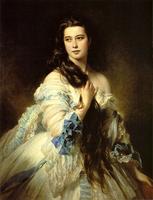
Barbara Dmitrievna Mergassov-Rimsky-Korsakova
Franz Xaver Winterhalter
Sarah
John Riley
Portrait of Countess E.A. Vorontova-Dashkova
Alexandre Cabanel
Mrs. Thomas Gage
John Singleton Copley
Portrait of the Countess Maria Benedetta Di San Martino
Pompeo Batoni
Emily, Duchess of Leinster
Joshua Reynolds
Portrait of a Lady with Her Lacework
Joseph Wright
The Broken Pitcher
Jean-Baptiste Greuze
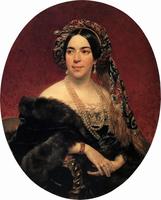
Portrait of Princess Z. A. Volkonskaya
Karl Bryullov
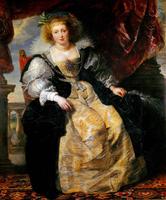
Helena Fourment
Peter Paul Rubens