Expert analysis of Spyros Papaloukas’s Cafe
Style: Expressionism · Genre: cityscape
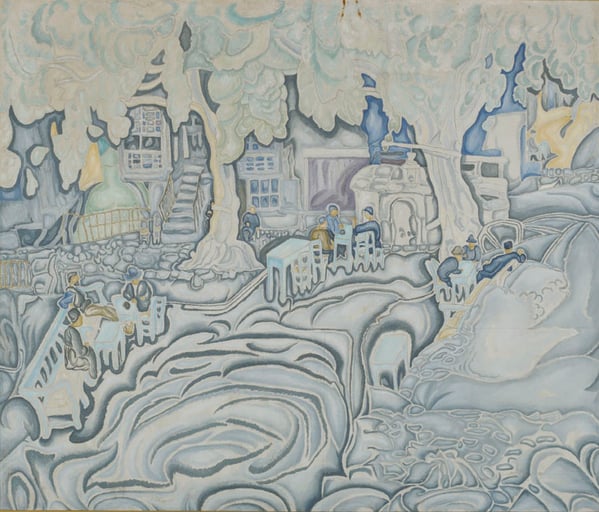
Expert Analysis: "Cafe" by Spyros Papaloukas
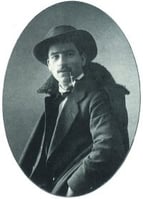
Spyros Papaloukas (1892–1957) was a leading figure in the introduction of Expressionism to Greek modern art. His painting Cafe exemplifies how he adapted the emotional intensity and bold formal distortions of early 20th‑century European Expressionism to the specific character of Greek urban life.
Composition and Color:
The cityscape genre here is transformed from mere topographical record into a psychological interior. Papaloukas uses a vibrant, often dissonant palette—saturated yellows, deep blues, and acidic greens—to evoke the charged atmosphere of a café. The space is compressed, with tilted perspectives and flattened planes that heighten a sense of restlessness. Tables and chairs become almost abstract shapes, their edges blurred or exaggerated, as if seen through a haze of energy or emotion.
Expressionist Techniques:
Rather than aiming for naturalistic representation, Papaloukas distorts line and form to convey the sensory overload and social dynamics of café culture. Figures are often faceless or reduced to silhouettes, emphasizing the anonymity of modern urban gathering places. The brushwork is vigorous and often layered, creating a texture that mirrors the rhythm of conversation, clinking glasses, and ambient noise.
Significance within Expressionism:
Papaloukas is notable for synthesizing the lessons of the German Die Brücke and French Fauvist color with a distinctly Mediterranean sensibility. While Northern European Expressionists often channeled anxiety through grim urban scenes, Papaloukas injects a warmer, more luminous quality—even his shadows seem to vibrate with sunlight. Cafe thus stands as a bridge between the angst‑ridden cityscapes of Kirchner and the sun‑drenched interiors of the Greek tradition.
Cultural and Historical Context:
Painted during a period when Athens was rapidly modernizing, Cafe captures the tension between traditional Greek life and the new European‑style public spaces. Papaloukas treats the café not as a nostalgic refuge but as a stage for modern alienation and fleeting human connection. His work helped legitimize Expressionism in Greece, where academic realism had long dominated, and influenced a generation of Greek modernists who followed.
In sum, Cafe is significant for its masterful fusion of Expressionist form with Greek subject matter, its psychological intensity, and its role in expanding the vocabulary of early 20th‑century cityscape painting beyond the usual German and French centers.
Genre
Style
Visually similar
20 works with related composition and palette
Scheiber Hugó, Fényözön, 1925
Scheiber Hugó
Scheiber Hugó, Kertvendéglő
Scheiber Hugó
Mirmande
André Lhote
The First Day of Spring
Salvador Dali
Fishermen and Boats
Christopher Wood
Animated Landscape
Fernand Leger
Figures in a Township
Walter Battiss
Untitled
Pablo Picasso
Village, Church and Two Characters
Jean Metzinger
Immortality
Max Ernst
Corfe Castle Village
Frances Hodgkins
The Ball July 14
Ossip Zadkine
Landscape
Michel Kikoine
Bradford On Tone, Geoffrey Gorer’s Cottage
Frances Hodgkins
Village Street
Grégoire Michonze
Landscape at Vence - Little White House
Christopher Wood
Landscape with factory chimney
Wassily Kandinsky
Scheiber Hugó, Folyóparton
Scheiber Hugó
Scheiber Hugó , Nagyvárosi Utcák
Scheiber Hugó
Still-life with cross
Minas Avetisyan