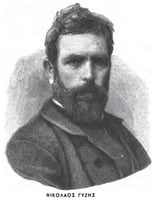
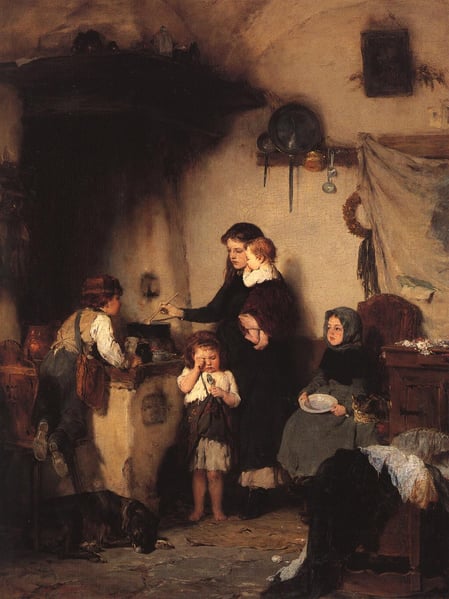
Nikolaos Gyzis sanatçısının The orphans eseri hakkında uzman analizi
Tarz: Realism · Tür: genre painting
Expert Analysis: The Orphans by Nikolaos Gyzis
This work stands as a poignant exemplar of 19th‑century Realism, a movement that rejected idealization in favor of unflinching depictions of everyday life—especially the lives of the marginalized. Gyzis, a leading figure of the Munich School and a key promoter of Greek Realism, here elevates genre painting from simple anecdote to a vehicle for profound social observation.
Significance within Realism:
Gyzis captures the quiet dignity of childhood poverty without sentimentality. The orphans are not romanticized; their tattered clothing, subdued poses, and absent expressions speak to a reality of loss and hardship. The meticulous handling of light and texture—the worn fabric, the weary faces—reflects Realism’s commitment to truthful representation. Unlike earlier academic painting that often portrayed poverty as a moral lesson, Gyzis presents it as an unvarnished social condition, inviting empathy rather than judgment.
Significance within Genre Painting:
The Orphans transcends the typical limitations of genre scenes by infusing a specific, fleeting moment with universal emotional weight. The composition—likely a tight, intimate grouping—draws the viewer into the children’s shared solitude. In the context of Greek art, this painting also marks a shift from folkloric or historical subject matter to contemporary social commentary. Gyzis’s choice to depict orphaned children aligns with the broader European Realist concern for the disenfranchised (as seen in Courbet or Millet), asserting that the unremarkable, often overlooked lives of the poor merit the same artistic seriousness as history painting.
Overall Impact:
The Orphans remains significant for its fusion of technical mastery with humanistic depth: it is both a document of 19th‑century Greek social reality and a timeless meditation on resilience and vulnerability. Through this work, Gyzis proves that the most powerful art can emerge from the simplest, most honest observations of life.
Museum / Gallery
Stil
Görsel olarak benzer
İlişkili kompozisyon ve renk paletine sahip 20 eser
Child's Soup
Léon Augustin Lhermitte
All sorts of treasures ("The peddler")
Felix Schlesinger
Family scene
Felix Schlesinger
Three women reading a letter
Domenico Induno
Hope
Frank Holl
Dressing the Children
Laura Knight
The visit to the nanny
Domenico Induno
The Painter's Family at Masham, North Yorkshire
Julius Caesar Ibbetson
Tale of the wounded Garibaldian
Gerolamo Induno
No Tidings from the Sea
Frank Holl
Cottage interior with children blowing bubbles
Pierre Jean Edmond Castan
The cooks
Victor Gabriel Gilbert
New friends
Bertha Wegmann
Courtship
Gerolamo Induno
Praying before the communion at Megara
Théodore Ralli
Der Brief aus dem Feld
Gerolamo Induno
A Party for Grandfather
Jules Breton
At lunchtime
Felix Schlesinger
The overturned doll's pram
Felix Schlesinger
The visit to the nurse
Domenico Induno