
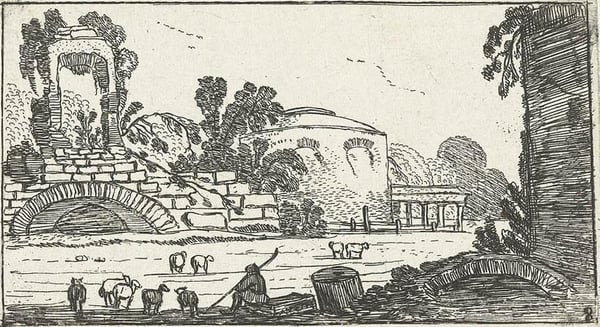
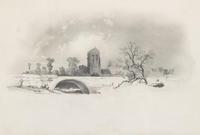
Landscape with ruins and shepherds with sheep
Dettagli
Analisi esperta di Landscape with ruins and shepherds with sheep di Esaias van de Velde
Stile: Baroque · Genere: landscape
This artwork, "Landscape with ruins and shepherds with sheep" by Esaias van de Velde, embodies a pivotal moment in the development of the Baroque landscape genre. Van de Velde was a key figure in the early Dutch Golden Age of painting, known for moving away from the fantastical, Italianate vistas that dominated earlier art. Instead, he championed a more naturalistic and atmospheric approach, emphasizing the specific qualities of the Dutch countryside and its light.
The Baroque style here is evident in the subtle drama of the composition: the classical ruins introduce a sense of historical depth and transience, a common Baroque theme of vanitas (the fleeting nature of life). Meanwhile, the shepherds and sheep ground the scene in the everyday, combining the ideal (ancient ruins) with the real (contemporary rural life). This fusion was innovative for its time.
What makes this work significant is its role in establishing landscape as a self-sufficient genre in the Baroque period. Rather than being a mere backdrop for religious or mythological scenes, the landscape itself becomes the subject—a vehicle for mood, light, and emotional resonance. Van de Velde’s handling of space, with a low horizon and expansive sky, and his delicate attention to the texture of foliage and stone, were influential on later Dutch masters like Jan van Goyen. "Landscape with ruins and shepherds with sheep" thus stands as a quintessential example of the Baroque landscape’s turn toward naturalism and poetic atmospheric effect.
Museum / Gallery
Visivamente simili
20 opere con composizione e palette affini
Landscape with Ruins
Esaias van de Velde
Ancient ruins by a river
Esaias van de Velde
Another view of the Temple of the Sibyl at Tivoli
Giovanni Battista Piranesi
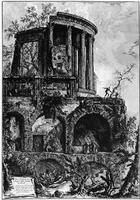
Vedute di Roma
Giovanni Battista Piranesi
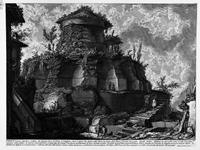
The Roman antiquities, t. 2, Plate XXVIII. Plan, and elevation cross-section of the Tomb of the Scipios.
Giovanni Battista Piranesi
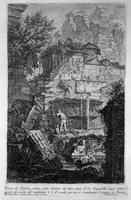
Ruins of an ancient tomb placed before other ruins of an aqueduct
Giovanni Battista Piranesi
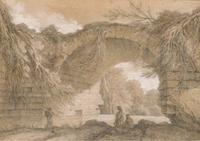
Un paysage avec un pont enjambant une rivière, trois figures au premier plan
Charles-Michel-Ange Challes
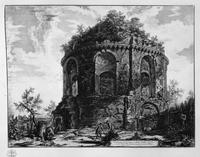
View of the Temple of the Cough said of the Via Tiburtina
Giovanni Battista Piranesi
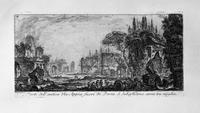
Temple of Clitunno
Giovanni Battista Piranesi
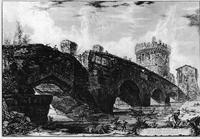
Vedute di Roma
Giovanni Battista Piranesi
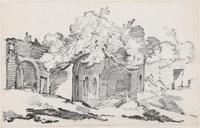
The Grotto of the Nymph Egeria
Joseph-Marie Vien
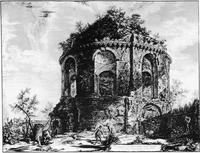
Vedute di Roma
Giovanni Battista Piranesi
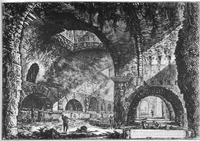
Vedute di Roma
Giovanni Battista Piranesi
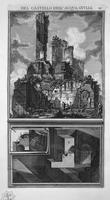
Perspective of one of the sides, and construction details of the five branches of the orifice of the aqueduct
Giovanni Battista Piranesi
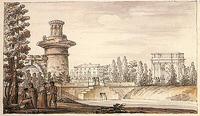
Ruined tower and Orlovsky gate
Giacomo Quarenghi
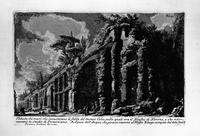
The Roman antiquities, t. 1, Plate XXIV. Celio o Oppio. The Seven Halls. Baths of Trajan.
Giovanni Battista Piranesi
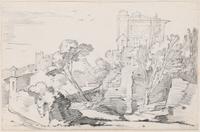
Casino Farnese on the Palatine Hill, Rome
Joseph-Marie Vien
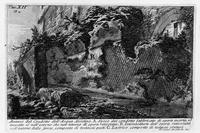
The Roman antiquities, t. 1, Plate XII. Aqua Alsietina.
Giovanni Battista Piranesi
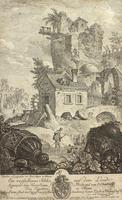
Landscape
Carl Schutz
A stormy day
Juan Jiménez Martín