Analisi esperta di Houses di Theophrastos Triantafyllidis
Stile: Post-Impressionism · Genere: cityscape
Expert Analysis of "Houses" by Theophrastos Triantafyllidis
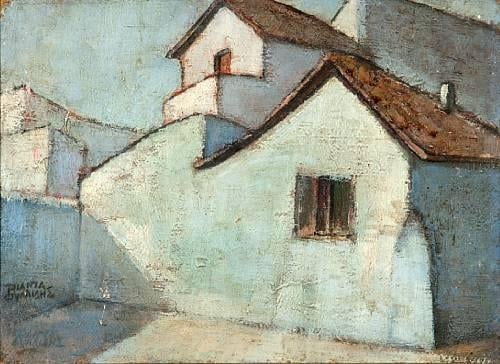
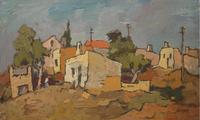
Theophrastos Triantafyllidis’s “Houses” is a compelling cityscape that firmly belongs to the Post-Impressionist tradition while simultaneously asserting a distinct regional identity. As a Greek artist working in the early to mid-20th century, Triantafyllidis channels the core tenets of Post-Impressionism— expressive color, simplified forms, and a subjective response to nature—into a meditation on vernacular architecture and Mediterranean light.
Stylistic Significance within Post-Impressionism
In “Houses,” the artist moves beyond the empirical observation of Impressionism. Instead of capturing fleeting atmospheric effects, he distills the urban scene into sturdy, almost volumetric shapes. The houses are rendered with bold outlines and flattened planes, recalling the constructive brushwork of Paul Cézanne and the cloisonnism of Émile Bernard. Color is not naturalistic but emotional: warm ochres, deep terracottas, and vibrant whites evoke the sun-drenched character of Greek islands or mainland towns. This use of heightened, non-local color—a hallmark of Post-Impressionism—allows the cityscape to transcend mere topography and become a vehicle for feeling.
Genre and Cultural Identity
While the genre is a cityscape, Triantafyllidis does not aim for documentary precision. Instead, he emphasizes the rhythm of clustered rooflines, the interplay of shadow and sunlight, and the stark geometry of walls and windows. This approach aligns with the Post-Impressionist desire to express the artist’s inner vision. For a Greek modernist like Triantafyllidis, this meant synthesizing international Post-Impressionist language with local subject matter—an important step in establishing a modern Greek art identity distinct from both academicism and folk traditions.
What Makes It Significant
The significance of “Houses” lies in its successful fusion of Western European Post-Impressionist formal strategies with the unique pictorial heritage of Greece. Triantafyllidis’s treatment of the cityscape demonstrates how a regional artist can adopt a global style without losing cultural specificity. The work stands as a bridge between the universal concerns of early modernism—simplification, emotional color, structural order—and the particular beauty of Mediterranean architecture. In doing so, it contributes to the broader Post-Impressionist project of reimagining everyday scenes through a lens of personal and cultural expression.
Visivamente simili
20 opere con composizione e palette affini
Santa Panagia (Sicily)
Renato Guttuso
The Debray farm
Maurice Utrillo
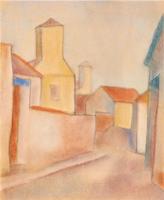
Vajda Lajos Street in Szentendre 310x250mm Pastel on Paper
Vajda Lajos
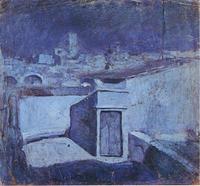
The roofs of Barcelona in the moonlight
Pablo Picasso
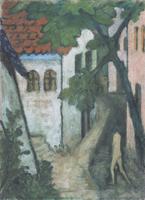
Zigeunerkind Im Dorf
Otto Mueller
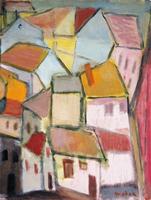
Modok Mária, Szentendrei Háztetők 1960.
Modok Mária
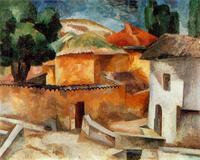
Yard in Crimea
Robert Falk
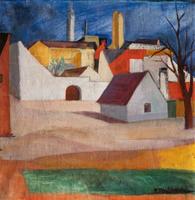
Modok Mária, Szentendrei Házak 1930
Modok Mária
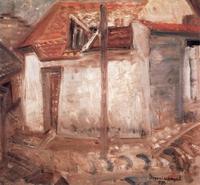
White Walls
Istvan Ilosvai Varga
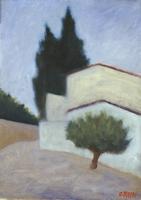
Paesaggio
Ottone Rosai
Landscape from Caransebes
Corneliu Baba
Houses
Gregoire Boonzaier
A040 - Road to the village
Ramiro Martín Martín
Upper Piazza
Alberto Burri
Tatar Women in Mangalia
Francisc Sirato
Piazza del Carmine
Ottone Rosai
A048 - La Figuera
Ramiro Martín Martín
Cherhana
Jean Alexandru Steriadi
Houses with Man Carrying Stone
Istvan Ilosvai Varga
Village Street
Edgar Degas