
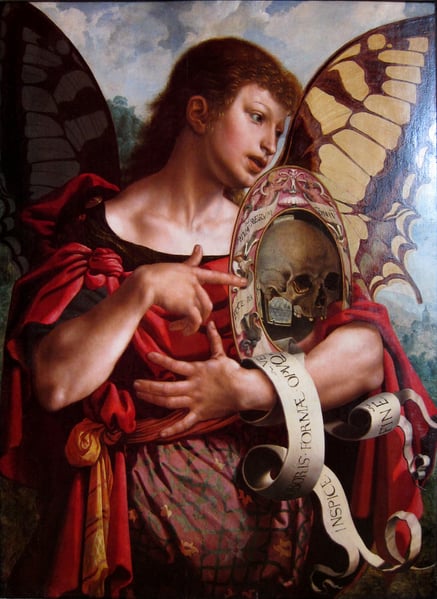
Expert analysis of Jan van Hemessen’s Vanity
Style: Northern Renaissance · Genre: vanitas
Analysis of "Vanity" by Jan van Hemessen
As a Northern Renaissance vanitas, Jan van Hemessen’s "Vanity" holds significant within its genre by embodying the period’s central moral and philosophical preoccupations. The work’s explicit subject—the transience of earthly pleasures and the inevitability of death—aligns with the vanitas tradition, which flourished in the 16th and 17th centuries as a response to Protestant and Catholic calls for introspection.
Hemessen’s choice of the vanitas theme underscores his engagement with the Northern Renaissance’s characteristic fusion of meticulous naturalism and allegory. While the painting’s specific iconography is not detailed in the available facts, its very classification as a vanitas positions it as a vehicle for moral instruction: a reminder that beauty, wealth, and life itself are fleeting. This message would have resonated with contemporary audiences, who were increasingly exposed to religious reform and the fragility of earthly existence.
The significance of "Vanity" lies in its early, Northern Renaissance articulation of a genre that would later become central to Dutch and Flemish still-life painting. Hemessen’s work demonstrates how artists of this period synthesized detailed observation of the material world with symbolic meaning, making the tangible serve as a mirror for spiritual truth. As such, it stands as a key example of how Northern Renaissance art used everyday objects and figures to confront viewers with life’s ultimate questions.
Visually similar
20 works with related composition and palette

St. Catherine of Alexandria
Raphael

The Penitent Mary Magdalene
Sebastiano Conca
The Penitent Magdalene
Guido Reni
Polyptych of St Barbara (central Panel)
Palma Vecchio

Saint Catherine of Alexandria
Artemisia Gentileschi

Little Magdalene
John Currin

The Penitent Magdalene
Philippe de Champaigne

Virginia da Vezzo, the Artist's Wife, as the Magdalen
Simon Vouet

Marcia
Domenico Beccafumi
The Penitent Magdalene
Jan de Bray

The Penitent Magdalene
Guercino

Angel, from the polyptych of St. Nicolas of Tolentino
Raphael

Magdalene contemplating the Crown of Thorns
Guercino

Pallas Athene
Parmigianino

St. Catherine of Alexandria
Lorenzo Lotto
St. Magdalene
Giovanni Francesco Romanelli

Salvator Mundi
Correggio
Flora
Francesco Melzi
Mary Magdalene
Mabuse

[Unkown]
Orazio Gentileschi