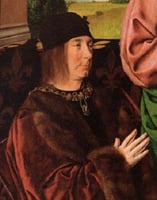
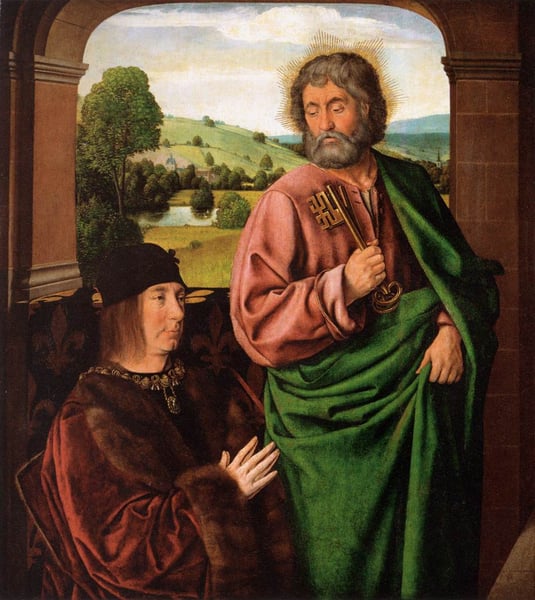
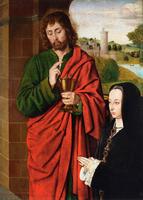
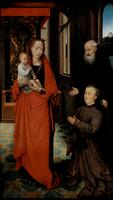
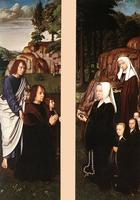
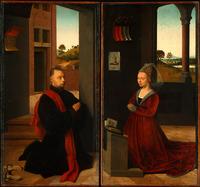
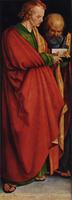
This artwork is a left-hand wing of a triptych, a common devotional format in the Northern Renaissance. Its significance lies in how it exemplifies the period’s fusion of realistic portraiture with sacred imagery. Jean Hey (often identified with the Master of Moulins) places Peter II, Duke of Bourbon, in direct spiritual communion with his patron saint, St. Peter. This combination of donor portrait and religious narrative—typical of Northern Renaissance altarpieces—demonstrates the era’s emphasis on personal piety and the intercessory role of saints. The painting’s meticulous detail, refined naturalism, and symbolic integration of the earthly and divine are hallmarks of Jean Hey’s style, making this work a key example of Northern Renaissance religious painting’s ambition to render the sacred with compelling, tangible presence.