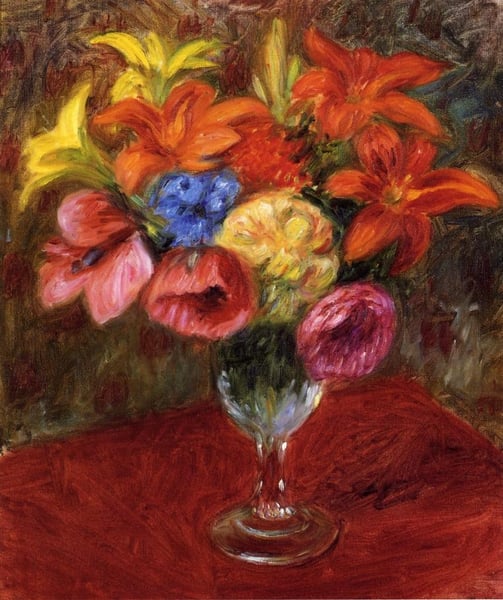
Expertenanalyse zu William James Glackenss Poppies, Lilies and Blue Flowers
Stil: Impressionism · Genre: flower painting
Expert Analysis of "Poppies, Lilies and Blue Flowers" by William James Glackens
As an Impressionist flower painting by a leading American modernist, Poppies, Lilies and Blue Flowers exemplifies the shift from urban realism to pure sensory pleasure that defined the later phase of William James Glackens’s career. The work is significant for three key reasons:
-
American Impressionism at its peak – Glackens, originally a member of the Ashcan School (known for gritty city scenes), embraced a vibrant, light-drenched palette after exposure to French Impressionism—especially the work of Renoir. This painting showcases that mature style: broken brushwork, high-key color, and a focus on capturing the fleeting effects of light on petals and leaves. The flowers are not merely botanical studies; they become vehicles for the artist’s exploration of atmosphere and luminosity.
-
Color harmony and composition – The interplay of red poppies, white lilies, and blue blossoms creates a striking triadic color scheme that is at once lush and balanced. Glackens juxtaposes complementary hues (red/green foliage, blue/orange undertones) to generate visual vibration, a hallmark of Impressionist theory. The arrangement—clustered, informal, and slightly asymmetrical—feels spontaneous yet carefully orchestrated, emphasizing the painterly process over exact botanical accuracy.
-
Genre within a broader modernist context – While still lifes of flowers had a long tradition, Glackens’s treatment elevates the genre to a celebration of pure optical experience. At a time when American art was grappling with Post-Impressionism and early Modernism, Glackens remained committed to the Impressionist ideal of capturing a direct, unmediated impression of beauty. This painting therefore represents a crucial bridge between European Impressionism and the emerging American taste for decorative, color-driven works—a trend that would influence later still-life painting in the United States.
In essence, Poppies, Lilies and Blue Flowers is significant not only for its technical mastery but for embodying the optimistic, sensory-rich moment when American artists turned from social commentary to the enduring pleasures of light and color.
Museum / Gallery
Visuell ähnlich
20 Werke mit ähnlicher Komposition und Farbpalette
Autumn bouquet
Veniamin Kremer
Vase with Field Flowers
Octav Bancila
Flowers & Leaves
Karl Schrag
Bouquet. Abramtzevo
Viktor Vasnetsov
Vase with Peonies
Nicolae Darascu
Vase of Flowers
Odilon Redon
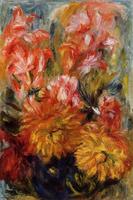
Gladiolas in a Blue Vase
Pierre-Auguste Renoir
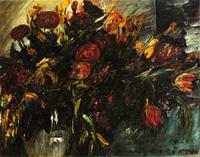
Red and Yellow Tulips
Lovis Corinth
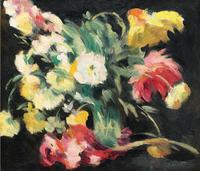
Millefiori
Francisc Sirato
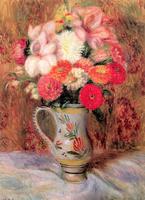
Flowers in a Quimper Pitcher
William James Glackens
Yellow Lily
Le Pho
Flowers
Henri Fantin-Latour
Bouquet of flowers
Suzanne Valadon
Fruits and Flowers
Marc Chagall
Vase de Fleurs
Odilon Redon
Autumn Flowers
Henri Fantin-Latour
Flowers in a Green Vase Dahlilas and Asters
Pierre-Auguste Renoir
Still Life with Peonies
T. C. Steele
Flowers in a Vase
Paul Cezanne
Vase of Flowers
Odilon Redon