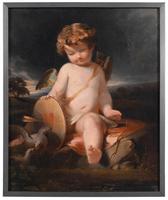
Expert Analysis: "Portrait of Prince Henry Lubomirski as the Genius of Fame" by Louise Elisabeth Vigée Le Brun
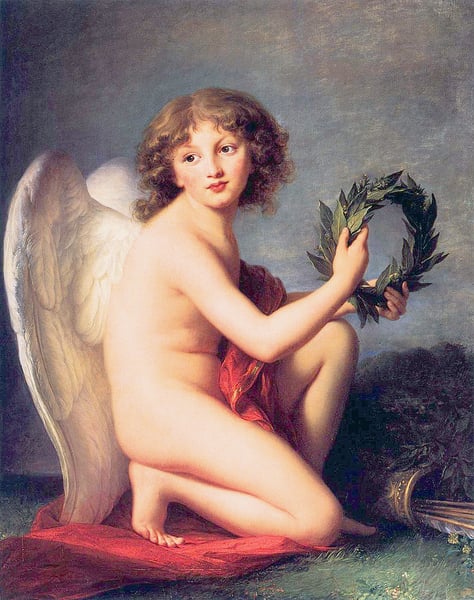
This portrait stands as a remarkable fusion of two dominant 18th-century styles—Rococo and Neoclassicism—masterfully employed by one of history’s most celebrated female painters. Vigée Le Brun, best known for her royal and aristocratic portraits, here elevates the genre beyond mere likeness into allegory. The subject, Prince Henry Lubomirski, is cast as the "Genius of Fame," a classicizing conceit that aligns with Neoclassicism’s embrace of antique virtue and symbolic clarity. Yet the treatment remains unmistakably Rococo in its soft, luminous brushwork and the delicate, almost theatrical grace of the pose.
What makes this work significant is how it embodies a transitional moment: the Rococo taste for playful, sensuous surface elegance is still present in the prince’s idealized features and fluid drapery, but the underlying concept—a youth personifying Fame, an attribute of timeless renown—looks forward to the moral seriousness of Neoclassicism. Vigée Le Brun also asserts her own reputation through this piece; as a woman painter navigating a male-dominated art world, she deftly combines technical virtuosity with intellectual ambition. The portrait is not merely a likeness but a statement: the prince, and by extension the artist herself, claims a place among the immortalized.