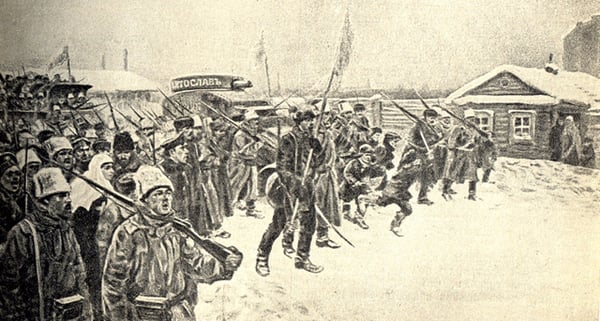
At the workers' outskirts in the days of overthrowing the autocracy
Details
Expert analysis of Ivan Vladimirov’s At the workers' outskirts in the days of overthrowing the autocracy
Style: Realism · Genre: genre painting
Expert Analysis: "At the workers' outskirts in the days of overthrowing the autocracy" by Ivan Vladimirov
This genre painting is a powerful example of Realism employed as a historical and political tool. Its significance lies in how it captures a transformative moment in Russian history—the February Revolution of 1917—through a documentary-style lens that emphasizes the ordinary workers as the agents of change.
Context and Artistic Approach:
Working within the tradition of Realism, Vladimirov avoids romantic or heroic allegory. Instead, he presents a seemingly matter-of-fact scene set “at the workers’ outskirts,” a liminal space between the industrial periphery and the center of power. This choice grounds the revolution in the gritty, everyday reality of the proletariat. The painting functions as a visual record, akin to a news photograph, but with the painterly attention to texture and detail that Realism demands.
Significance within the Style:
- Documentary Authenticity: Vladimirov was known for his eyewitness-style depictions of the 1917 revolutions. Here, the Realist style serves not just aesthetic ends but ideological ones: it lends credibility and emotional weight to the moment of “overthrowing the autocracy,” portraying it as a lived, collective act rather than a symbolic event.
- Social Focus: The genre of genre painting—scenes of everyday life—is elevated to a form of social commentary. By focusing on workers at the outskirts rather than on famous leaders or urban centers, Vladimirov highlights the grassroots nature of the uprising. The painting becomes a testament to the anonymous masses whose labor and sacrifice drove the historical shift.
- Historical Importance: This work is significant as a primary visual source for understanding how the revolution was perceived and remembered in Soviet art. It embodies the early Soviet embrace of Realism to legitimize the new order, positioning ordinary workers as protagonists of history.
In summary, the painting’s significance derives from its masterful use of Realist technique to document a pivotal historical event through the lens of everyday workers, making it both an artistic achievement and a crucial piece of revolutionary historiography.
Visually similar
20 works with related composition and palette
The revolt of the soldiers and workers in the days of February 1917
Ivan Vladimirov
Pogrom of wine shop
Ivan Vladimirov
Escort of prisoners
Ivan Vladimirov
The King And Hon. Salandra visit the front of our war, amidst the enthusiastic cheers of the troops
Achille Beltrame
The defeat of the strikers
Ivan Vladimirov
The shooting of peasants by White Cossacks
Ivan Vladimirov
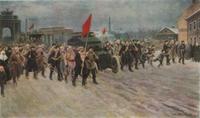
At the workers' outskirts of the days of the overthrow of the autocracy. February 1917
Ivan Vladimirov
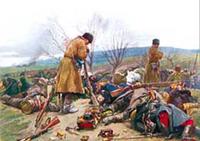
From the artist's diary, the War 1904-1905
Mykola Samokysh
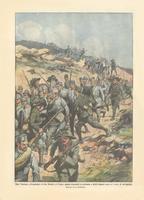
Enemies Surrounded By The Hundreds And Pushed Forward Like A Herd Of Game
Achille Beltrame
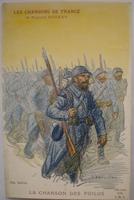
La Chanson Des Poilus
Theophile Steinlen
The seizure of German automobiles
Ivan Vladimirov
Barricade fighting in Red Presnya
Ivan Vladimirov
The 220 prisoners taken in the fight for the possession of the Freikofel pass
Achille Beltrame
The revolt of the peasants in the village Sorochintsy
Ivan Vladimirov
Soldiers in the snow
Vasily Vereshchagin
Snowy trenches (Russian position on the Shipka Pass)
Vasily Vereshchagin
Seeing the unit of workers to the front
Konstantin Yuon
Arresting Generals during the Revolution in February 1917
Ivan Vladimirov
Study to "The Conquest of Siberia by Yermak"
Vasily Surikov
The ambush
Alekos Kontopoulos