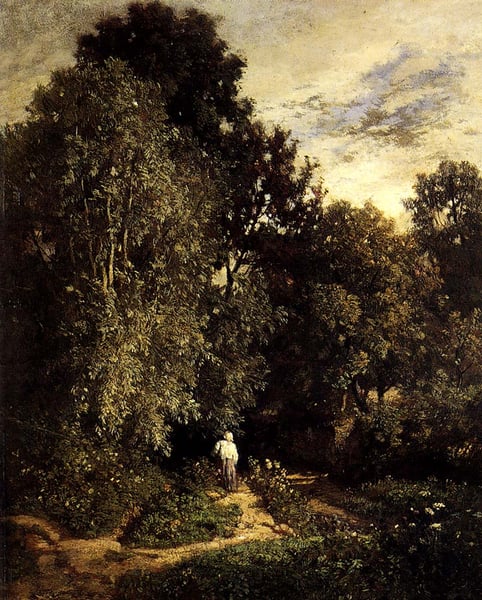
Path in a Small Wood
Expertenanalyse zu Constant Troyons Path in a Small Wood
Stil: Realism · Genre: landscape
Expert Analysis: "Path in a Small Wood" by Constant Troyon
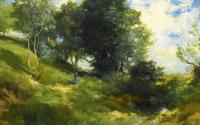
Constant Troyon’s Path in a Small Wood stands as a quintessential example of Realist landscape painting, rooted in the mid-19th-century Barbizon tradition. Executed during a period when artists were turning away from the idealized, dramatic vistas of Romanticism, this work instead embraces a quiet, unembellished slice of nature. Troyon, best known for his animal paintings and pastoral scenes, here focuses on the intimate, everyday experience of a forest interior.
Significance within Realism and the Barbizon School:
-
Truth to Nature: The painting exemplifies the Realist credo of rendering the natural world as it is—without heroic composition or allegorical narrative. The “small wood” is a humble, unremarkable grove, yet Troyon elevates it through careful observation of light filtering through leaves, the texture of bark, and the soft earth of the path. This direct, almost scientific attention to atmospheric effects directly descends from the Barbizon painters’ practice of working en plein air.
-
Expressive Modesty: Unlike the grand forests of Rousseau or the dramatic skies of Daubigny, Troyon’s path is deliberately unassuming. The path itself functions as a compositional device, drawing the viewer’s eye into the depth of the woods, but the destination remains ordinary. This rejection of the spectacular in favor of the quotidian is a hallmark of Realism: beauty exists not in the exceptional, but in the truthful rendering of the common.
-
Mastery of Tonal Range: Troyon’s palette here is restrained, dominated by browns, muted greens, and earthy ochres—colors that mirror the actual forest understory. His brushwork varies from soft, blended strokes in the shadowy undergrowth to sharper touches where sunlight hits the foliage. This technical control not only creates a convincing sense of space but also conveys the transient play of light, a signature of the Barbizon influence on the later Impressionists.
Art-Historical Context: Path in a Small Wood was created during a pivotal moment when landscape painting in France was moving from studio-based conventions to empirical observation. Troyon’s work, though less radical than Courbet’s, helped legitimize the ordinary landscape as a subject worthy of serious artistic attention. Collectors and critics of the time recognized his ability to infuse a simple forest path with a sense of serene monumentality—an achievement that bridges the lyrical naturalism of the Barbizon school and the more rigorous, light-obsessed practice of the Impressionists who followed.
In short, this painting is significant because it demonstrates how Realism—through modest composition, faithful representation, and a quiet yet profound reverence for nature—transformed the landscape genre from mere backdrop into a primary subject of emotional and artistic depth.
Museum / Gallery
Visuell ähnlich
20 Werke mit ähnlicher Komposition und Farbpalette
Outskirts of a Wood, with Gypsies
David Cox
The Crossroads at the Eagle Nest, Forest of Fontainebleau
Charles-Francois Daubigny
Landscape with oak trees and shepherd
Aleksey Savrasov
Island of San Bartolommeo
Camille Corot
Osiery with Cows
Laszlo Mednyanszky
Herding Sheep
Thomas Moran
A Cow and its Keeper
Camille Corot
Landscape with Three Figures
Camille Corot
Sevres Brimborion View toward Paris
Camille Corot
Under the Trees
Thomas Moran
Fresnos, sauces y chopos
Jose Maria Velasco
Forest Road
Fyodor Vasilyev
Boys Fishing
William Collins
On the Waywayanda, Orange County, New York
David Johnson
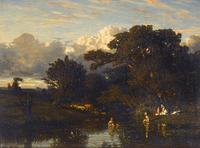
The Bathers
Jules Dupre
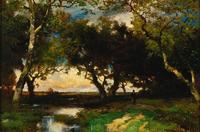
Under the Trees
Thomas Moran
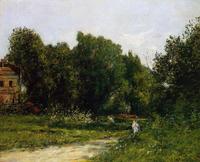
Park Cordieres a Trouville
Eugene Boudin
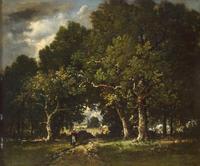
Road in the Wood
Narcisse-Virgilio Diaz
A Path Through the Woods
Thomas Moran
Forest scene
Jacob van Ruisdael