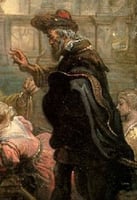
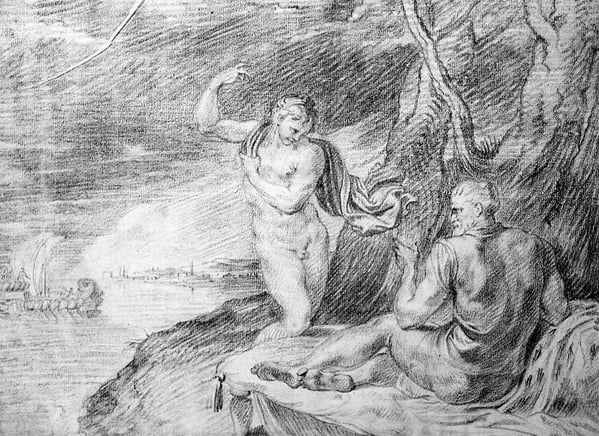
Minerva and Odysseus at Telemachus
Theodoor van Thulden の Minerva and Odysseus at Telemachus の専門的な分析
スタイル:Baroque · ジャンル:mythological painting
Expert Analysis: "Minerva and Odysseus at Telemachus" by Theodoor van Thulden
This mythological painting, executed in the Baroque style, captures a pivotal moment from Homer’s Odyssey: the goddess Minerva (Athena) appearing to Odysseus and his son Telemachus. Theodoor van Thulden, a Flemish Baroque master, demonstrates the period’s hallmark dynamism and psychological depth through this work.
Significance within the Baroque Style:
-
Dramatic Narrative and Emotional Intensity: Van Thulden selects a moment of revelation and counsel, typical of Baroque art’s focus on climactic action. Minerva’s divine presence is conveyed through sweeping gestures and a luminous, almost theatrical lighting that isolates the figures from a dark, indefinite background—a chiaroscuro technique that heightens the emotional gravity of the scene.
-
Compositional Energy: The diagonal arrangement of the figures—Odysseus turning in surprise, Telemachus poised in awe, and Minerva descending from above—creates a sense of motion and urgency. This diagonal thrust, combined with flowing drapery and expressive poses, embodies the Baroque preference for dynamic, asymmetrical compositions over static harmony.
-
Influence of Rubens and Flemish Baroque: Van Thulden, a pupil and collaborator of Peter Paul Rubens, inherits the rich, warm palette and robust figure modeling typical of the Flemish school. The flesh tones and texture of the clothing show a tactile realism grounded in Rubens’ legacy, yet van Thulden adds a cooler, more luminous quality to Minerva’s divine aura, marking his individual approach within the Baroque idiom.
Mythological Painting and Baroque Conventions:
-
As a mythological scene, the work serves both to educate and to delight, aligning with Baroque art’s dual purpose of moral instruction and sensory appeal. Minerva represents wisdom and strategic guidance, reinforcing the theme of divine intervention in human fate—a common Baroque allegory for virtue triumphing through intellect.
-
The painting’s significance also lies in its narrative clarity: van Thulden organizes a complex story into a single, readable moment. Telemachus, often depicted as a young man searching for his father, is here shown at the point of reunion with Odysseus, while Minerva orchestrates their meeting. This distillation of epic into intimate drama is a Baroque strength that van Thulden exploits fully.
Conclusion:
“Minerva and Odysseus at Telemachus” is significant as a quintessential example of Baroque mythological painting, demonstrating van Thulden’s mastery of dramatic lighting, emotional expression, and energetic composition. It reflects the period’s fascination with classical myths as vehicles for exploring human psychology and divine power, while also illustrating the enduring influence of Rubens on Flemish Baroque art.
視覚的に類似
構図やパレットが近い作品 20 件
Cult of Bacchus
Jan Saenredam
Adam and Eve
Jan Saenredam
Hercules (Effects of Jealousy)
Albrecht Durer
Pan and Syrinx
Giovanni Battista Piranesi
Adam and Eve Before the Tree of Knowledge
Jan Saenredam
Apollo and Silenus
Giovanni Battista Piranesi
The Young Satyr
Stefano della Bella
Nymphs and Satyrs
Peter Paul Rubens
Diana and Actaeon
Jacob Jordaens
The Triumph of Silenus
Nicolas Poussin
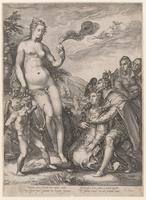
Cult of Venus
Jan Saenredam
The Baptism of Christ
Peter Paul Rubens
Pan punished by the Nymphs
Jacob Jordaens
Seated Female Nude, in Solitude
Salvator Rosa
Adam and Eve
Lucas van Leyden
Treated by the Muses
Jacob Jordaens
Bacanal
Frans Wouters
Molorchos making a sacrifice to Hercules
Andrea Mantegna
The Three Graces
Peter Paul Rubens
Allegory of the five senses
Adam van Noort