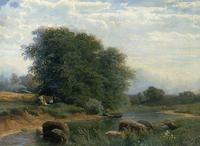
Expert Analysis of "The Creek" by T. C. Steele
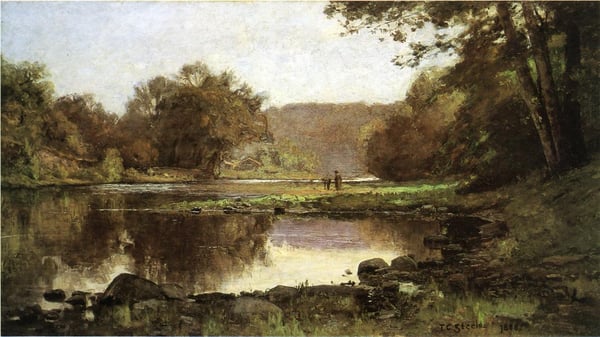
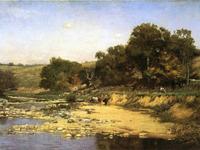
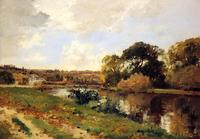
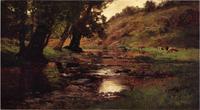
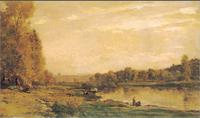
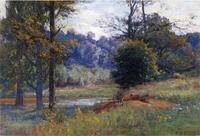
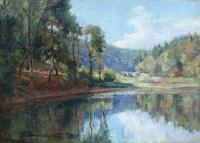
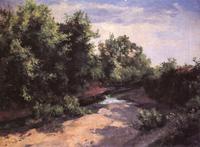
As an Impressionist landscape, T. C. Steele’s The Creek exemplifies the movement’s core pursuit of capturing transient light and atmospheric effects in nature. Steele, a leading figure of the Hoosier Group and a dedicated American Impressionist, transforms a simple creek-side scene into a study of shifting color and texture. The work’s significance lies in its demonstration of how Impressionist principles—broken brushwork, an emphasis on plein-air observation, and a vivid, often high-key palette—can be applied to the intimate, pastoral landscapes of the American Midwest, rather than the more frequently depicted French countryside. The Creek is a testament to Steele’s ability to elevate a humble local subject into a luminous, ephemeral moment, bridging European Impressionist technique with a distinctly American sense of place and light.