Expertenanalyse zu Allan Ramsays Jean Jacques Rousseau
Stil: Rococo · Genre: portrait
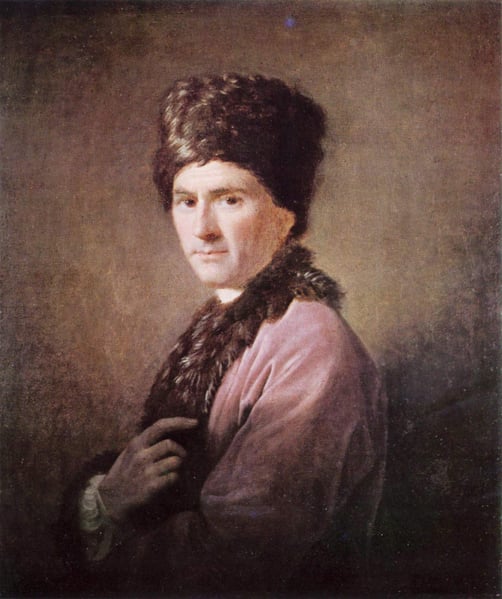
Expert Art Historical Analysis: "Jean Jacques Rousseau" by Allan Ramsay
As a Rococo portrait, Allan Ramsay’s depiction of philosopher Jean Jacques Rousseau occupies a fascinating intersection between the decorative elegance of the style and the intellectual gravity of its sitter. The Rococo period (c. 1730–1770) is characterized by light pastel palettes, fluid brushwork, asymmetrical compositions, and an emphasis on intimacy, charm, and the refined pleasures of private life—often in contrast to the formal grandeur of the preceding Baroque. In portrait painting, Rococo artists excelled at capturing a sitter’s personality and social grace through soft, naturalistic modeling and a sense of fleeting, candid expression.
What makes Ramsay’s portrait significant within this context is its deliberate modulation of Rococo conventions to suit the subject. Rousseau, a central figure of the Enlightenment, was known for his radical ideas on individual freedom, education, and the “noble savage.” Rather than portraying him in the opulent silks or pastoral fantasy typical of many Rococo aristocratic portraits, Ramsay applies the style’s refined technique—subtle flesh tones, delicate transitions of light and shadow, and a warm, intimate palette—to present Rousseau as a thoughtful, approachable intellectual. The composition likely foregrounds the philosopher’s face and bearing, minimizing ornamental distraction to emphasize character and introspection.
This work thus stands as a critical example of how Rococo portraiture could adapt to Enlightenment sensibilities. It marries the movement’s visual charm with a new seriousness of purpose, bridging the gap between playful decor and philosophical depth. In art historical terms, Ramsay’s Rousseau is significant because it demonstrates that Rococo was not merely a style of aristocratic frivolity; it could also serve as a vehicle for modern, humanist portraiture that values personal identity and intimate realism over status display. The painting remains a key touchstone for understanding how 18th-century artists used the period’s characteristic elegance to render the intellectual heroes of their age.
Museum / Gallery
Visuell ähnlich
20 Werke mit ähnlicher Komposition und Farbpalette
Self portrait
Claude Arnulphy
Portrait of Johann Melchior Dinglinger
Antoine Pesne
«Портрет Хрипуновой
Ivan Argunov
John Philip Kemble
Thomas Lawrence
Portrait of a Lady with Muff
Francois Boucher
Charles Jerome, Comte Pozzo di Borgo
Franz Xaver Winterhalter
Portrait of John Rolle Walter of Stevenstone
Pompeo Batoni
Portrait of A. I. Tropinina
Vasily Tropinin
Jean Nicolas Vernezobre
Maurice Quentin de La Tour
Kiseleva
Vasily Tropinin
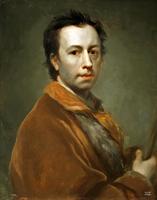
Self Portrait
Anton Raphael Mengs
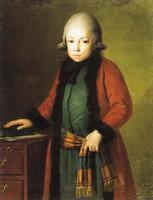
Sergey Mordvinov
Carl-Ludwig Johann Christineck
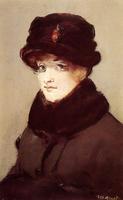
Woman in furs (Portrait of Mery Laurent)
Edouard Manet
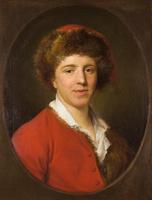
George Oakley Aldrich
Pompeo Batoni
Man with fur hat
Elisabeth Jerichau-Baumann
Portrait of Feodosya Resanova
Vasily Perov
Portrait of Anna Yuryevna Kvashnina-Samarina
Fyodor Rokotov
Praskovia Uvarova
Konstantin Makovsky
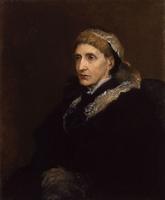
Josephine Elizabeth Butler (née Grey)
George Frederick Watts
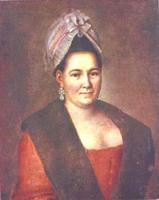
Portrait of an Unknown Woman
Aleksey Antropov