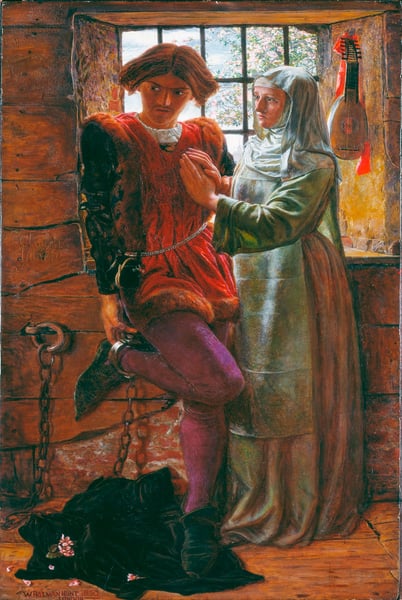
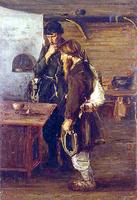
Based solely on the provided facts—that Claudio and Isabella is a Romanticist literary painting by William Holman Hunt—an expert analysis would note the following:
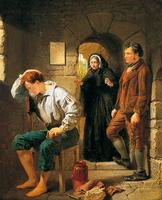
This work is significant as a prime example of how Romanticism merged intense emotional expression with literary narrative, specifically drawing from Shakespeare’s Measure for Measure (Act III, Scene I). As a Romanticist literary painting, Hunt elevates a moment of moral and psychological crisis—Isabella’s anguished plea and Claudio’s desperate fear of death—into a visual drama of heightened sentiment. The composition and use of chiaroscuro (if present) would typically serve to amplify the inner turmoil of the figures, a hallmark of Romanticism’s focus on individual emotion over classical restraint.
What makes it significant within this style is its departure from the more tranquil or heroic subjects of earlier Romanticism; instead, Hunt turns to a private, intimate confrontation that explores themes of virtue, mortality, and human frailty. The work underscores Romanticism’s capacity to transform a specific literary scene into a timeless study of ethical conflict, bridging the gap between poetry and painting with an almost theatrical intensity.