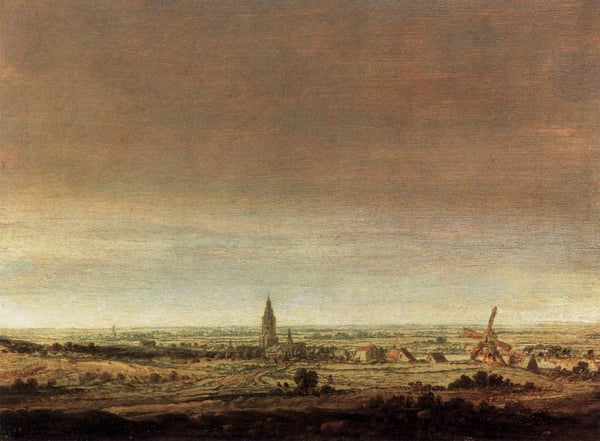
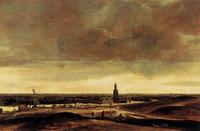
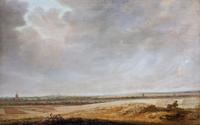
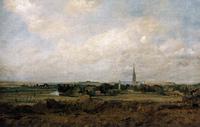
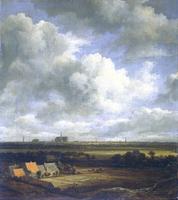
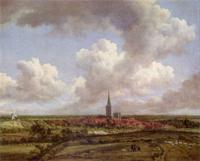
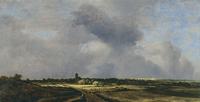
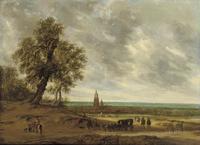
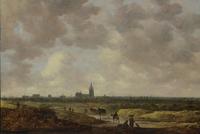
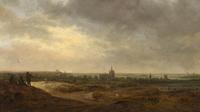
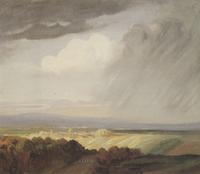
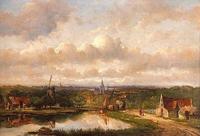
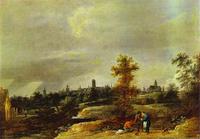
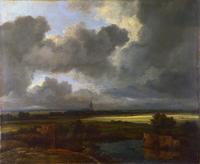
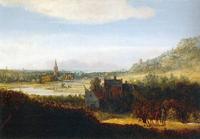
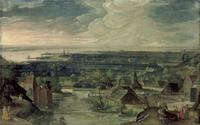
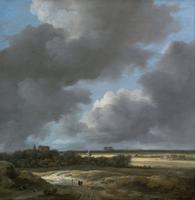
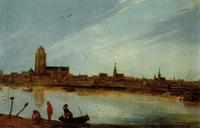
Based solely on the supplied facts—that the work is a Baroque landscape by Hercules Seghers—this artwork is significant for embodying the unique intersection of the Baroque style with a highly original, almost visionary approach to the landscape genre. While typical Baroque landscapes often idealized nature or served as orderly backgrounds, Seghers' work is known for defying conventions. Within this context, "Landscape with City on a River" likely pushes the Baroque emphasis on drama, atmosphere, and spatial depth into a more personal, expressive realm. The choice of an expansive river view with a distant city aligns with the Baroque fascination with vastness and dynamic interplay between sky and terrain, but Seghers' treatment—often featuring rugged, lonely vistas and experimental etching techniques—would make it a pivotal example of how the landscape genre could be elevated into a vehicle for mood and imagination, influencing later Dutch artists like Rembrandt. Thus, its significance lies in being a Baroque landscape that transcends formulaic representation, showcasing instead a pioneering, poetic vision within the period.