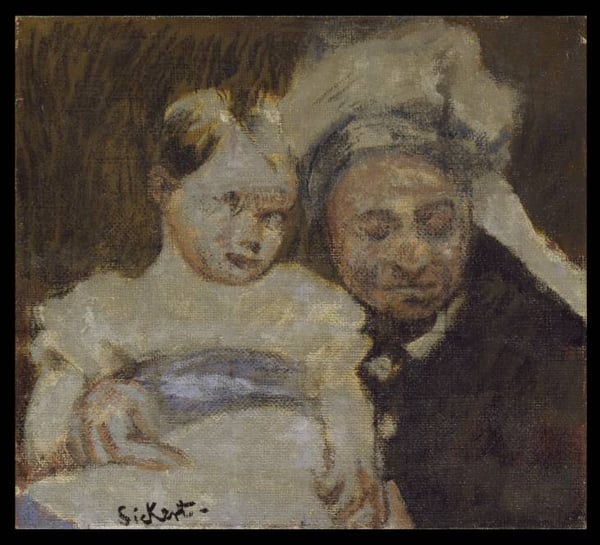
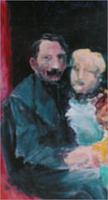
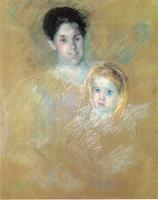
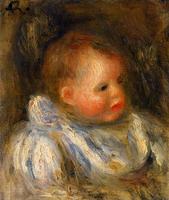
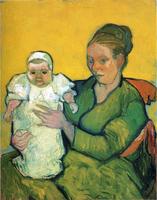
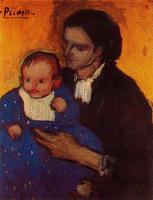
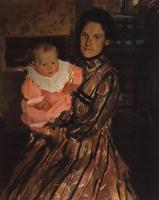
This Impressionist portrait by Walter Sickert, Queen Victoria and her great-grandson, is significant for its unconventional treatment of royal portraiture within the movement. While Impressionism typically focused on everyday life and informal moments, Sickert applies its signature loose brushwork, muted tonalities, and emphasis on atmosphere to a historically formal subject. Rather than idealizing the monarch, he captures an intimate, almost domestic interaction, subverting the traditional grand-manner portrait. The work thus bridges the gap between high society and the Impressionist fascination with fleeting, candid observation—demonstrating that even royalty can be rendered through the movement's characteristic immediacy and emotional restraint.