Expert analysis of Edwin Lord Weeks’s Indian Prince And Parade Cermony
Style: Orientalism · Genre: genre painting
Expert Analysis: "Indian Prince And Parade Ceremony" by Edwin Lord Weeks
Style: Orientalism
Genre: Genre painting
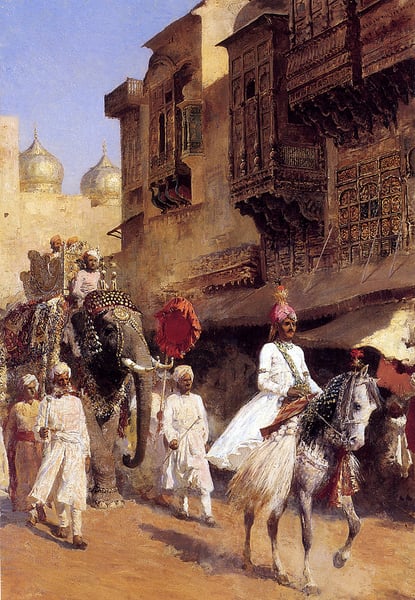
This work is a quintessential example of 19th-century Orientalist genre painting, a style that sought to capture the West's romanticized vision of the "exotic" East. Edwin Lord Weeks, a leading American Orientalist, specialized in meticulously detailed scenes of daily life, ceremony, and architecture in India and the Middle East.
Significance within Orientalism and Genre Painting:
-
Spectacle of Power and Pageantry: The painting depicts an Indian prince amid a grand ceremonial parade, a subject that perfectly aligns with Orientalist fascination for hierarchical, opulent, and ritualistic Eastern courts. Weeks emphasizes the visual splendor—rich fabrics, elaborate jewelry, caparisoned elephants, and vibrant colors—to create a sense of awe and otherworldliness. This focus on ceremonial display reinforces the Western perception of India as a land of timeless, feudal splendor.
-
Ethnographic Detail as Artistic Credibility: As a genre painting, the work is not merely decorative but functions as a visual document. Weeks was known for his extensive travels and firsthand sketches. Here, the careful rendering of architectural elements (likely inspired by Mughal or Rajput palaces), costume details, and the hierarchical arrangement of participants (prince, attendants, soldiers) elevates the painting beyond fantasy. This commitment to accuracy gave Orientalist works a perceived authenticity, making them significant in shaping Western knowledge of Indian culture—even if that knowledge was filtered through a colonial lens.
-
Narrative of Imperial Gaze: The painting’s significance lies in its unstated narrative: the viewer is positioned as a detached observer, privileged to witness a private royal spectacle. This reflects the Orientalist tendency to present Eastern rulers as figures frozen in a premodern, exotic past, thereby justifying Western colonial intervention as a modernizing force. The prince’s calm, dignified demeanor, surrounded by spectacular wealth, also subtly reinforces the stereotype of the passive, opulent Eastern sovereign.
-
Technical Mastery in Genre Painting: Weeks’s use of light—often golden or hazy—creates a dreamlike atmosphere that enhances the romantic appeal. His precise brushwork in rendering textures (silks, marble, animal hide) demonstrates the high finish expected of academically trained genre painters. The composition, with its diagonal flow of the parade and central focal point on the prince, guides the eye and emphasizes narrative clarity.
In summary, Indian Prince And Parade Ceremony is significant because it encapsulates the core ambitions of Orientalist genre painting: to combine ethnographic detail, visual spectacle, and a subtle colonial ideology, all while showcasing Weeks’s virtuosity as a painter of exotic life. It remains a valuable artifact of how 19th-century Western audiences imagined India—a land of majestic ceremony, timeless hierarchy, and intoxicating color.
Museum / Gallery
Visually similar
20 works with related composition and palette
Mogul's Elephant
Edwin Lord Weeks
Street Scene In India
Edwin Lord Weeks
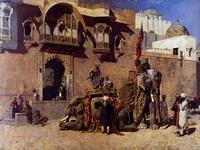
A Rajah Of Jodhpur
Edwin Lord Weeks
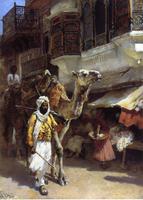
Man Leading a Camel
Edwin Lord Weeks
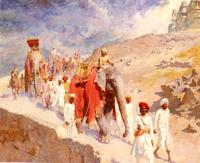
Indian Hunting Party
Edwin Lord Weeks
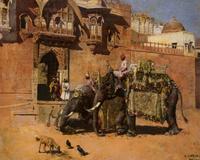
Elephants at the Palace of Jodhpore
Edwin Lord Weeks
The Metalsmith's Shop
Edwin Lord Weeks
Leaving For The Hunt At Gwalior
Edwin Lord Weeks
Horse Market, Persian Stables, Bombay
Edwin Lord Weeks
The Rajahs Elephant
Edwin Lord Weeks
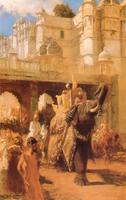
A Royal Procession
Edwin Lord Weeks
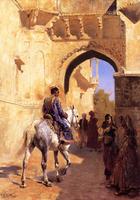
Street Scene In India
Edwin Lord Weeks
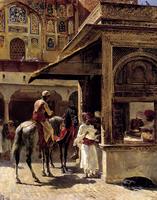
Street Scene In India
Edwin Lord Weeks
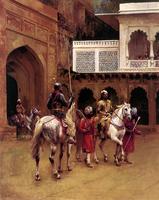
Indian Prince, Palace Of Agra
Edwin Lord Weeks
A Street Market Scene, India
Edwin Lord Weeks
The Silk Merchants
Edwin Lord Weeks
The Maharahaj of Gwalior Before His Palace
Edwin Lord Weeks
Craftsman Selling Cases By A Teak Wood Building, Ahmedabad
Edwin Lord Weeks
A Caparisoned Elephant – Scene near Delhi (A Scene in the East Indies)
William Daniell
Outside An Indian Dye House
Edwin Lord Weeks