
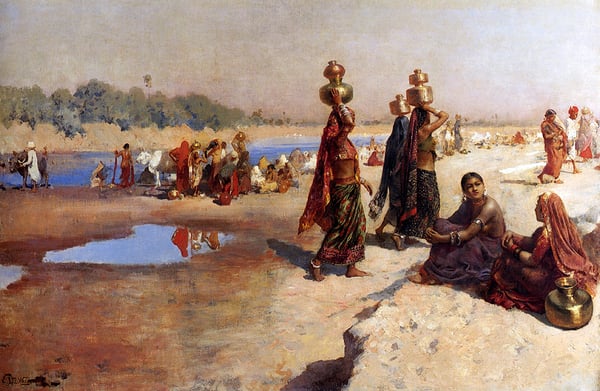
Edwin Lord Weeks sanatçısının Water Carriers Of The Ganges eseri hakkında uzman analizi
Tarz: Orientalism · Tür: genre painting
Expert Analysis: Water Carriers Of The Ganges by Edwin Lord Weeks
Style: Orientalism
Genre: Genre painting
Significance within Orientalism and Genre Painting:
Edwin Lord Weeks’ Water Carriers Of The Ganges stands as a quintessential example of Western Orientalist painting in the late 19th century, while also fulfilling the conventions of genre painting—the depiction of everyday life. Its significance lies in how it merges documentary precision with romanticized exoticism, a hallmark of the Orientalist movement.
As an Orientalist work, the painting participates in the Western fascination with the “Orient” as a realm of timeless, picturesque otherness. Weeks, an American artist who traveled extensively in India, brings a traveler’s eye to the scene: the Ganges River, central to Hindu ritual and daily existence, is presented as a stage for a mundane but visually striking activity—water carrying. The subject matter (water carriers, a common sight along the river) is elevated through meticulous attention to architectural details, costume, and light, typical of Weeks’ style. This interplay between observed reality and artistic idealization is what made Orientalist genre paintings so appealing to Western audiences: they offered a seemingly authentic window into a foreign culture, yet one filtered through a lens of aesthetic beauty and narrative quietude.
Within genre painting specifically, Water Carriers Of The Ganges is notable for its focus on labor and routine rather than dramatic action. The water carriers, likely drawn from specific social castes, are not anonymous figures but types representing a way of life. Weeks’ treatment—balanced composition, warm tonal palette, and human scale—imbues their task with dignity and a sense of serene purpose. This was a deliberate strategy: by depicting ordinary people in extraordinary settings, Orientalist genre painters like Weeks asserted that even the most humble tasks in the East possessed a visual and cultural richness worth capturing.
The artwork’s significance, therefore, is twofold: it serves as a record of Western perceptions of India in the late 1800s, and it exemplifies how genre painting could be adapted to Orientalist themes, creating works that are both ethnographic documents and aesthetically pleasing compositions. Water Carriers Of The Ganges remains important for its ability to transport the viewer into a specific time and place, while also revealing the artistic and ideological frameworks that shaped that vision.
Museum / Gallery
Görsel olarak benzer
İlişkili kompozisyon ve renk paletine sahip 20 eser
By the River
Eric Fischl

Bedouin Women Carrying Water Jars
John Singer Sargent
Women crossing the dry bed of the Bou-Saâda wadi
Nasreddine Dinet
The women from India
Mariam Aslamazian
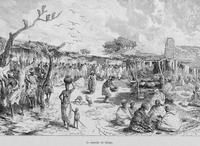
"le Marché De Salaga"
Edouard Riou

The woman from Madras
Mariam Aslamazian
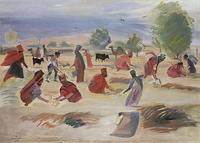
Yield of potatoes
Martiros Sarian

Woman's Bathing Place I Oodeypore, India
Edwin Lord Weeks
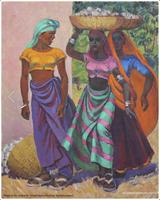
India's constructer woman
Mariam Aslamazian
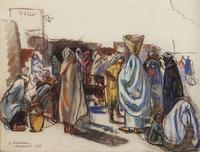
Market. Marrakesh
Zinaida Serebriakova

The Afterglow in Egypt, 19th century
William Holman Hunt

Blanchisseuses Dans La Seguia De Biskra
Paul Leroy
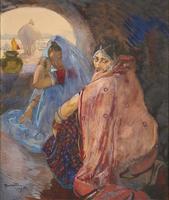
Indian Women in Udaipur
Paul-Albert Besnard

Two Woman Chatting by the Sea, St. Thomas
Camille Pissarro
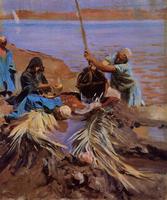
Egyptians Raising Water from the Nile
John Singer Sargent
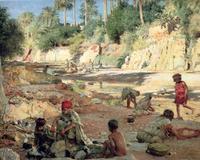
Small Washers In The Wadi
Nasreddine Dinet
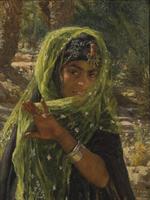
Girl veiling herself
Nasreddine Dinet

Beach in Normandy
Richard Parkes Bonington

Abraham's Servant Meeteth Rebecca
James Tissot

Woman Carrying a Pitcher on Her Head
Camille Pissarro