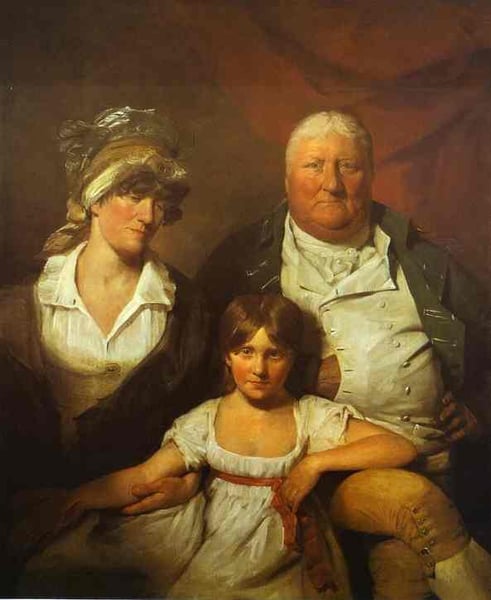
William Chalmers Bethune, his wife Isabella Morison and their Daughter Isabella
Ayrıntılar
David Wilkie sanatçısının William Chalmers Bethune, his wife Isabella Morison and their Daughter Isabella eseri hakkında uzman analizi
Tarz: Romanticism · Tür: portrait
Expert Analysis: William Chalmers Bethune, his wife Isabella Morison and their Daughter Isabella by David Wilkie
Style & Period Context
This portrait exemplifies the Romanticist emphasis on emotional intimacy, individual identity, and the sanctity of family life. Unlike the stiff, formal portrayals of the Neoclassical period, Wilkie’s work captures a private, affectionate moment within a domestic setting—a hallmark of Romantic portraiture that prioritizes psychological depth and personal narrative over idealized grandeur.
Significance Within the Genre
The painting is notable for its triadic family composition, which was a progressive choice in early 19th-century portraiture. By including the daughter alongside both parents, Wilkie shifts focus from single-sitter status symbols to the bonds of kinship and shared identity. The direct gaze of the figures (likely suggested by the title’s naming of each individual) invites the viewer into an intimate sphere, contrasting with more detached aristocratic portraits of the era.
Romanticism’s Core Achievements
- Emotional resonance: The careful rendering of gesture and expression (e.g., a hand on a shoulder, a child’s trusting pose) emphasizes love and unity as central to human experience.
- Domestic realism: Wilkie avoids theatrical backdrop or allegorical props, grounding the sitters in a believable, unidealized space, which aligns with Romanticism’s turn toward authentic, everyday life.
- Individualism: The specific names in the title affirm each sitter’s distinct personhood, rejecting the generic “family portrait” in favor of a celebration of unique personalities—a Romantic ideal.
Final Insight
As a Romantic portrait, this work’s significance lies in its humanization of the sitters: it transforms a commission into a meditation on affection, continuity, and the private world of the middle-class family, thereby expanding the portrait genre’s capacity to convey inner life.
Görsel olarak benzer
İlişkili kompozisyon ve renk paletine sahip 20 eser
Portrait d'Amélie-Justine et de Charles-Edouard Pontois
Adèle Romany
Portrait of V. I. Mitrofanov and M. A. Mitrofanova
Dmitry Levitzky
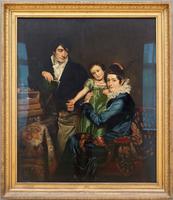
Portrait of the De Hemptinne family
François-Joseph Navez
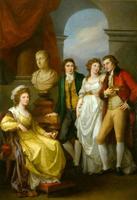
Family portrait of Catherine Petrovna Baryatinskiy
Angelica Kauffman
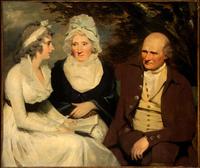
John Johnstone, Betty Johnstone, and Miss Wedderburn
Henry Raeburn
Portrait of V. I. and M. A. Mitrofanovs
Dmitry Levitzky
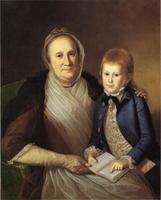
Mrs. James Smith and Grandson
Charles Willson Peale
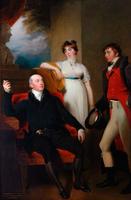
Sir Mark Sykes, Henrietta Masterman Sykes and Tatton Sykes
Thomas Lawrence
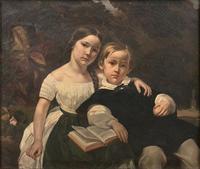
Two children reading
Alfred Dehodencq
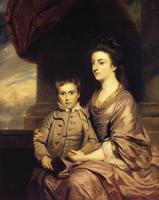
Elizabeth, Countess of Pembroke and Her Son
Joshua Reynolds
John Small (1797–1847), and His Son
William Dyce
John Parker and his Sister Theresa
Joshua Reynolds
Les joueurs de cartes
Johann Anton de Peters
Mrs Bracebridge and Her Daughter Mary
George Romney
The Heygate Family
Ozias Humphry
LHEUREUSE FAMILLE
Jean-Baptiste Charpentier the Elder
Portrait of the Prince de Wagram and his daughter Malcy Louise Caroline Frederique Napoléon Alexandre Berthier
Franz Xaver Winterhalter
Portrait of madame de Vylder and her son
François-Joseph Navez
Robert Goldsborough and Family
Charles Willson Peale
Família Barros
Domingos Sequeira