Analisi esperta di Catharina Hooft with her Nurse di Frans Hals
Stile: Baroque · Genere: portrait
Artwork: Catharina Hooft with her Nurse (ca. 1620)
Artist: Frans Hals
Style: Baroque
Genre: Portrait
Expert Analysis
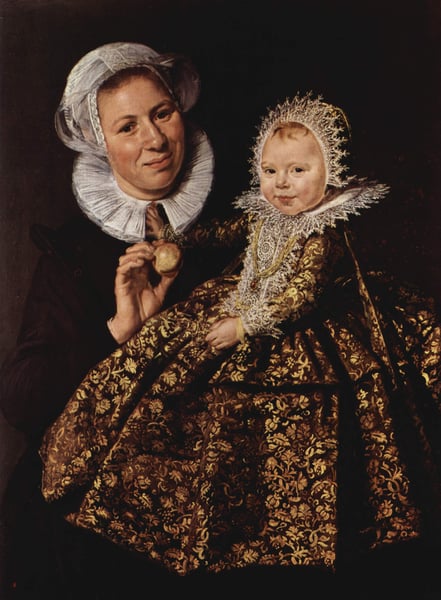
Frans Hals’s Catharina Hooft with her Nurse stands as a remarkably intimate and psychologically astute work within the Dutch Baroque portrait tradition. Unlike the formal, stiff conventions of many contemporary family or child portraits, Hals captures a fleeting moment of genuine human connection—a revolutionary approach that elevates this painting beyond mere likeness.
Composition and Innovation
The composition breaks from typical hierarchical portraiture. Rather than placing the child in a stiff, adult-like pose, Hals shows the toddler Catharina turning toward her nurse with a playful, trusting expression. The nurse, in turn, looks down at her charge with a warm, slightly amused gaze, her hand gently steadying the child. This interaction creates a diagonal line of energy across the canvas, drawing the viewer into the private, affectionate space between them. The nurse’s informal pose and direct engagement with the child was unusual for the time, celebrating the role of the caretaker rather than relegating her to the background.
Baroque Dynamism and Technique
True to the Baroque spirit, Hals employs his signature loose, lively brushwork—visible, brisk strokes that imbue the fabrics (the child’s delicate white dress, the nurse’s crisp cap and bodice) with texture and movement. The light falls softly on Catharina’s round face and the nurse’s hands, while shadows deepen the folds of clothing, creating a sense of three-dimensionality. This technique, later called alla prima, gives the painting an immediacy and sense of life that was revolutionary for portraiture.
Psychological Depth and Significance
What makes this work especially significant is its unidealized, empathetic humanity. The child’s direct, open gaze and the nurse’s subtle smile convey trust and tenderness without sentimentality. Hals avoids the stiff formality of many 17th-century children’s portraits, which often depicted youngsters as miniature adults. Instead, he captures the autonomy of childhood and the emotional bond with a caregiver—a theme that would resonate with later artists like Vermeer and the Impressionists.
In the context of Hals’s oeuvre, this portrait demonstrates his unmatched ability to distill character and relationship through spontaneous gesture and painterly freedom. It remains a cornerstone of Baroque portraiture for its naturalism, psychological insight, and masterful handling of light and texture.
Museum / Gallery
Visivamente simili
20 opere con composizione e palette affini
Portrait of a Woman and Child
Anthony van Dyck
Young Woman with a Child
Anthony van Dyck
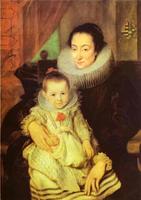
Marie Clarisse, Wife of Jan Woverius, with Their Child
Anthony van Dyck
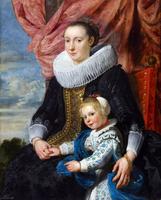
Portrait of a Lady with Her Daughter
Cornelis de Vos
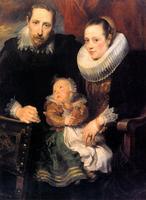
Family Portrait
Anthony van Dyck
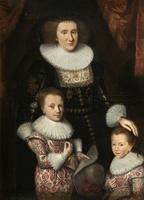
Jean, Countess of Perth, with Her Two Sons (after George Jamesone)
Adam de Colone
Antonetta Wtewael
Joachim Wtewael
Self-Portrait with Wife Catherine de Hemelaer and Son Jan Erasmus Quellinus
Erasmus Quellinus the Younger
Mother and Child
Cornelis de Vos
Mrs. Richard Patteshall (Martha Woody) and child
Thomas Smith
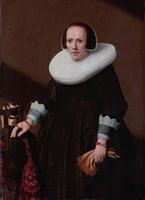
Geertruyd Reael, Wife of Philips Denijs
Huygh Pietersz Voskuyl
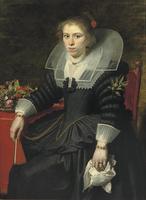
Portrait of a young lady, said to be Comtesse de Ribaucourt
Cornelis de Vos
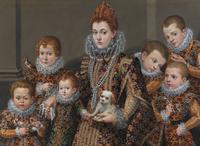
Bianca degli Utili Maselli, holding a dog and surrounded by six of her children
Lavinia Fontana
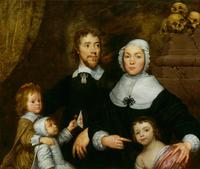
Portrait of Richard Streatfeild Family
William Dobson
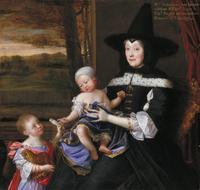
La señora Salesbury con sus nietos
John Michael Wright
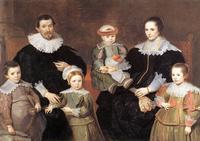
The Family of the Artist
Cornelis de Vos
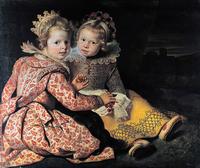
Magdalena and Jan-Baptist de Vos, Children of the Painter
Cornelis de Vos
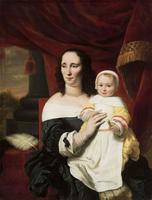
Portrait of Johana De Geer-trip with Daughter
Ferdinand Bol
A Portrait of a Young Woman
Rembrandt
Family Portrait
Cornelis de Vos