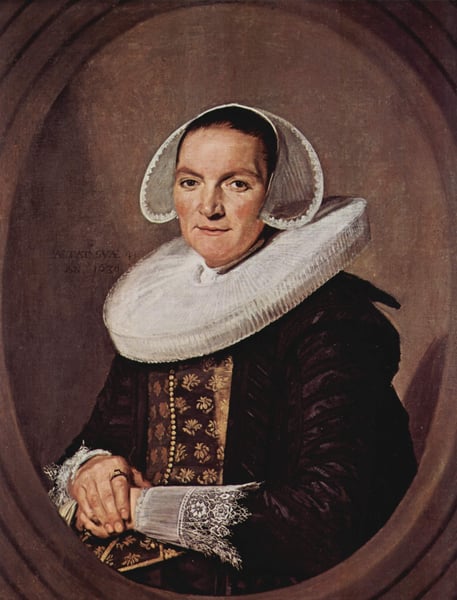
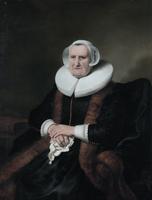
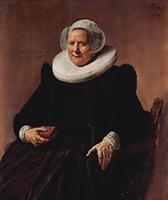
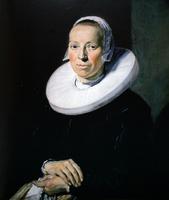
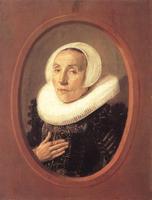
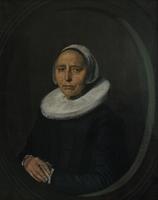
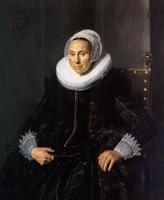
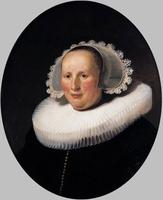
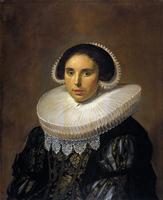
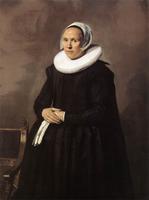
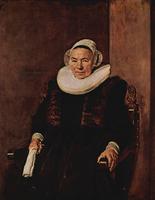
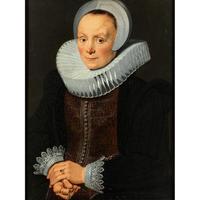
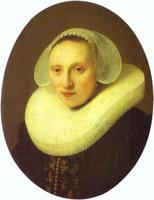
This portrait by Frans Hals exemplifies the Baroque period’s emphasis on psychological depth and naturalistic detail. Hals captures the sitter’s composed dignity through the subtle tension of folded hands—a motif that conveys both piety and self-possession, typical of Dutch Golden Age portraiture. The work’s significance lies in its departure from rigid formalism; Hals’ loose brushwork and attention to the subtle play of light across the woman’s features and clothing evoke a sense of immediate presence, making the portrait feel both intimate and monumental. Within Baroque portraiture, this painting stands out for its ability to balance formal composition with a vivid, human immediacy, reflecting the era’s fascination with individual character and the fleeting nature of life.