Crucifixion
Экспертный разбор работы «Crucifixion» художника Emil Nolde
Стиль: Expressionism · Жанр: religious painting
As an expert art historian, I will provide an analysis of Emil Nolde’s Crucifixion based solely on the supplied facts: that it is an Expressionist religious painting.
Expert Analysis: Emil Nolde’s Crucifixion
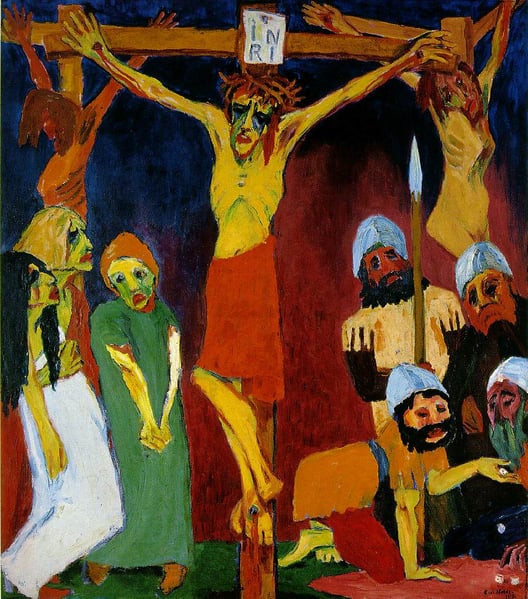
Emil Nolde’s Crucifixion is a landmark achievement within the Expressionist movement and a radical reimagining of the traditional religious painting genre. Its significance lies in how Nolde weaponizes the core tenets of Expressionism—subjective emotion, distorted form, and aggressive color—to strip the Crucifixion of centuries of pious, idealized iconography and present it as a raw, visceral, and profoundly human catastrophe.
Significance within Expressionism:
- Emotional Over Narrative: Unlike Renaissance or Baroque Crucifixions that focus on theological narrative or compositional harmony, Nolde’s work prioritizes pure psychological impact. The figures are not anatomically correct saints but vessels of suffering, their faces reduced to masks of anguish or indifference. This distortion is a hallmark of Expressionism: the external form is twisted to reveal an internal, spiritual truth.
- Color as Violent Force: Nolde, a master colorist, uses jarring, non-naturalistic hues—clashing yellows, deep blues, and burning reds—not to depict a historical event but to create an atmosphere of feverish turmoil. The intense, almost sickly green of Christ’s body and the sulphurous yellow sky amplify the sense of agony and foreboding. This chromatic aggression is pure Expressionist innovation: color itself becomes the vehicle for emotional, even spiritual, crisis.
- Primitivism and Raw Spirituality: In the Crucifixion, Nolde channels a raw, almost tribal intensity. The figures are blocky, their faces primitive and mask-like, echoing the influence of African and Oceanic art that fascinated early 20th-century modernists. This “primitivism” was not mere exoticism; it was a deliberate attempt to bypass centuries of refined art and tap into a more direct, instinctive religious feeling.
Significance within Religious Painting:
Nolde’s Crucifixion is profoundly radical because it refuses to comfort. Where traditional religious painting often offers redemption, dignity, or theological order, Nolde offers only chaos and exposure. The central figure is not a serene Savior but a broken, corporeal body. The surrounding figures—perhaps soldiers, mourners, or onlookers—are not clearly differentiated; they are a chorus of shared, disorienting grief.
This work helped redefine religious art for the modern age, transforming it from a doctrine-illustrating tool into a vehicle for existential inquiry. It embodies the Expressionist belief that the most authentic spirituality is found not in idealized beauty, but in the raw, unvarnished experience of human suffering.
Final Assessment:
Emil Nolde’s Crucifixion is significant precisely because it is unsettling. It demonstrates how Expressionism could seize a centuries-old subject and, through radical stylization and emotional audacity, make it feel immediate, dangerous, and new. It stands as a testament to art’s power to strip away convention and confront the most profound questions of faith and pain with uncompromising directness. This painting is a keystone in the history of religious Expressionism, showing the genre at its most transformative and provocative.
Визуально похожие
20 работ с близкой композицией и палитрой
Crucification
Minas Avetisyan
Resurrection
Marc Chagall
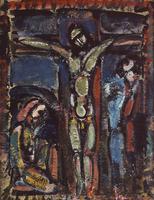
Crucifixion
Georges Rouault
Modern Christ
Endre Bartos
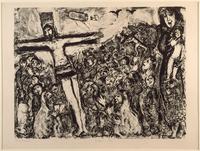
Crucifixion
Marc Chagall
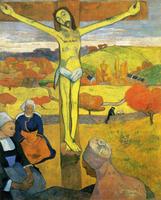
Yellow Christ
Paul Gauguin
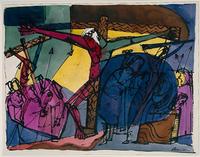
Golgotha
Romare Bearden
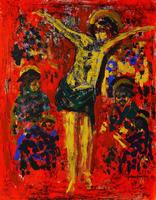
Jesus
George Stefanescu
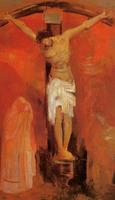
The Crucifixion
Odilon Redon
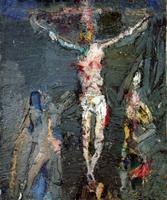
Crucifixion
Eugene Leroy
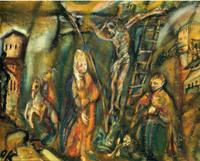
Crucifixion (Golgotha)
Oskar Kokoschka
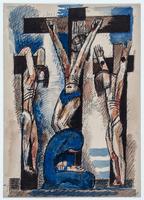
Crucifixion
Marcel Gromaire
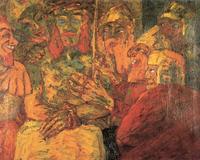
Mocking of Christ
Emil Nolde
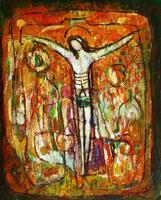
Jesus
George Stefanescu
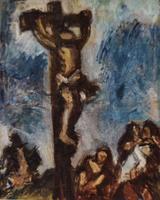
Golgota
Bela Czobel
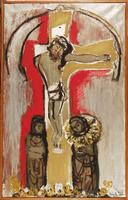
Hungarian Christ
Piroska Szanto
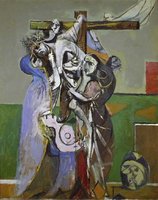
The Deposition
Graham Sutherland
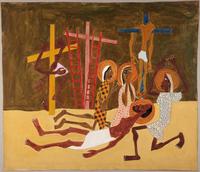
Lamentation
William H. Johnson
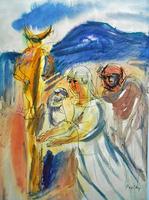
Rilke: The Duino Elegies IV.
Maria Bozoky
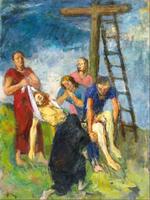
Berény Róbert, Levétel a Keresztről
Berény Róbert