Analysis of "Quiet Pasture" by Eyvind Earle
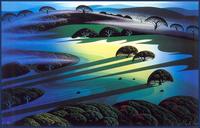
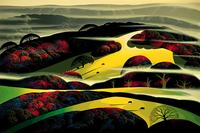
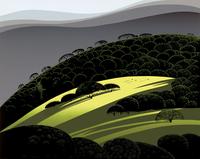
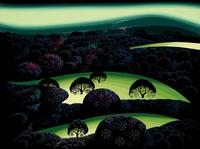
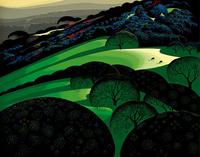
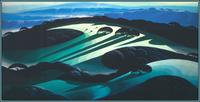
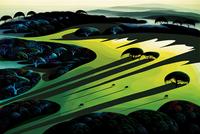
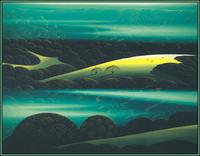
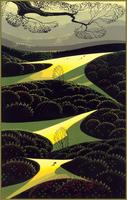
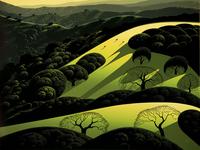
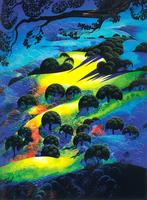
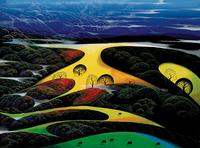
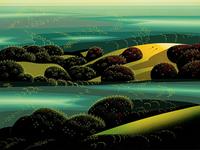
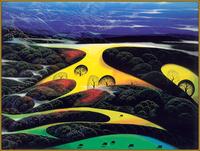
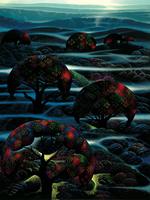
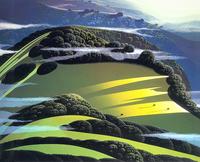
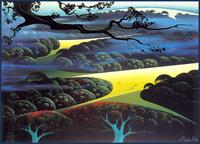
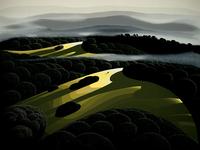
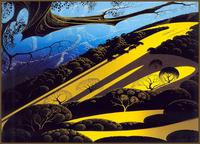
Eyvind Earle’s Quiet Pasture is a masterful example of Magic Realism in landscape painting. Magic Realism is characterized by the fusion of precise, realistic detail with an undercurrent of the uncanny or dreamlike—transforming the ordinary into something timeless and slightly mysterious. In this work, the “pasture” is anything but mundane: Earle’s meticulous rendering of light, texture, and spatial clarity creates a scene that feels both familiar and hauntingly still, as if caught in a moment outside of normal time.
The significance of Quiet Pasture within Earle’s oeuvre and the Magic Realist movement lies in its ability to elevate a simple rural subject into a meditative, almost surreal vision. The painting captures a perfect balance between naturalism and stylized geometry—Earle’s hallmark—imbuing the landscape with a quiet, enigmatic presence that invites prolonged contemplation. It is this very tension between the real and the imagined that defines the power of Magic Realism, and Quiet Pasture stands as a serene yet profound artifact of that tradition.