Экспертный разбор работы «The Days Catch» художника Eugene de Blaas
Стиль: Academicism · Жанр: portrait
Expert Analysis: "The Days Catch" by Eugene de Blaas
Eugene de Blaas (1843–1932), a master of the late-nineteenth-century Academic style, is celebrated for his meticulously executed genre portraits that idealize everyday life. "The Days Catch" stands as a quintessential example of Academicism’s devotion to polished technique, harmonious composition, and narrative charm.
Significance within Academicism:
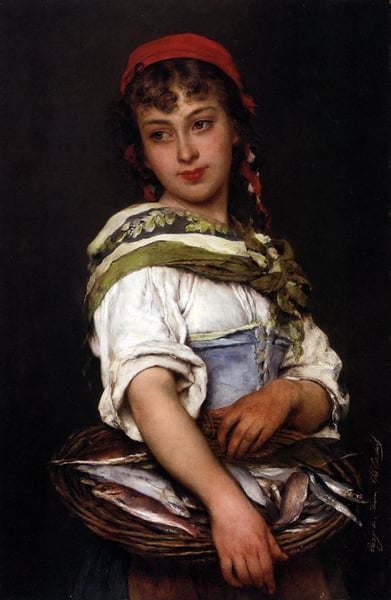
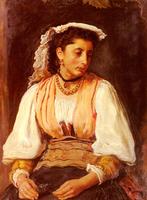
The painting typifies the academic emphasis on classical draftsmanship and lifelike rendering. De Blaas employs a smooth, nearly invisible brushstroke to achieve a porcelain-like finish on the figure’s skin, while the textures of fabric, fish, and wicker basket are rendered with virtuosic precision. This technical perfection—a hallmark of the Academic tradition—elevates a humble moment of labor into a timeless, idealized scene. The soft, diffused lighting and balanced color palette (warm earth tones punctuated by the silvery gleam of fish) create a serene, almost theatrical atmosphere, reinforcing the academic goal of ennobling ordinary subjects.
Portrait-Genre Fusion:
Although categorized as a portrait, the work functions as a hybrid: the figure’s direct gaze and individualized features satisfy portraiture’s need for likeness, while the fishing net and catch situate the sitter within a distinct narrative—a day’s work on the Venetian lagoon. This fusion was a hallmark of De Blaas’s popularity, as it allowed viewers both to admire a beautifully painted face and to engage with a sentimental story of honest labor. The young woman’s rosy cheeks and content expression romanticize poverty, reflecting the period’s taste for “sympathetic realism” that avoided the harsher truths of the naturalist movement.
Cultural and Regional Context:
De Blaas spent much of his career in Venice, and "The Days Catch" belongs to his celebrated series of Venetian genre scenes. These works fed a growing 19th-century appetite for picturesque, exotic glimpses of Italian life, particularly among British and American collectors. The painting’s significance lies in its ability to codify a nostalgic vision of Venice—not as a decaying city but as a place of timeless beauty and simple virtue. De Blaas’s academic polish and idealization made these scenes widely accessible, securing his place as a leading Academic painter of the era.
In sum, "The Days Catch" is significant for its flawless execution, its seamless blend of portraiture and genre, and its role in perpetuating a romanticized Academic vision of 19th-century Venice. It remains a testament to the skill and appeal of late Academic art, even as avant-garde movements challenged its primacy.
Визуально похожие
20 работ с близкой композицией и палитрой
The cherry girl
Émile Auguste Hublin

The Milkmaid
Eugene de Blaas
The Sicilian orange seller
Vito d'Ancona
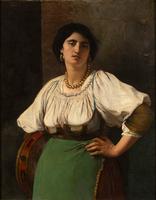
Woman with a tambourine
Michele Cammarano

Pisan Girl with Basket of Oranges and Lemons
Pierre-Auguste Cot
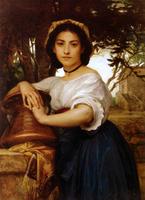
Young Roman water carrier
Diogène Maillart

The Knitter
William-Adolphe Bouguereau

The Milkmaid
Jean-Baptiste Greuze
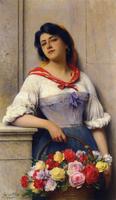
The Flower Girl
Eugene de Blaas
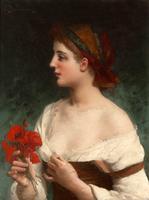
Untitled
Jules-Frédéric Ballavoine
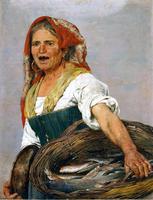
The fishmonger
Pasquale Celommi

At the Edge of the Brook
William-Adolphe Bouguereau

A friend in need
Émile Auguste Hublin
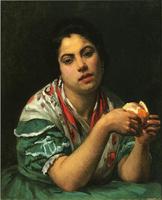
Peasant Woman Peeling an Orange
Mary Cassatt

Young dreamy laundress
Ernest Hébert
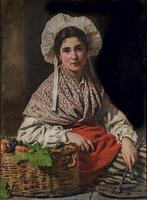
Fruit seller; costume of Normandy
Eleuterio Pagliano

Little Girl with a Blue Bowl
William-Adolphe Bouguereau
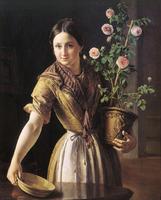
A girl with a pot of roses
Vasily Tropinin

A Neapolitan beauty
Adolphe Piot
Pippa
John Everett Millais