Analisi esperta di Novaya square di Fyodor Alekseyev
Stile: Neoclassicism · Genere: veduta
Artwork Analysis: "Novaya Square" by Fyodor Alekseyev
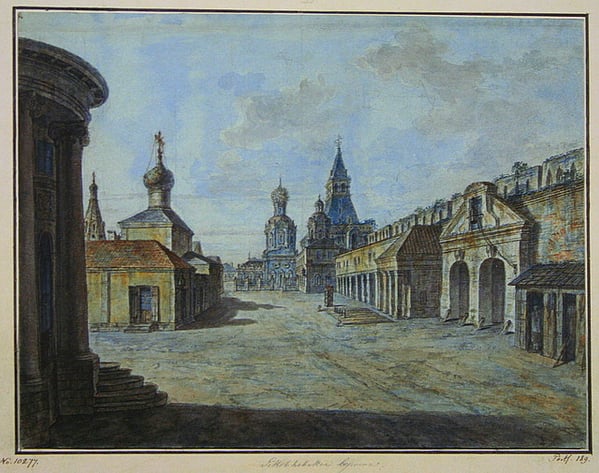
Fyodor Alekseyev’s “Novaya Square” stands as a masterful example of the veduta genre within the Neoclassical tradition, offering a precise, idealized view of urban space that bridges documentary record and artistic refinement. Painted during a period when Russia was embracing Western European artistic conventions under Catherine the Great and her successors, Alekseyev’s work is significant for its fusion of rational order (a Neoclassical hallmark) with the topographical accuracy demanded by veduta painting.
What makes this artwork significant:
-
Pioneering Russian Veduta – Alekseyev is often called the “Russian Canaletto,” and “Novaya Square” exemplifies his role in elevating the veduta from mere city portraiture to a refined Neoclassical genre. The composition employs a precise linear perspective, drawing the eye along clean architectural lines toward a distant focal point—a technique that mirrors the Neoclassical reverence for clarity, symmetry, and harmony.
-
Documentary and Ideological Value – The painting captures a newly redeveloped square in Moscow (or possibly St. Petersburg), showcasing the city’s transformation under Enlightenment-era planning. The orderly facades, open space, and balanced proportions reflect the ideals of rational urbanism, while the presence of well-dressed figures and carriages suggests a society in step with European modernity. Alekseyev’s work thus serves both as a historical record and as a propaganda of progress.
-
Light and Atmosphere – Unlike the more dramatic chiaroscuro of Baroque vedute, Alekseyev bathes the scene in an even, cool northern light, softening shadows and emphasizing the geometry of the architecture. This atmospheric clarity aligns with Neoclassicism’s preference for calm, reasoned beauty over emotional intensity, and it allows the viewer to appreciate the square’s design as an embodiment of civic virtue.
-
Influence and Legacy – Alekseyev’s combination of Italianate veduta techniques (learned during his studies abroad) with distinctly Russian subject matter established a national school of cityscape painting. “Novaya Square” is a key example of how Neoclassicism was adapted in Russia: not as a slavish imitation of ancient ruins, but as a tool to celebrate contemporary imperial achievement through ordered, luminous vistas.
In summary, “Novaya Square” is significant for its seamless synthesis of Neoclassical compositional discipline with the documentary tradition of the veduta, offering a window into Russia’s Enlightenment-era urban ambitions while asserting Alekseyev’s role as a founding figure of Russian landscape and cityscape art.
Visivamente simili
20 opere con composizione e palette affini
View from the Lubyanka square to Vladimirskiye gate
Fyodor Alekseyev
Moskvoretskaya Street
Fyodor Alekseyev
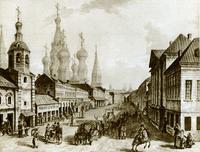
View of Moskvoretskaya Street, Zaryadye, Moscow
Fyodor Alekseyev
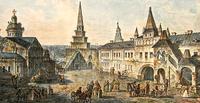
Church of St. John the Baptist, Borovitskaya tower and Stablings prikaz (department) in the Kremlin
Fyodor Alekseyev
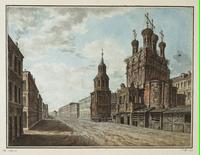
Church of Nikola the Big Cross on Ilyinka
Fyodor Alekseyev
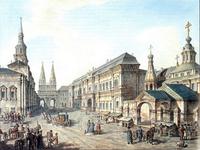
North side of Red Square
Fyodor Alekseyev
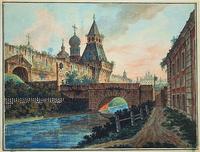
View of Vladimirskiye (Nikolskiye) Gate of Kitai gorod
Fyodor Alekseyev
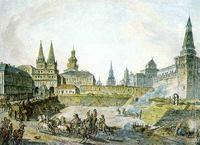
View of Voskresenskiye (Resurrection) Gates of Kitay gorod, Nikolskye Gate of Kremlin and Neglinny bridge.
Fyodor Alekseyev
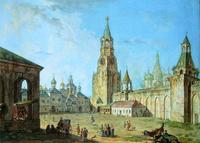
View from the Kremlin's Spassky Gate
Fyodor Alekseyev
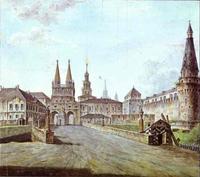
View of Moscow Near the Iversky Gate of the Kremlin
Fyodor Alekseyev
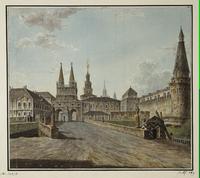
View of Voskresenskiye (Resurrection) and Nikolskiye Gates
Fyodor Alekseyev
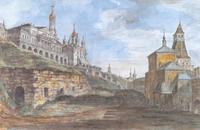
View of the Sovereign's Palace and the Church of the Annunciation in the Rye yard
Fyodor Alekseyev
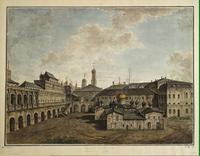
Terem and Church of Our Savior in a pine forest in the Kremlin
Fyodor Alekseyev
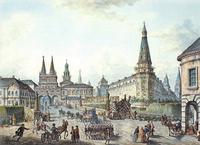
View of Voskresenskiye (Resurrection) and Nikolskiye Gates
Fyodor Alekseyev
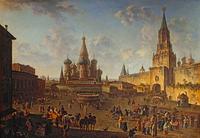
Red Square, Moscow
Fyodor Alekseyev
New Jerusalem Monastery
Fyodor Alekseyev
St Petersburg
Joseph Andreas Weiss
View of Lubyanka
Fyodor Alekseyev
Ivan the Great Bell Tower and Chudov Monastery in the Kremlin
Fyodor Alekseyev
Bogojavlensky Anastadjin Monastery in Kostroma
Vasily Sadovnikov