Analisi esperta di David di Frederic Leighton
Stile: Academicism · Genere: religious painting
Expert Analysis: "David" by Frederic Leighton
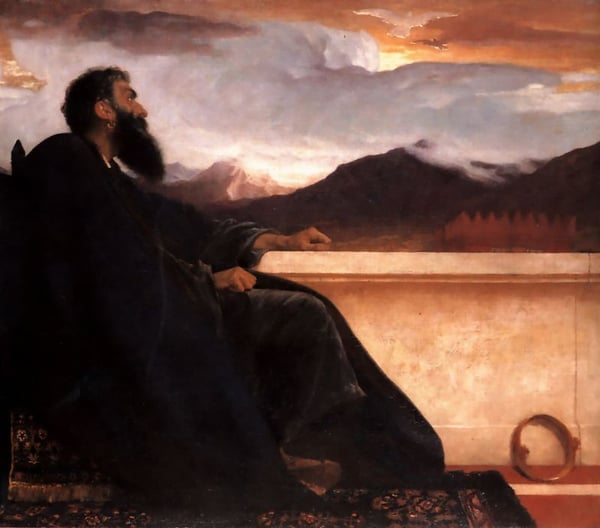
As a masterwork of Academicism, Frederic Leighton’s David exemplifies the movement’s devotion to idealized form, classical balance, and rigorous draftsmanship. Painted within the genre of religious painting, the work stands out for its seamless fusion of biblical narrative with the neoclassical aesthetics that defined Leighton’s oeuvre and the broader Victorian academic tradition.
Significance within Academicism:
Leighton, a leading figure of the Royal Academy, employed the hallmarks of Academicism—smooth, polished surfaces, harmonious proportions, and a restrained color palette—to elevate the Old Testament shepherd-king into a timeless, sculptural ideal. The figure of David is rendered with anatomical precision and a calm, heroic contrapposto reminiscent of Greek statuary, signaling the movement’s reverence for antique art. Unlike earlier, more dramatic or emotional depictions of David (e.g., Caravaggio or Donatello), Leighton presents a serene, contemplative youth, emphasizing grace over turmoil, which aligns perfectly with the Academic credo of refining nature to achieve universal beauty.
Significance within Religious Painting:
Leighton’s treatment of a biblical subject through an academic lens redefines religious art for the 19th century. Rather than focusing on the moment of battle with Goliath or the pathos of sin, Leighton chooses a quieter, pre-monarchic David—perhaps meditating on his harp or receiving divine inspiration. This introspective approach reflects the period’s shift toward moral and aesthetic idealism in religious narratives, making the sacred accessible through formal perfection. The painting’s calm dignity and meticulous detail (such as the intricate drapery and idealized features) transform a familiar story into a lesson in virtue and beauty, resonating with Victorian values of piety and refinement.
Conclusion:
David is significant as a prime example of Academicism’s ability to merge classical form with spiritual content. Leighton’s mastery of line, light, and composition elevates a religious icon to a timeless archetype, showcasing how the academic style could reinvigorate traditional genres. The work stands as a testament to the era’s belief that art should instruct, elevate, and enchant through disciplined beauty—a legacy that secures Leighton’s place as a pillar of Victorian Classicism.
Museum / Gallery
Visivamente simili
20 opere con composizione e palette affini
Nicodemus Visiting Jesus
Henry Ossawa Tanner
Monk on Terrace
Carl Blechen
Sketch for the Portrait of Muhammad Ali, Viceroy of Egypt
Jean-François Portaels
Portrait of a Man
Ivan Mrkviсka
L'Esule
Antonio Ciseri
St. Paul at his Writing Desk
Rembrandt
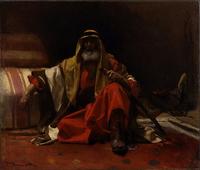
An arab sheik
Leon Bonnat
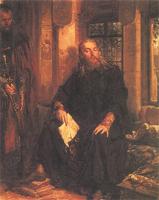
Wladyslaw White in Dijon
Jan Matejko
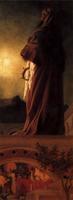
Joseph
Frederic Leighton
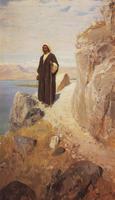
And he returned to Galilee in the power of the Spirit
Vasily Polenov
Figure of an apostle, turned right
Jean Auguste Dominique Ingres
Self-portrait
Arnold Böcklin
Blackbearded old man
Vasily Surikov
Apóstolo São Paulo
Jose Ferraz de Almeida Junior
The Slave Market
Jean-François Portaels
Old Rabbi
Rembrandt
Young Ladies on a Terrace in Tangiers
Rudolf Ernst
Allegory of Winter
Giovanni Francesco Romanelli
The Vendramin Family Venerating a Relic of the True Cross
Titian
Moses views the Promised Land
Frederic Leighton