Analisi esperta di Desdemona di Frederic Leighton
Stile: Academicism · Genere: literary painting
Expert Analysis: "Desdemona" by Frederic Leighton (c. 1879–1880)
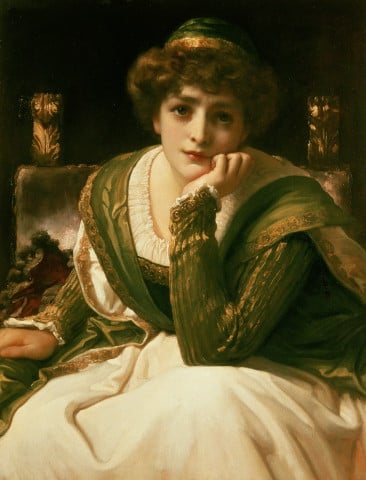
As a quintessential work of Academicism, Leighton’s Desdemona elevates literary painting through its masterful synthesis of classical idealism, psychological nuance, and technical precision. The work derives its subject from Shakespeare’s Othello, capturing Desdemona not at a moment of dramatic action but in a suspended, introspective state—likely just before her tragic death. This choice reflects the Academicist preference for conveying narrative through restrained, timeless gestures rather than theatrical emotion.
Significance within Academicism:
- Idealized form: Leighton, a leading figure of the Royal Academy, renders Desdemona with marble-like skin, perfect contrapposto, and flowing drapery that echoes Greco-Roman sculpture. The figure’s serene composure and downward gaze emphasize her innocence and vulnerability, aligning with the Academicist goal of elevating moral themes through beauty.
- Literary synthesis: The painting transforms a specific Shakespearean scene into a universal meditation on fate and purity. Desdemona’s closed eyes and folded hands suggest prayer or acceptance, a departure from the violent climax of the play, allowing the viewer to contemplate her internal tragedy.
- Technical mastery: Leighton’s meticulous brushwork—seen in the translucent fabric, the subtle chiaroscuro modeling of the face, and the warm, muted palette—demonstrates the Academic hallmark of finish. The composition’s pyramid structure and balanced use of negative space create a harmonious, almost funereal calm.
Why it matters: In an era when Academicism faced challenge from Impressionism and Pre-Raphaelite intensity, Desdemona reaffirms the staying power of classical discipline. Leighton proves that literary painting need not be melodramatic; instead, it can distill a story into its most profound, poetic essence. The work remains a benchmark for how Academic artists reconciled narrative depth with formal perfection, embodying the Victorian ideal of art as both morally instructive and exquisitely crafted.
Visivamente simili
20 opere con composizione e palette affini
Portrait of Ekaterina Vladimirovna Rodzianko
Vladimir Borovikovsky
Portrait of Mrs. Drummond
Thomas Gainsborough
Julie Von Woyna
Friedrich von Amerling
Countess Skavronskaia
Louise Elisabeth Vigee Le Brun
Portrait of Princess Anna Alexandrovna Galitzin
Louise Elisabeth Vigee Le Brun
Madame David
Jacques-Louis David
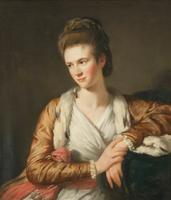
Portrait of a Woman (called 'Anne Craster, d.1832')
Nathaniel Hone the Elder
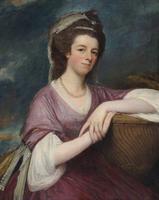
Lady Elizabeth (Scot) Lindsay (1763–1858), Countess of Hardwicke
George Romney
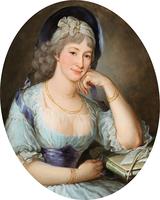
Portrait of Countess Marie Ernestine Esterhazy Starhemberg
Barbara Krafft
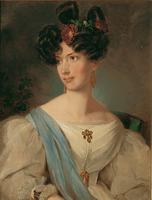
Lady portrait
Peter Fendi
Rebecca Boylston
John Singleton Copley
Resting beauty
Wladyslaw Czachorski
Hon. Margaret Mercer Elphinstone
Charles Turner
Portrait of Rebecca Boylston
John Singleton Copley
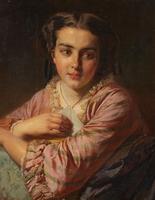
Portrait of a young woman
Felix Schlesinger
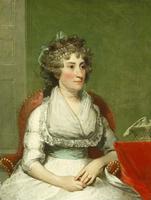
Catherine Yates Pollock (Mrs. George Pollock)
Gilbert Stuart
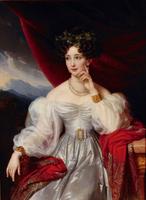
Princess Sophie of Bavaria
Joseph Karl Stieler
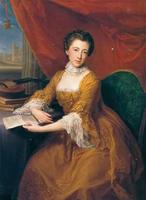
Portrait of Lady Margaret Georgiana Poyntz
Pompeo Batoni
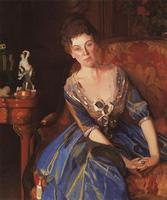
Portrait of E. Oliv
Konstantin Somov
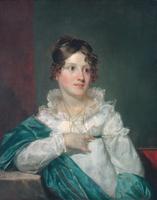
Mrs. Daniel DeSaussure Bacot
Samuel Morse