
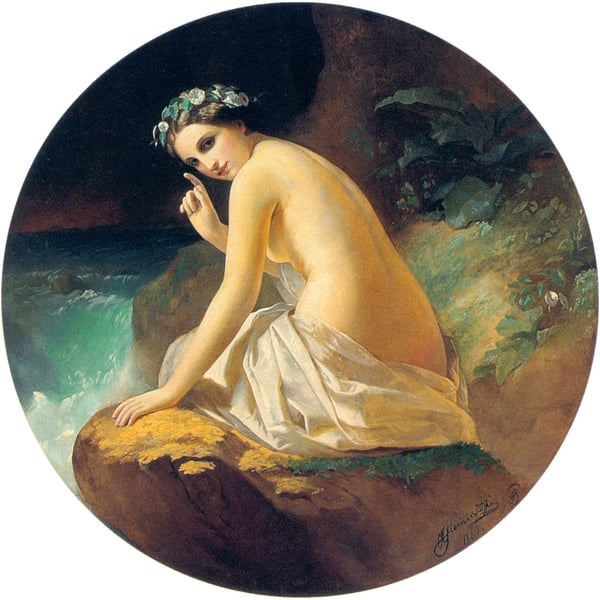
Expert analysis of Henryk Siemiradzki’s Nimfa
Style: Academicism · Genre: mythological painting
Expert Analysis of "Nimfa" by Henryk Siemiradzki
Henryk Siemiradzki’s "Nimfa" stands as a quintessential example of Academicism at its most technically polished and thematically serene. Within the genre of mythological painting, this work embodies the core values of the academic tradition: idealized beauty, masterful draftsmanship, and a reverent engagement with classical antiquity.
Significance within Academicism: Siemiradzki was a leading figure of the late 19th-century academic school, closely associated with the St. Petersburg Academy and the Munich circle. "Nimfa" demonstrates the academic emphasis on flawless anatomy, luminous color harmony, and balanced composition. The figure of the nymph is rendered with smooth, almost enamel-like skin tones, set against a soft, atmospheric landscape—a technique that prioritizes idealized naturalism over raw expression. This perfection of surface and form is the hallmark of Academicism’s pursuit of a timeless, universal beauty.
Significance as a Mythological Painting: As a mythological work, "Nimfa" does not depict a dramatic narrative but rather a mood of idyllic reverie. The nymph—a minor nature deity from Greek and Roman lore—serves as a vehicle for exploring the human connection to an untroubled, golden-age past. Siemiradzki avoids the bombast common in history painting; instead, he captures a quiet, sun-drenched moment of solitude. This focus on pastoral tranquility aligns with the era’s fascination with Arcadia, offering viewers an escape into a world of classical harmony.
What Makes the Work Significant: The painting is significant for its synthesis of academic discipline with poetic atmosphere. Siemiradzki’s ability to render the delicate interplay of light on skin and water, while maintaining a sculptural solidity of form, reveals his debt to Renaissance masters like Raphael and Titian, as well as his own contemporaries in the Munich School. "Nimfa" is not revolutionary but rather the culmination of a centuries-old tradition—a testament to academic painting’s enduring power to evoke beauty and nostalgia. It reminds us that in the hands of a master, even a conventional mythological subject can achieve a transcendent, almost dreamlike clarity.
Visually similar
20 works with related composition and palette
Después del baño
Andrei Belloli
Susanna and the Elders
Pieter van Hanselaere
Naiad
Charles-Andre van Loo (Carle van Loo)
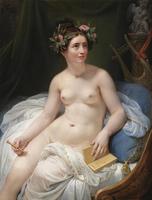
The Poetess Sappho
Jacques-Louis David
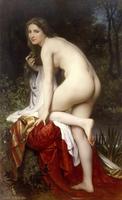
Bather
William-Adolphe Bouguereau
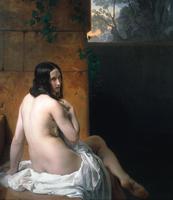
Susanna at her Bath
Francesco Hayez
Musidora
Thomas Sully
Mary Magdalene in the Desert
Emmanuel Benner
A Pastoral Idyll
Louis Léopold Robert
Pandora
Jules Joseph Lefebvre
After the Bath
William-Adolphe Bouguereau
By Summer Seas
Herbert James Draper
A maiden lamenting in the woods
Narcisse-Virgilio Diaz
The bather
Adolphe Piot

Woodland bather holding a butterfly
Vaclav Brozik
Woman Bathing in a Waterfall
Oskar Begas
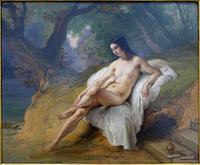
Bather
Francesco Hayez
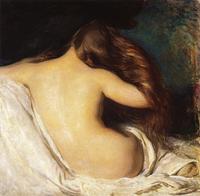
Woman Drying Her Hair
Joseph DeCamp
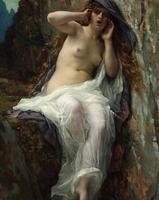
Écho
Alexandre Cabanel
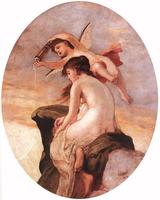
Amor and Psyche
Károly Lotz