Analisi esperta di Plafon Jutrzenka di Henryk Siemiradzki
Stile: Academicism · Genere: sketch and study
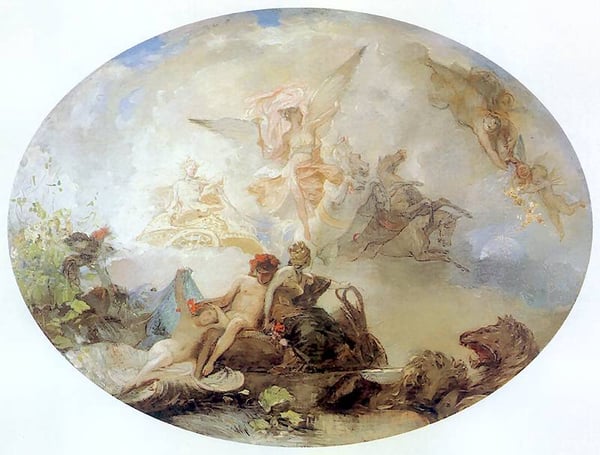
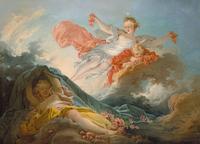
Henryk Siemiradzki’s "Plafon Jutrzenka" (c. 1880s–1890s) is a revealing sketch and study that illuminates the working methods of Academicism at its peak. While Siemiradzki is famed for his monumental, polished canvases of Greco-Roman and biblical scenes, this preparatory work offers rare insight into how a master of the academic tradition conceived a ceiling decoration (the “plafon”) dedicated to the goddess of dawn, Jutrzenka (Aurora).
Significance within Academicism:
-
Demonstration of Academic Process: In the 19th-century Academy, a finished painting was the result of a rigorous sequence of studies—from rough compositional sketches to detailed figure drawings. This piece is a vital intermediate step, showing how Siemiradzki balanced the demands of a large, foreshortened ceiling composition with the classical ideal of clear, harmonious forms.
-
Mastery of Illusionistic Foreshortening: The sketch reveals the artist’s careful planning of perspective from below (di sotto in sù). The figures are arranged to appear as if floating above the viewer, with limbs and drapery drawn in strong diagonal lines that create a sense of upward movement. The study’s loose brushwork allows us to see how Siemiradzki solved the problem of keeping forms legible while animating them with the energy of dawn’s light.
-
Symbolism and Idealization. Jutrzenka, the Polish personification of dawn, is rendered here with the classicizing features and flowing drapery typical of Academic allegory. The sketch preserves the purity of the idea—the goddess scattering roses or light—before it was refined into a more rigid finished ceiling. This immediacy makes the study feel more dynamic and personal than the final, often heavily varnished plafond.
-
Link between Polish Romanticism and International Academicism: Siemiradzki, a Polish artist who worked in Rome and St. Petersburg, bridged local national themes (the Slavic “Jutrzenka”) with the universal language of academic classicism. This sketch, therefore, is not only a technical document but also a cultural artifact showing how Polish myth was elevated to the grand scale of European ceiling painting.
In summary, "Plafon Jutrzenka" is significant because it captures the essence of Academicism’s disciplined creativity: a study that is at once a blueprint for a spectacular illusion and a spontaneous record of the artist’s first encounter with his radiant subject. It reminds us that behind every polished salon masterpiece lies a moment of raw, searching draftsmanship.
Visivamente simili
20 opere con composizione e palette affini

Justice and Fortitude
Giovanni Battista Tiepolo
The liberal arts with their spirits
Nikolaos Gyzis
An Allegory with Venus and Time
Giovanni Battista Tiepolo
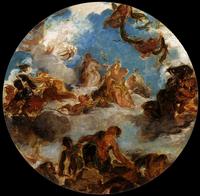
Sketch for Peace Descends to Earth
Eugene Delacroix
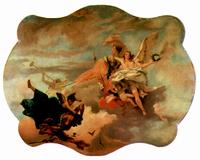
The Triumph of Fortitude and Sapiency
Giovanni Battista Tiepolo
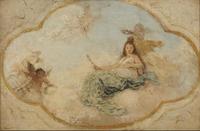
Study for fresco
Gerolamo Induno
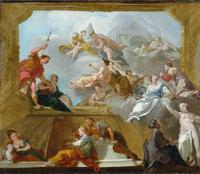
A Representation of the Liberal Arts: Ceiling Design for the State Dining Room at Grimsthorpe Castle
Francesco Sleter
An ethereal beauty with putti in the clouds
Luc-Olivier Merson
The Rising of the Sun
Francois Boucher
The Wedding of Cupid and Psyche
Francois Boucher
Vulcan Presenting Arms to Venus for Aeneas
Francois Boucher
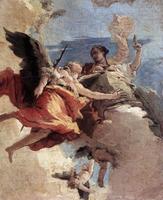
Allegory of Strength and Wisdom
Giovanni Battista Tiepolo
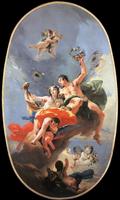
The Triumph of Zephyr and Flora
Giovanni Battista Tiepolo
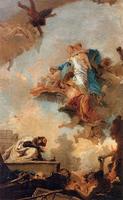
Apparition of the Virgin to St Simon Stock
Giovanni Battista Tiepolo
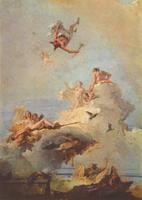
Olympus
Giovanni Battista Tiepolo
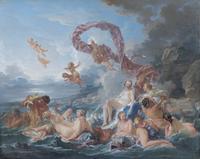
The Birth and Triumph of Venus
Francois Boucher
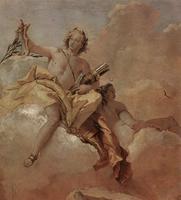
Apollo and Diana
Giovanni Domenico Tiepolo
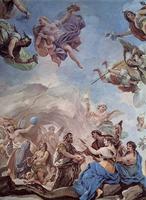
The Creation of Man (detail of decorative ceiling)
Luca Giordano
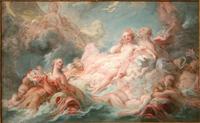
The Birth of Venus
Jean-Honore Fragonard
Aurora Triumphing over Night
Jean-Honore Fragonard