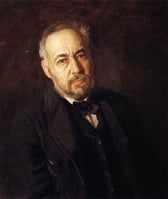
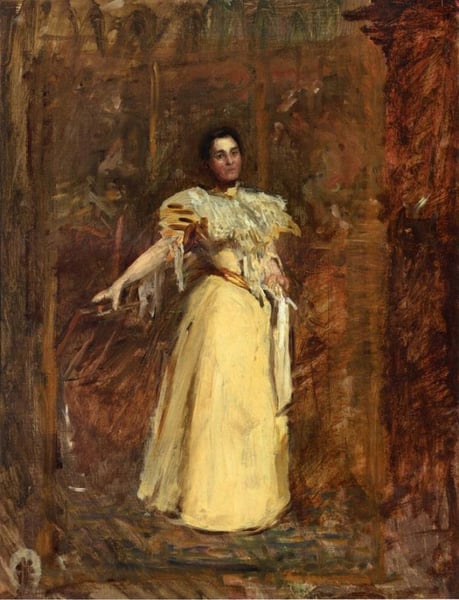
Painting
Analyse experte de Painting de Thomas Eakins
Style : Realism · Genre : portrait
Expert Analysis of Thomas Eakins’ “Painting” (portrait, Realism)
Thomas Eakins, a leading figure of American Realism, created works that pushed the boundaries of objective truth and psychological depth in portraiture. While the specific painting titled “Painting” is not widely documented (it may refer to a less-known work or a generic title), the given facts—artist, style, and genre—allow a focused analysis on what makes Eakins’ approach significant within the Realist tradition.
Commitment to Unvarnished Truth
Eakins rejected the idealized, romanticized portraits of his time. His Realist method demanded rigorous observation of anatomy, light, and character. In his portraits, he often posed subjects in natural, unguarded moments, refusing to flatter or soften their features. This dedication to verisimilitude extended to every detail: the texture of skin, the folds of clothing, and the play of shadow. For a painting simply called “Painting,” the very absence of a grand subject or narrative reinforces Eakins’ belief that art’s highest purpose was to record reality without artifice.
Psychological Penetration
Eakins’ sitters are not merely likenesses—they are psychological studies. He captured the weight of intellect, fatigue, or inner tension through subtle cues: a tightened jaw, a distant gaze, or the strain of hands at rest. In “Painting” (as in his masterworks The Gross Clinic or The Agnew Clinic), the viewer becomes a witness to a private moment, challenged to confront the subject’s humanity. This intensity of character over mere resemblance was radical for its era and anticipated the modernist focus on interiority.
Scientific Precision and Artistic Unity
Eakins’ background in anatomy and photography directly informed his brushwork. He used meticulous perspective, controlled lighting, and a muted, earthy palette to create a sense of immediacy. Even in a portrait, he treated the space around the figure with geometric clarity, often using the background or props to echo the sitter’s profession or temperament. This integration of science and art made his portraits feel like living documents rather than decorative objects.
Significance in the Realist Movement
Eakins’ portraits stand as a counterpoint to the more polished, sentimental Realism of his contemporaries (e.g., Sargent). He dared to depict the flawed, the ordinary, and the intellectually profound. In “Painting,” the very act of naming a work after its medium underscores Eakins’ philosophy: the canvas is not a window to fantasy but a record of a real encounter between artist, subject, and light.
In summary, Thomas Eakins’ “Painting” epitomizes the Realist mission: to see clearly, to represent honestly, and to insist that the truthful depiction of a human face can be as profound as any allegory. His legacy lies in proving that dignity and significance reside in the unadorned facts of life.
Visuellement similaire
20 œuvres à la composition et à la palette proches
Dame in avondtoilet
Isaac Israels
Comedia
Thomas Dewing
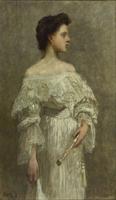
Lonovics Kornélia Kisasszony Képmása
Károly Lotz
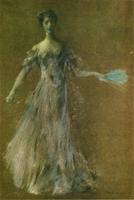
Lady in Lavender Dress
Thomas Dewing
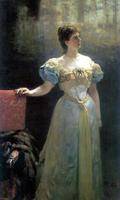
Portrait of Princess Maria Klavdievna Tenisheva
Ilya Repin
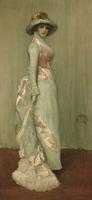
Harmony in Pink and Grey: Lady Meux
James McNeill Whistler
Violet Sargent
John Singer Sargent
The Mirror
William Merritt Chase
Rose and Green: The Iris - Portrait of Miss Kinsella
James McNeill Whistler
Portrait of woman in a costume
Ion Andreescu
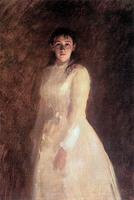
Portrait of a Woman
Ivan Kramskoy
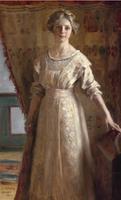
Miss Vibeke Krøyer, full figure standing
Peder Severin Kroyer
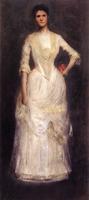
Portrait of Ella Emmet
Thomas Dewing
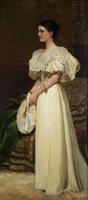
Portrait of Herich Leoni
Károly Lotz
Portrait of Ellade Crespi Colombo
Cesare Tallone
Portrait of Charlotte Berend in white dress
Lovis Corinth
Mrs. Leeds, the later Princess Anastasia of Greece (and Denmark)
Giovanni Boldini
Portrait of Violet, Marchioness of Granby
James Jebusa Shannon
Lady in the mirror with a fan
Pericles Pantazis
Full-length female portrait
Umberto Veruda