Analisi esperta di Portrait of Walt Whitman di Thomas Eakins
Stile: Realism · Genere: portrait
Expert Analysis: Portrait of Walt Whitman by Thomas Eakins
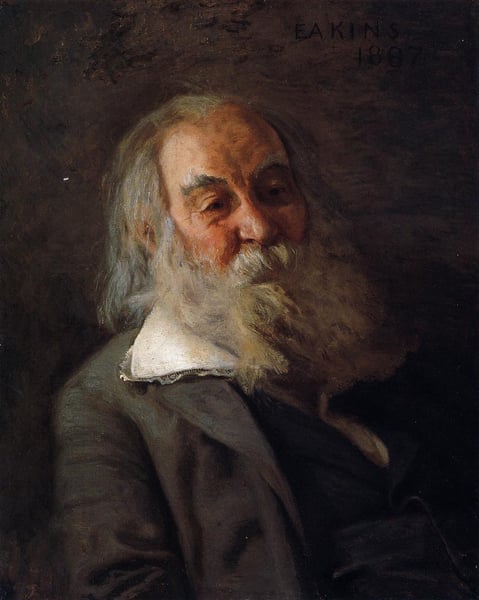
Thomas Eakins’ Portrait of Walt Whitman is a landmark work within the Realist movement and a defining example of the portrait genre’s capacity for unflinching honesty. Painted in the late 19th century, it reflects Eakins’ commitment to depicting his subjects with rigorous observation, rejecting the romanticized or idealized conventions that dominated portraiture in earlier periods.
The portrait’s significance lies in its raw, psychological depth. Eakins presents Whitman—the iconic American poet—not as a polished public figure, but as an aging, introspective man. The sitter’s unbuttoned collar, tousled white hair, and weathered skin are rendered with meticulous detail, emphasizing the physical toll of time. This aligns with Realism’s core principle: to portray life as it is, without flattery or artifice. Eakins’ brushwork captures the texture of flesh and fabric, while the subdued, earthy palette avoids dramatic lighting, grounding the image in a quiet, contemplative atmosphere.
Crucially, the painting subverts the grand tradition of portraiture. Where many contemporaries sought to elevate their subjects, Eakins treats Whitman with a democratic intimacy. The poet’s direct gaze and relaxed posture convey a sense of candid self-possession, mirroring the free-verse, unpretentious spirit of Whitman’s own poetry. This approach was radical for its time—it prioritized truth over beauty, making the portrait a touchstone for later Realist and even modernist portraiture.
In the context of Eakins’ career, the work exemplifies his belief that a portrait should reveal character rather than status. By focusing on Whitman’s humanity—his weariness, wisdom, and unguarded presence—Eakins affirms Realism’s power to elevate the everyday and the genuine. The painting stands as a testament to both the artist’s technical mastery and his philosophical insistence that art’s highest purpose is to see clearly.
Museum / Gallery
Visivamente simili
20 opere con composizione e palette affini
Head of an Old Man
Jan Lievens
Pavel Vyazemsky
Konstantin Makovsky
Portrait of the Artist A. P. Bogolubov
Ilya Repin
Portrait of A.P. Bogolyubov
Ilya Repin
Portrait of an Old Man
Edvard Isto
Portrait of the Author Alexander Herzen
Nikolai Ge
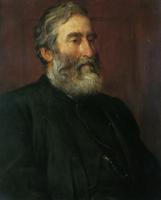
Portrait of the reverend Harry Jones
George Frederick Watts
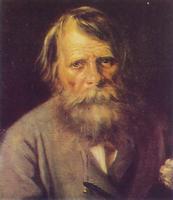
Portrait of a Man
Vasily Perov
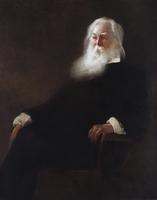
Walt Whitman
John White Alexander
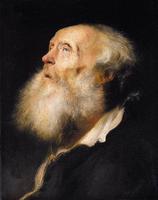
Study of an Old Man
Jan Lievens
Self-Portrait
Francesco Hayez
Old Man Praying
Gerrit Dou
Portrait of I. E. Tsvetkov
Vladimir Makovsky
John MacWhirter, Landscape Painter
James Archer
William Littlejohn, Bank Agent
Joseph Farquharson
The old man reading a letter
Fyodor Bronnikov
Fomushka-owl
Vasily Perov
Old man reading a book
Joaquín Agrasot
Old man's head
Jan Matejko
The writer
Pericles Pantazis