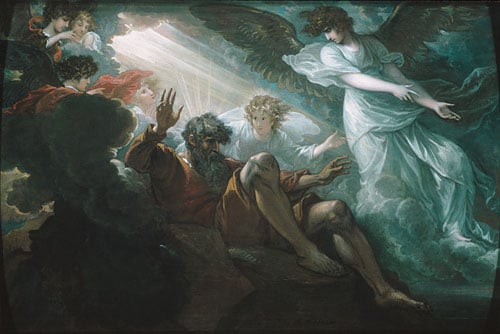
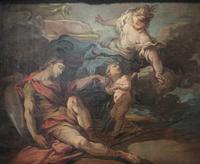
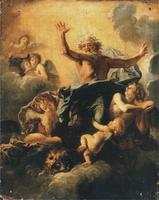
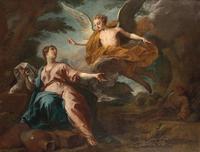
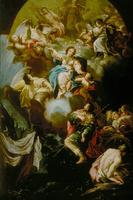
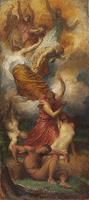
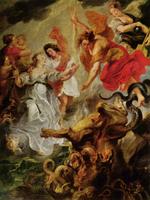
In Benjamin West's Moses Shown the Promised Land, the artist harnesses the moral clarity and structured idealism of Neoclassicism to elevate a pivotal biblical narrative. West, a founding figure of the Neoclassical movement in Britain and America, here transforms a religious subject into a history painting of epic gravitas. The composition likely centers on the dramatic moment on Mount Nebo, where a dignified Moses—rendered with the sculptural precision and calm heroism characteristic of the style—gazes upon the promised land. West’s Neoclassical approach strips away Baroque emotional excess, focusing instead on the scene’s moral weight: the reward of faith tempered by the tragedy of not entering the land. This work is significant as a prime example of how West pioneered the fusion of sacred narrative with Enlightenment ideals of order, virtue, and historical truth, influencing generations of history painters on both sides of the Atlantic.