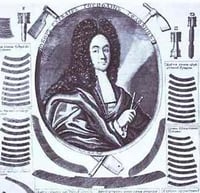
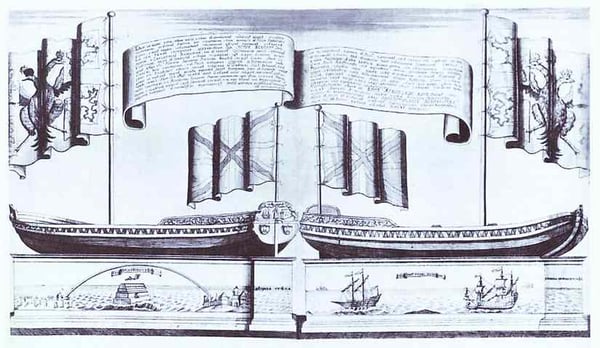
Boat of Peter I
Dettagli
Analisi esperta di Boat of Peter I di Alexey Zubov
Stile: Baroque · Genere: marina
Expert Analysis: "Boat of Peter I" by Alexey Zubov
Alexey Zubov’s Boat of Peter I stands as a singular work within the Baroque tradition, merging the genre of the marina (seascape) with a potent political and historical allegory. Executed in the early 18th century, the engraving captures not merely a vessel but the very symbol of Russia’s emergence as a naval power under Peter the Great.
Stylistic Significance: Baroque Grandeur in Miniature
True to the Baroque ethos, Zubov employs dramatic contrasts of light and shadow, dynamic diagonal lines, and meticulous detailing to imbue the scene with a sense of movement and monumental importance. The boat itself—often referred to as the “grandfather of the Russian fleet” (a small English-style boat that Peter used as a youth on Lake Pleshcheyevo)—is depicted with sharp, precise lines that emphasize its wood grain, rigging, and flags. The sky is filled with roiling clouds typical of Baroque marine painting, their swirling forms echoing the turbulence of Russia’s modernization. The engraving’s high contrast between the dark hull and the luminous sky reflects the Baroque love of chiaroscuro while also serving to elevate the simple boat to the status of a sacred relic.
Genre Innovation: The Marina as National Narrative
As a marina, this work moves beyond mere topographical representation. Zubov places the boat on choppy waters, with stylized waves that seem to surge forward, driving the vessel toward the viewer. The inclusion of a distant fleet (likely Peter’s new Baltic armada) anchors the boat in a larger narrative: the birth of the Russian navy. Unlike many Baroque marinas that focused on the sublime power of the sea, Zubov’s composition subordinates the natural elements to the political message. The boat is not dwarfed by the ocean; rather, it dominates the frame as the central icon of transformation. This fusion of seascape with state propaganda was groundbreaking in Russian art, aligning the genre with the Petrine agenda of Westernization.
Historical and Symbolic Weight
The artwork’s significance lies in its role as a visual manifesto for Peter’s reforms. Zubov, the leading engraver of the Petrine era, created this print to be widely circulated—an early example of reproductive art used to shape public identity. The “Boat of Peter I” was not just any vessel; it was the very boat where Peter first learned to sail, later kept as a national treasure. By rendering it in the dramatic Baroque style, Zubov transforms a modest dinghy into an allegorical ark of empire, carrying Russia from isolation to naval greatness. The combination of Baroque drama, maritime precision, and patriotic symbolism makes this work a cornerstone of Russian Baroque art, capturing the spirit of an era when art was harnessed to forge a new nation.
Museum / Gallery
Visivamente simili
20 opere con composizione e palette affini
Seeweg und Postdienst zwischen Holland und Indien
Roelant Roghman
The Bringing of 4 Swedish Frigates in St. Petersburg after the Victory in the Battle of Grengam September 8 1720
Alexey Zubov
Illustration for the book Russian school of painting, Illustration for the epic "Sadko - a rich guest"
Ivan Bilibin
Three Men Standing
Stefano della Bella
Panoramic View of St. Petersburg
Alexey Zubov
Two Sailors From a Galley
Stefano della Bella
Outgoing ship
Hans Holbein the Younger
Voiliers
Abraham Storck
St. Petersburg. View of the Peter and Paul Fortress.
Alexey Zubov
The Battle of Grengam, June 27 1720
Alexey Zubov
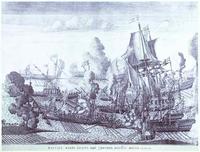
Battle of Gangut June 27, 1714
Alexey Zubov
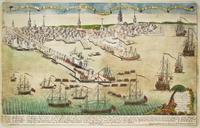
Landing of Troops
Paul Revere
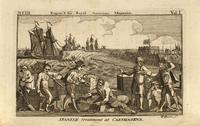
Spanish Treatment
Paul Revere
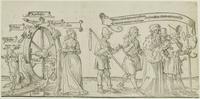
Allegory on Social Injustice
Albrecht Durer
View of the Spanish Fort and Friendly Cove, Nootka Sound
Sigismund Bacstrom
Boys’ Art #7: British Fleet, Falkland Islands
Joyce Kozloff
Full Sail off Sandy Hook Entrance to New York Harbor
Pavel Svinyin
Invitation
Oleksandr Aksinin
Ballad of San Juan De Ulúa
Jose Guadalupe Posada
View of the Town of Boston
Paul Revere