Analisi esperta di Courtesan di Utagawa Toyokuni II
Stile: Ukiyo-e · Genere: genre painting
Expert Analysis of "Courtesan" by Utagawa Toyokuni II
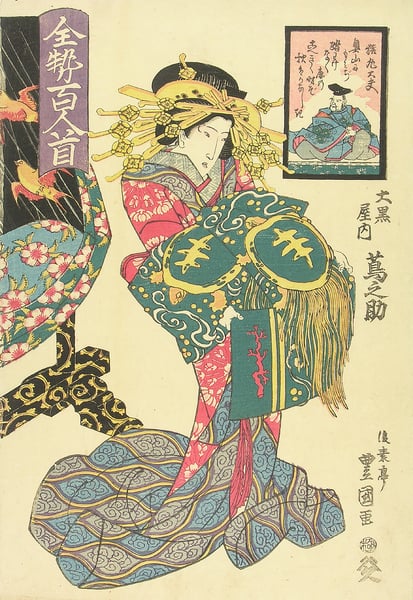
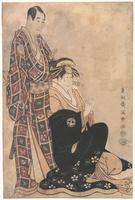
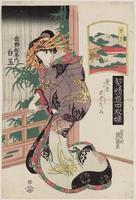
In this classic Ukiyo-e genre painting, Utagawa Toyokuni II presents a courtesan—a quintessential subject of the “floating world” —with the refined elegance and decorative sophistication that defined the Utagawa school. The artist, a pupil and successor of the renowned Toyokuni I, here captures the idealized beauty and status of a high-ranking oiran or tayū (courtesan). Her elaborate kimono, likely adorned with large-scale patterns and a striking obi (sash), demonstrates the meticulous attention to textile design and color harmony characteristic of the best Ukiyo-e prints and paintings. The figure’s calm, slightly aloof expression and poised stance reflect the social performativity of Edo-period pleasure quarters, where courtesans were both entertainers and symbols of aspirational fashion.
Significance in Ukiyo-e and Genre Painting
The work is significant for several reasons within its style and period:
-
Transitional Mastery: Toyokuni II operated during a time of stylistic continuity from his teacher. While Toyokuni I’s figures were bold and dramatic, Toyokuni II’s courtesan reveals a softer, more delicate line—foreshadowing the later, more refined bijin-ga (beautiful women pictures) of artists like Utamaro and Eisen. This painting stands as a bridge between early Utagawa dynamism and the lyrical elegance of mature Ukiyo-e.
-
Technical Virtuosity: As a genre painting, it likely employs bold contour lines, flat areas of vibrant mineral pigments, and a subtle use of gold or silver for kimono details—techniques that elevated the courtesan from mere portrait to a decorative statement of worldly pleasure and impermanence.
-
Cultural Document: The courtesan’s attire and pose offer a visual record of late Edo-period fashion and social hierarchy. By capturing her with both individuality and type, Toyokuni II confirms Ukiyo-e’s role as both art and sociocultural commentary—where the beautiful, fleeting world of the licensed quarters became a mirror for urban life.
Thus, this artwork exemplifies the Ukiyo-e commitment to iki (chic sophistication) and the celebration of the transitory, making it a crucial example of the genre’s evolution and its enduring appeal as both popular culture and fine art.
Visivamente simili
20 opere con composizione e palette affini
Courtesan Choto With Two Kamuro (Young Attendants) Behind Her
Utagawa Toyokuni II
The Courtesan Kaoru of Owariya matched with Okitsu
Keisai Eisen
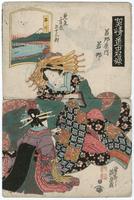
Shinagawa: Wakana of the Wakanaya
Keisai Eisen
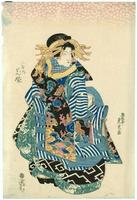
Hanamurasaki of theTamaya
Utagawa Sadatora
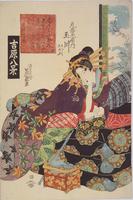
The Courtesan Tamagawa of the Maruebiya House
Keisai Eisen
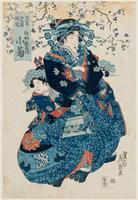
Kogiku
Keisai Eisen
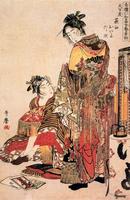
The widow
Kitagawa Utamaro
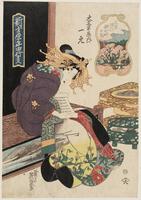
The Third Month, Cherry Blossoms in Naka-no-chô
Keisai Eisen
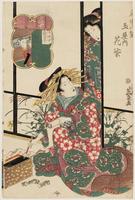
Hanamurasaki of the Tamaya, from the series Eight Views of the Pleasure Quarters (Kuruwa hakkei)
Keisai Eisen
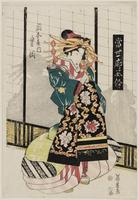
Toyooka of the Okamotoya
Keisai Eisen
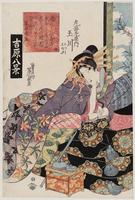
Clearing Weather at Awazu (Awazu seiran), Tamagawa of the Maru-Ebiya, kamuro Katsumi and Shinobu, No. 4 from the series Eight Views in the Yoshiwara (Yoshiwara hakkei)
Keisai Eisen
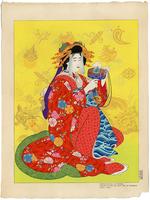
Daikoku, Dieu La Richesse Personnifie Par Une Courtisane Du Shimabara. Kyoto, Japon
Paul Jacoulet
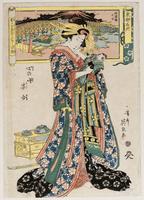
from the series Tôto meisho, Kokoro no nazo sugata awase
Keisai Eisen
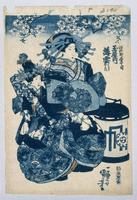
The Courtesans Usugomo, Haruka, and Yayoi of the Tamaya Teahouse
Utagawa Kuniyoshi
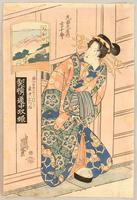
Mitate Yoshiwara Goju-san Tsui - Beauty
Keisai Eisen
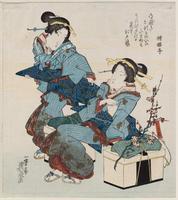
Women on an Excursion
Keisai Eisen
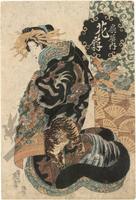
Courtesan Hanaogi from the Ogi house
Keisai Eisen
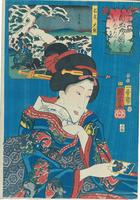
Timber in Iwami Province
Utagawa Kuniyoshi
Sagawa Kikunojo III as the Courtesan Katsuragi,and Sawamura Sojuro
Tōshūsai Sharaku
Seki: Shiratama of the Sano-Matsuya
Keisai Eisen