Gustave Loiseau sanatçısının Coast at Chaponival eseri hakkında uzman analizi
Tarz: Post-Impressionism · Tür: landscape
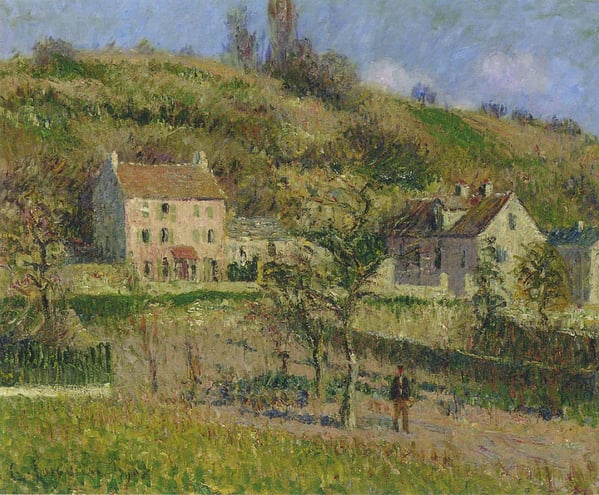
As an expert art historian, I will analyze "Coast at Chaponival" by Gustave Loiseau within the context of Post-Impressionist landscape painting.
Significance Within Post-Impressionism
Gustave Loiseau's "Coast at Chaponival" is a quintessential example of the Post-Impressionist movement's shift from the naturalistic concerns of Impressionism toward a more structured, expressive, and personal artistic vision. Loiseau, a pivotal figure of the Pont-Aven School, developed a signature technique that directly influenced the evolution of modern landscape painting.
Technical Innovation: The "En Treillis" Method
What makes this work particularly significant is Loiseau's distinctive brushwork, known as en treillis (like a trellis or latticework). In "Coast at Chaponival," this technique is fully realized. Rather than the broken, flickering dabs of the Impressionists, Loiseau builds the entire scene—sky, sea, cliffs, and shore—with systematic, intersecting, short strokes that create a woven, tapestry-like surface. This method does not merely describe the coast; it gives the painting a rhythmic, almost musical structure. The physical texture of the paint becomes as important as the subject, asserting the painting as a constructed object rather than a transparent window onto nature.
Expression of Time and Atmosphere
While rooted in a specific French coastal locale (likely Brittany, a region Loiseau frequently painted), "Coast at Chaponival" transcends topographical record. Loiseau uses his lattice of color to capture the ephemeral play of light and atmosphere over the sea and land. The structured strokes prevent the forms from dissolving into pure light, a common Impressionist risk. Instead, they freeze a specific moment into a durable, decorative pattern. This balance between capturing nature's transience and imposing the artist's own order is a core Post-Impressionist achievement.
Relation to Contemporaries
Unlike Gauguin's bold, flat color fields (also from Pont-Aven) or Seurat's precise pointillism, Loiseau's approach is more painterly and rugged. "Coast at Chaponival" represents a middle path: it retains the plein-air vitality of Monet but introduces a stronger architectonic stability. The work demonstrates that Post-Impressionism was not a single style but a collection of individual solutions to the problem of representing reality with heightened emotion and formal structure.
In summary, "Coast at Chaponival" is a significant Post-Impressionist landscape because of its innovative en treillis technique, which unifies the composition through structured, rhythmic brushwork while preserving the atmospheric freshness of the coastal subject. It showcases Loiseau's contribution to the movement's goal of making painting more about the artist's personal vision and the surface of the canvas itself.
Museum / Gallery
Görsel olarak benzer
İlişkili kompozisyon ve renk paletine sahip 20 eser
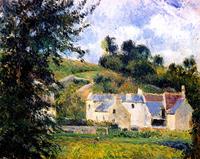
Houses of l'Hermitage, Pontoise
Camille Pissarro
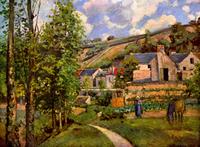
The Hermitage at Pontoise
Camille Pissarro
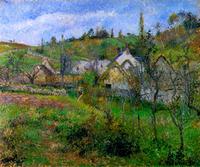
Le Valhermeil, near Pontoise
Camille Pissarro
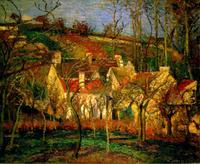
Red Roofs, Corner of a Village, Winter
Camille Pissarro
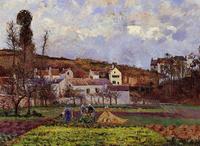
Kitchen Gardens at l'Hermitage, Pontoise
Camille Pissarro
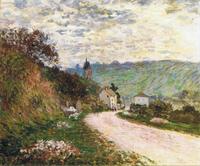
The Route a Vetheuil
Claude Monet
Village on the hill
Gustave Loiseau
An Autumn Evening near Paris
Alfred Sisley
Winter Landscape at the Val de Falaise
Claude Monet
Landscape at Chaponval
Camille Pissarro
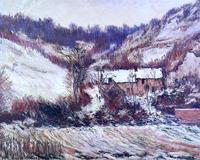
Snow Effect at Falaise
Claude Monet
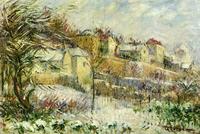
L'Hermitage in Pontoise
Gustave Loiseau
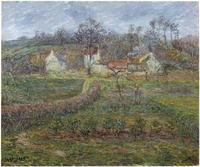
Landscape in a Valley
Gustave Loiseau
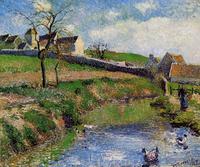
View of a Farm in Osny
Camille Pissarro
Crossroads at l'Hermitage, Pontoise
Camille Pissarro
Springtime
Alfred Sisley
Chaponval Landscape
Camille Pissarro
La Butte Pinson
Maurice Utrillo
Veslez
Gustave Loiseau
Artist's Home Seen from the Back
John Henry Twachtman