
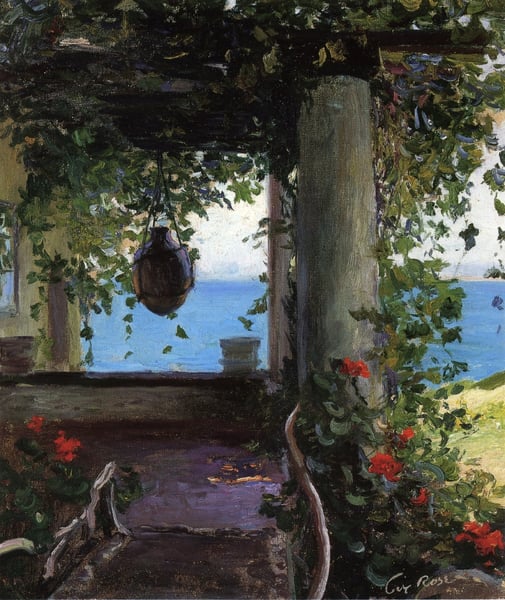
Analisi esperta di La Jolla Arbor di Guy Rose
Stile: Impressionism · Genere: landscape
Expert Analysis: "La Jolla Arbor" by Guy Rose
Guy Rose’s "La Jolla Arbor" stands as a luminous testament to American Impressionism and its adaptation of French plein-air principles to the distinctive light and landscape of Southern California. Painted in the early 20th century, the work exemplifies Rose’s mastery of capturing atmospheric effects and his deep engagement with the region’s coastal garden scenery.
Significance within Impressionism:
Rose studied in France and was directly influenced by Claude Monet, working at Giverny. In "La Jolla Arbor," he channels Monet’s fascination with dappled light filtering through foliage, but transplants it to the sun-drenched, arid climate of California. The arbor—likely a vine-covered structure—becomes a vehicle for exploring shifting patterns of sunlight and shadow, a core Impressionist concern. Rose’s palette shifts from the cooler, grayer tones of the French coast to warmer, golden hues, capturing the unique brilliance of La Jolla’s midday light.
Artistic Techniques:
The painting demonstrates loose, broken brushwork typical of Impressionism, with short, visible strokes that blend optically rather than on the palette. Rose modulates color temperature within the shadows—using violets and blues juxtaposed with warm yellows and greens—to convey the heat and translucency of the environment. The arbor’s lattice structure provides a rhythmic framework for these color experiments, while the deep green of the foliage anchors the composition.
Cultural and Stylistic Context:
Rose was a leading figure in the California Impressionist movement (often called the “California School”). "La Jolla Arbor" is significant because it merges the European Impressionist tradition with a distinctly American sense of place—celebrating the lush gardens and coastal retreats that defined early 20th-century Southern California. The painting’s serene, intimate view of a private garden suggests a harmonious relationship between human cultivation and natural beauty, a recurring theme among artists of the Arroyo Seco and Laguna Beach colonies.
Conclusion:
In "La Jolla Arbor," Guy Rose achieves a synthesis of Impressionist optical theory and California’s radiant landscape, elevating a simple garden scene into a study of light, color, and atmosphere. The work remains a key example of how American artists redefined Impressionism for a new geography, making it both a technical achievement and a cultural document of its time.
Museum / Gallery
Visivamente simili
20 opere con composizione e palette affini
The Pergola
Henri Martin
The Small Pergola
Henri Martin
Woman Sewing on a Veranda
Henri Martin
The Pergola in Marquayrol
Henri Martin
Young Women in Tonnelle
Henri Martin
Pergola in Marquayrol in Autumn
Henri Martin

Young Women in Terrace
Henri Martin
Veranda entwined with grapes
Sylvester Shchedrin
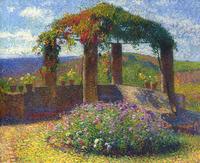
The Gloriette
Henri Martin
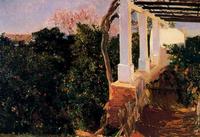
Farmhouse in Alcira
Joaquín Sorolla
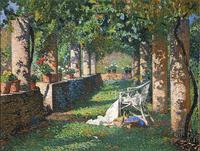
The Pergola in Spring
Henri Martin
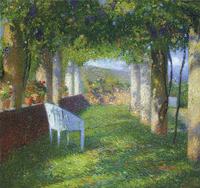
The Arbour
Henri Martin
Italian Landscape
Henryk Siemiradzki
The Pergola
Henri Martin
Mells, Somersetshire
Winston Churchill
No title
Grant Wood
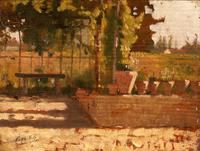
The pergola
Silvestro Lega
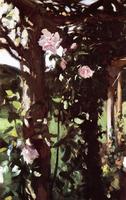
A Rose Trellis (Roses at Oxfordshire)
John Singer Sargent
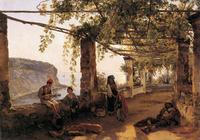
Terrace at Sorrento
Sylvester Shchedrin
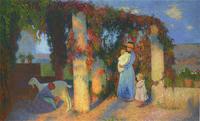
The Pergola in Marquayrol
Henri Martin