
Expertenanalyse zu Guy Roses The Gondolier, Venice
Stil: Impressionism · Genre: landscape
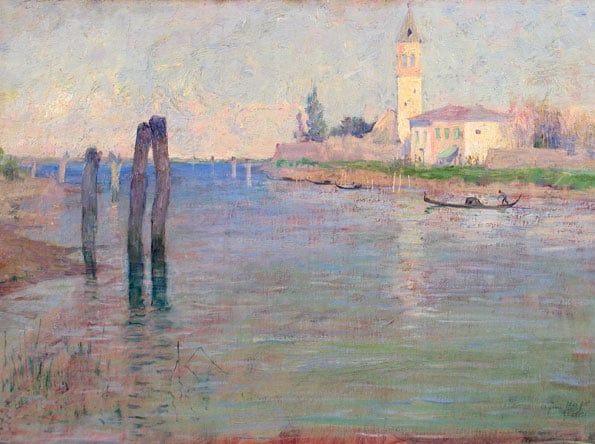
Expert Analysis: The Gondolier, Venice by Guy Rose
Guy Rose’s The Gondolier, Venice stands as a compelling example of American Impressionism’s engagement with European subjects, particularly the quintessentially Impressionist motif of Venetian canals. Executed in the late 19th or early 20th century—a period when Rose, like many of his contemporaries, sought to capture the fleeting effects of light and atmosphere—this landscape uses the city’s iconic waterways and gondolas as a vehicle for exploring the core tenets of the style.
Significance within Impressionism:
-
Light and Color Vibrations: Rose’s Venetian scene demonstrates the Impressionist obsession with natural light. The painting likely renders the interplay of sunlight on the canal water through a broken-color technique: short, visible brushstrokes of complementary hues (e.g., blues, greens, and warm reflections of buildings) that merge optically rather than on the palette. This approach, inherited from Monet and Renoir, transforms the gondola and its gondolier into mere patterns of luminance, dissolving solid forms into shimmering atmosphere.
-
American Impressionist Adaptation: What makes this work notable is how Rose—trained in Paris and later a leading figure of the California Impressionist school—bridges European and American sensibilities. While French Impressionists often treated Venice as a tourist’s reverie (e.g., Monet’s Venice series), Rose’s composition tends toward a quieter, more structured balance. His handling of the gondola’s silhouette against the rippling water reveals a subtle debt to the tonal harmonies of American Tonalism, yet the vigorous brushwork remains firmly Impressionist. This synthesis gives the painting a distinctive clarity: the scene is immediate, yet meditative.
-
Subject as Atmosphere: The gondolier himself is less a narrative figure than a compositional anchor. In true Impressionist fashion, Rose subordinates human presence to the environment—the figure is a rhythmic shape that directs the eye across the canal’s reflective surface. This treatment aligns with the movement’s broader interest in “the envelope” (the ambient air and light that unifies all elements), making the work significant as a case study in how American artists appropriated and refined European Impressionist principles.
Conclusion: The Gondolier, Venice is significant not merely because it depicts a beloved Impressionist locale, but because it exemplifies Guy Rose’s mastery of light-painting and his contribution to the transatlantic dialogue of Impressionism. It captures the ephemeral beauty of Venice while asserting a calm, distinctly American compositional poise—a testament to the style’s adaptability and enduring power.
Visuell ähnlich
20 Werke mit ähnlicher Komposition und Farbpalette
Venice
John Henry Twachtman
Laguna. Venice.
Vasily Polenov
La Voile verte
Paul Signac
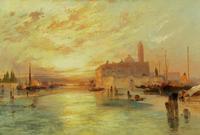
Venice
Thomas Moran
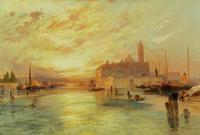
Venice
Thomas Moran
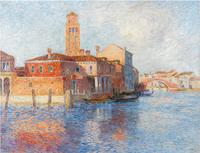
Vue De Venise, Murano
Ferdinand du Puigaudeau
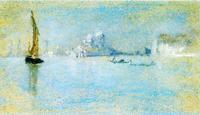
View of Venice
James McNeill Whistler
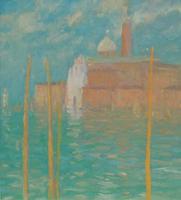
venice
John Miller
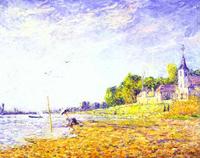
Bank at Poissy
Francis Picabia
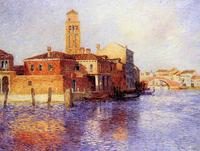
View of Venice
Ferdinand du Puigaudeau
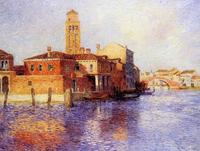
Vue De Venise
Konstantin Gorbatov

Venetian Scene
James McNeill Whistler
Martigues
Gustave Loiseau
View of Venice
Henri Martin
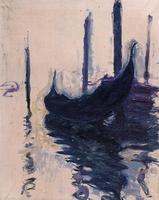
Gondola in Venice
Claude Monet
San Giorgio Maggiore 3
Claude Monet
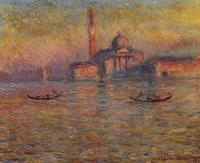
San Giorgio Maggiore 2
Claude Monet
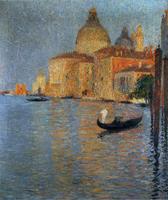
View of Salute in Venice
Henri Martin
Venice, Palazzo Venier dei Leoni
Henri-Edmond Cross
Venice Fishermen
Nicolae Darascu