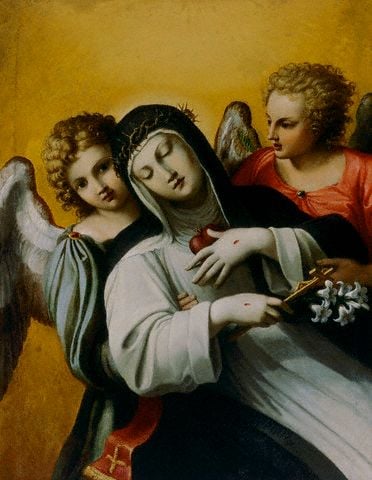
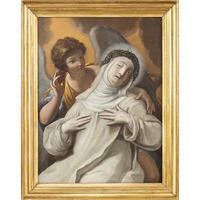
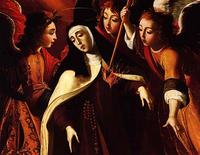
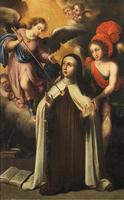
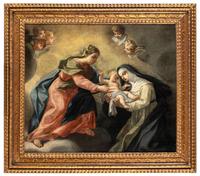
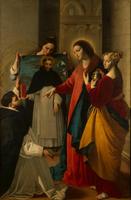
Agostino Carracci’s The Ecstasy of Saint Catherine exemplifies the Baroque synthesis of dynamic spirituality and naturalistic expression. As a religious painting from the early Baroque, it captures a moment of divine rapture—Saint Catherine of Alexandria experiencing a mystical union with Christ. The work’s significance lies in its interplay of dramatic tension and serene devotion, hallmarks of the Carracci reform that sought to fuse High Renaissance clarity with emotional immediacy. The saint’s upward gaze, fluttering drapery, and soft chiaroscuro convey both physical weightlessness and spiritual transcendence, a characteristic Baroque device to make the invisible tangible. Carracci’s masterful handling of light—falling on Catherine’s face and hands—directs the viewer’s focus to the ecstatic encounter, while the surrounding shadows enhance the sense of divine mystery. Within the Baroque period, this painting stands as a testament to the movement’s core ambition: to stir the viewer’s faith through theatrical yet deeply human sacred narratives.