
Analisi esperta di Dido di Andrea Mantegna
Stile: High Renaissance · Genere: mythological painting
Expert Analysis: Andrea Mantegna’s “Dido”
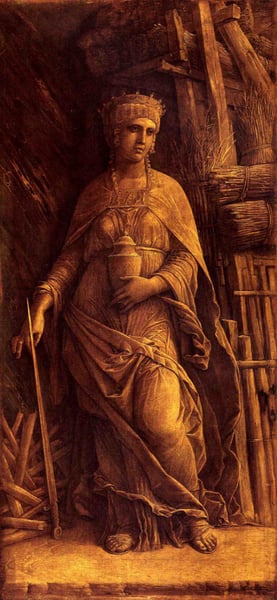
Andrea Mantegna’s Dido stands as a compelling example of High Renaissance mythological painting, though it is important to note that Mantegna’s career—rooted in the late 15th century—often straddles the boundary between Early and High Renaissance ideals. Here, his treatment of the tragic Carthaginian queen demonstrates the period’s fascination with classical antiquity, emotional gravitas, and the sculptural solidity of form.
Significance within the High Renaissance
The work is significant for its synthesis of archaeological precision and humanist pathos. Mantegna was renowned for his rigorous use of linear perspective and his deep study of Roman sculpture, and Dido exemplifies these traits. The figure of Dido is rendered with a monumental, almost marble-like presence—her drapery folds as if carved from stone, her posture conveying both regal dignity and profound sorrow. This physicality anchors the mythological narrative in a tangible, historically informed world, a hallmark of High Renaissance classicism.
Mythological Interpretation
Mantegna’s depiction of Dido taps into the Renaissance preoccupation with moral allegory. The queen’s story—abandoned by Aeneas, she takes her own life—is presented not merely as a tragic romance but as a meditation on duty, betrayal, and fate. The painting likely emphasizes her isolation and stoic resolve, using a restrained palette and stark chiaroscuro to heighten emotional intensity. Such treatment elevates the mythological subject to a universal human drama, aligning with the era’s ambition to merge classical tales with contemporary moral concerns.
Artistic Context
While Mantegna’s Dido may be less famous than his Camera degli Sposi or Dead Christ, its significance lies in its demonstration of how High Renaissance artists used antiquity not as mere decoration but as a lens for exploring psychological depth. The painting’s disciplined composition and archaeological detail (costume, architectural setting) pay homage to ancient Rome, while its expressive force anticipates the more dramatic works of later Renaissance masters. For scholars, Dido is a key example of Mantegna’s influence on the evolving concept of the mythological painting—a genre that would flourish in the hands of Titian and others.
In summary, Dido is significant as a refined fusion of classical form and emotional realism, embodying the High Renaissance’s core tenets: the marriage of intellect, technique, and human feeling.
Museum / Gallery
Visivamente simili
20 opere con composizione e palette affini
Saint Lucy
Benvenuto Tisi
Tanaquil, Wife of Lucomo
Domenico Beccafumi

Polyptych of St Barbara (central Panel)
Palma Vecchio
Morgan Le Fay
John Roddam Spencer Stanhope
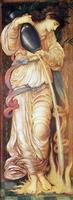
Temperantia
Edward Burne-Jones
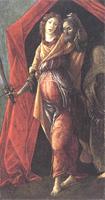
Judith Leaving the Tent of Holofernes
Sandro Botticelli
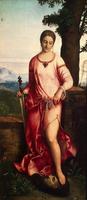
Judith
Giorgione
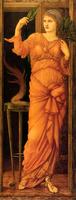
Sibylla Delphica
Edward Burne-Jones

Mother Poland (preliminary study)
Elisabeth Jerichau-Baumann
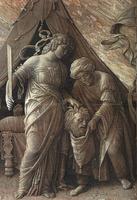
Judith and Holofernes
Andrea Mantegna

Vertumnus and Pomona
Francesco Melzi

Marcia
Domenico Beccafumi
Time, Death and Judgement
George Frederick Watts
Fortitude
Sandro Botticelli
La Madonna Del Velo È Un Dipinto (olio Su Lavagna, Cm 112 X 88) Di Sebastiano Del Piombo, Facente Parte Della Collezione Farnese, Oggi Al Napoli Nel Museo Nazionale Di Capodimonte (inv. Q 149), Nella Galleria Farnese.
Sebastiano del Piombo

Saint Catherine of Alexandria
Artemisia Gentileschi

A sibyl and a prophet
Andrea Mantegna

Hope
Edward Burne-Jones
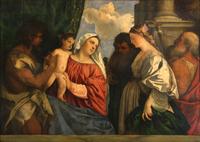
The Virgin and Child with Four Saints
Titian
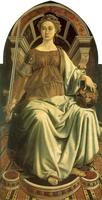
Justice
Piero del Pollaiolo