Andrea Mantegna の Hercules and Antaeus の専門的な分析
スタイル:High Renaissance · ジャンル:mythological painting
Expert Analysis: Hercules and Antaeus by Andrea Mantegna
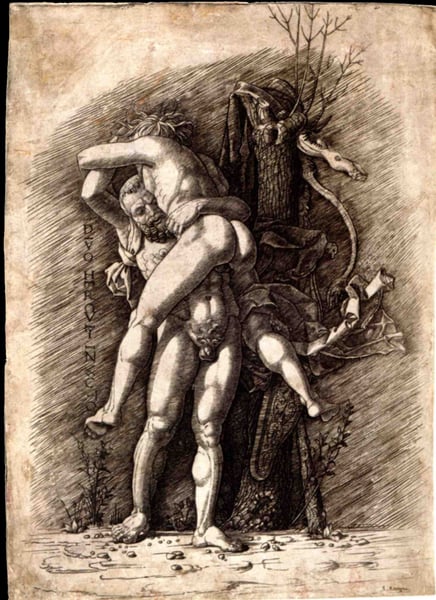
Hercules and Antaeus is a powerful mythological painting from the High Renaissance, executed by Andrea Mantegna—a master known for his rigorous classicism, sculptural figures, and pioneering use of perspective. This work captures the climactic moment of the myth in which the hero Hercules defeats the giant Antaeus by lifting him off the ground, thereby robbing him of the strength he draws from contact with his mother, Earth.
Significance within the High Renaissance:
-
Sculptural Anatomy and Contortion (Contrapposto and Foreshortening):
Mantegna demonstrates the High Renaissance fascination with the human body in extreme action. Hercules’ tense, muscular frame is rendered with meticulous anatomical precision, while Antaeus’s contorted limbs and strained face convey the agony of defeat. The dramatic foreshortening—especially in the giant’s twisted torso and dangling legs—reveals Mantegna’s skill in creating illusionistic depth, a hallmark of his innovative approach to spatial representation. -
Classical Theme and Moral Allegory:
The subject is rooted in classical mythology, a central source of inspiration for the High Renaissance. Mantegna treats the story not merely as a violent struggle but as an allegory of reason (Hercules, the civilizing hero) overcoming brute instinct (Antaeus, the chthonic force). This intellectual layering—typical of the period—elevates the painting beyond mere narrative. -
Composition and Tension:
The tightly knit composition locks the two figures together in a dynamic, unstable pose: Hercules holds Antaeus in a crushing bear-hug, while the larger giant appears to be lifted from below. This creates a powerful visual torque, with the eye spiraling from Hercules’ bent knees to his straining arms and up to Antaeus’s head. The compressed space and steep perspective (a Mantegna signature) intensify the confrontational drama and physical weight of the struggle. -
Contribution to High Renaissance Mythological Painting:
Mantegna’s Hercules and Antaeus stands out for its integration of archaeological precision—derived from his study of antique sculpture and coins—with the period’s new naturalism. Unlike earlier, flatter depictions of mythological combat, Mantegna pushes the figures into a convincing, three-dimensional space, while maintaining a monumental, relief-like clarity. This foreshadows later High Renaissance masters such as Michelangelo, whose own Hercules and Antaeus drawings echo Mantegna’s anatomical ferocity.
In sum, Hercules and Antaeus is significant for its radical physicality, masterful foreshortening, and its embodiment of the High Renaissance ideals: the marriage of classical form with Christian-era humanism, the celebration of the heroic male nude, and the pursuit of lifelike motion within a tightly controlled composition.
視覚的に類似
構図やパレットが近い作品 20 件
Bachus and Ariane
Agostino Carracci
The Satyr and Nymph
Agostino Carracci
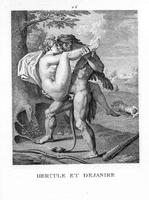
Hercules and Deianira
Agostino Carracci
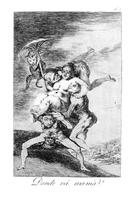
Where is mother going?
Francisco Goya
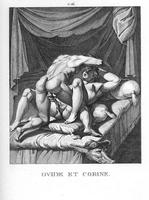
Ovid and Corine
Agostino Carracci
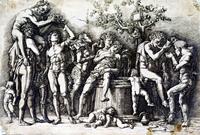
Bacchanalia with a Wine
Andrea Mantegna
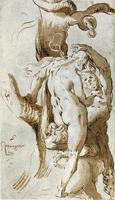
The Original Sin (Adam and Eve)
Bartholomeus Spranger
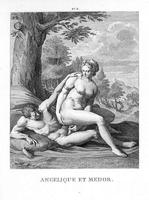
Angelica and Medor
Agostino Carracci
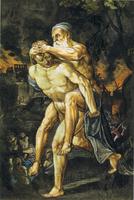
Aeneas Saving Anchisis from Burning Troy
Adam Elsheimer
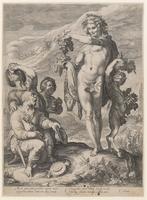
Cult of Bacchus
Jan Saenredam
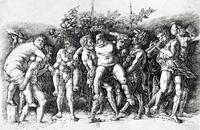
Bacchanal in Silene
Andrea Mantegna
Bacchus on the Shoulders of a Satyr
Cornelis Cort
Pandora
Agostino Carracci
Venus Punishing Profane Love
Agostino Carracci
Achille and Briseis
Agostino Carracci
Abduction Of A Woman (Rape Of The Sabine Women)
Albrecht Durer
The Risen Christ
Michelangelo
The Flagellation of Christ
Giulio Clovio
The Dream of Human Life
Michelangelo
Molorchos making a sacrifice to Hercules
Andrea Mantegna