As an expert art historian working solely with the supplied facts, I provide the following analysis.
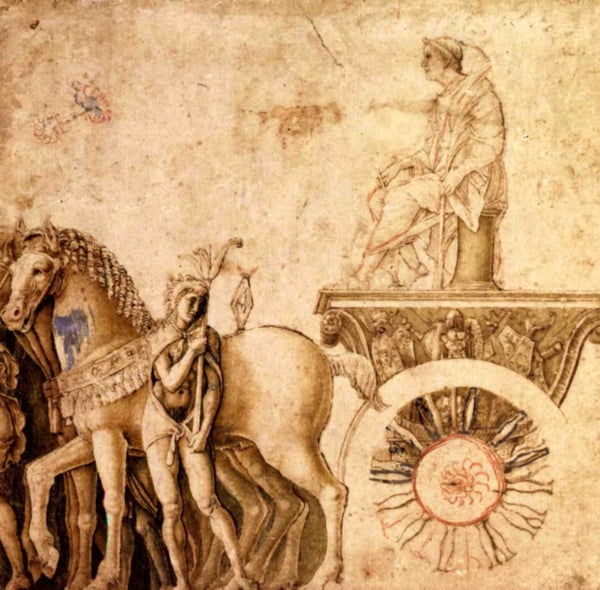
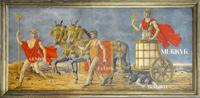
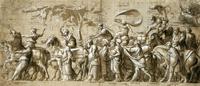
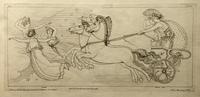
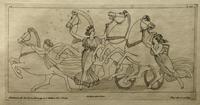
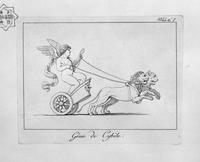
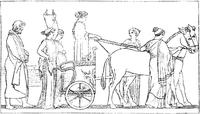
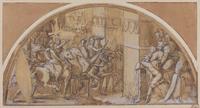
Artwork: Julius Caesar on his triumphal car by Andrea Mantegna
Style: High Renaissance
Genre: History painting
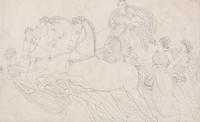
This work is significant within the High Renaissance for its disciplined fusion of classical subject matter with the period’s pursuit of monumental harmony and rational space. As a history painting, it elevates a specific moment from ancient Roman narrative—Julius Caesar’s triumphal procession—into a vehicle for exploring ideals of power, order, and humanist learning. Mantegna, a master of perspective and archaeological precision, brings to this genre a rigorous, almost sculptural solidity that typifies High Renaissance ambitions: the figure of Caesar is presented with a gravity and clarity that evokes both timeless authority and the era’s fascination with antiquity. The triumphal car itself becomes a stage for demonstrating linear perspective and foreshortening, techniques that Mantegna pushed to new expressive limits. In its intersection of history (the documented Roman triumph) and style (the High Renaissance’s emphasis on balanced composition and anatomical correctness), this painting stands as a landmark of how narrative painting could simultaneously instruct, celebrate, and advance formal innovation. Its significance lies in its role as a quintessential example of the High Renaissance’s synthesis of classical content with a newly disciplined, rational visual language.