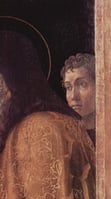
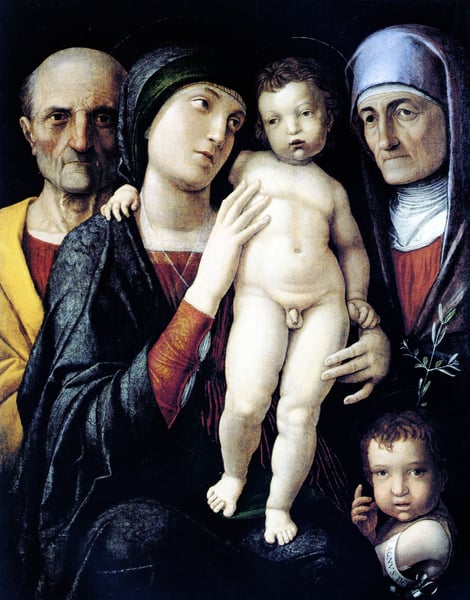
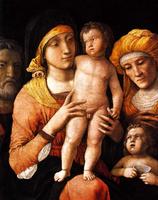
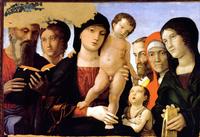
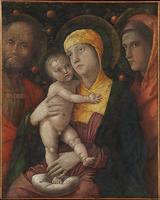
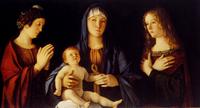
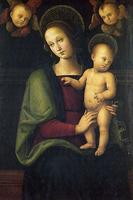
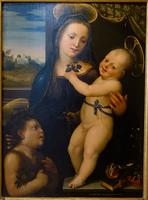
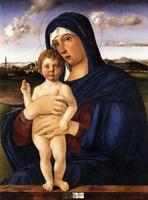
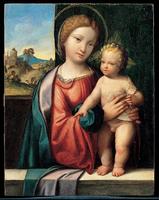
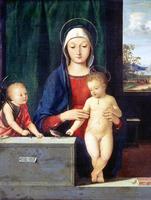
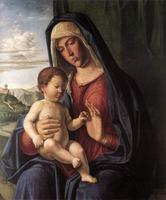
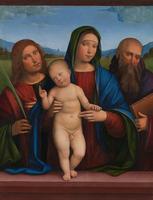
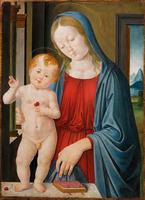
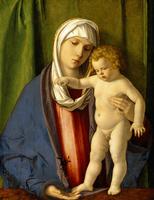
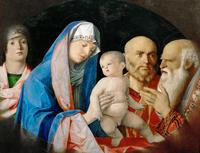
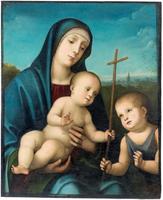
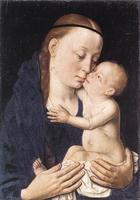
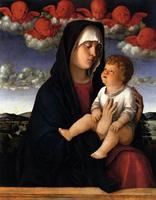
This Early Renaissance religious painting by Andrea Mantegna demonstrates key innovations of the period: a shift toward naturalistic representation, balanced composition, and the integration of human emotion within a sacred narrative. The work’s significance lies in its masterful use of perspective and classical references—hallmarks of Mantegna’s style—to create a sense of depth and monumentality. By placing the Virgin and Child with St. John the Baptist, St. Zachary, and St. Elizabeth in a carefully structured spatial setting, Mantegna elevates the devotional scene with intellectual rigor and visual clarity, typical of Early Renaissance ambitions to reconcile faith with humanist ideals.