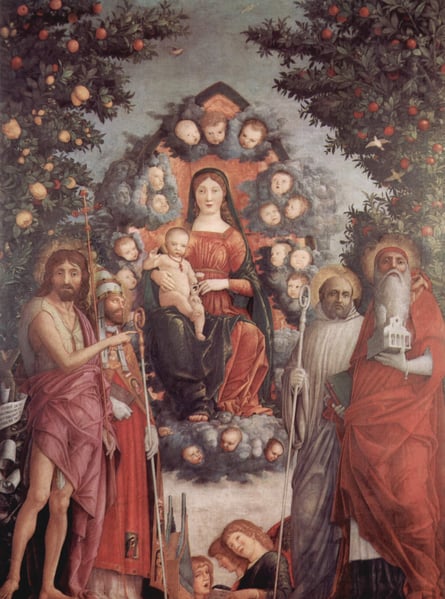
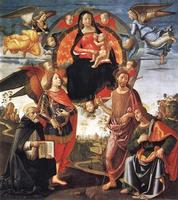
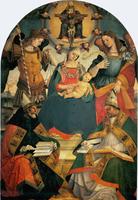
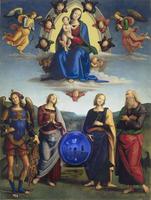
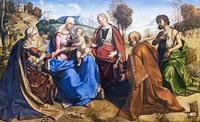
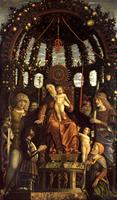
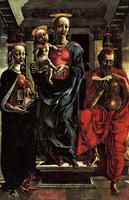
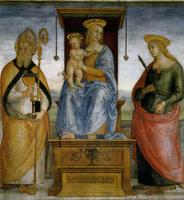
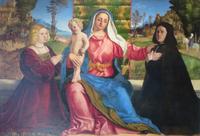
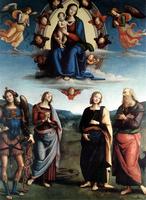
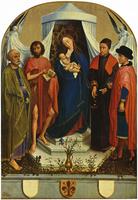
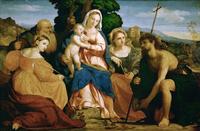
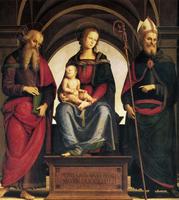
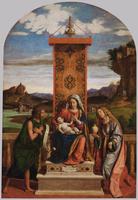
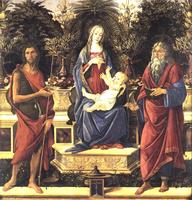
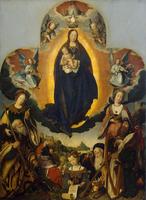
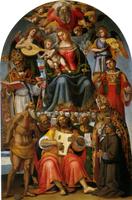
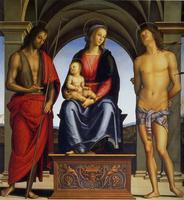
Based solely on the structured facts provided, the significance of Andrea Mantegna's Madonna with saints St. John the Baptist, St. Gregory I the Great, St. Benedict lies in its clear representation of a High Renaissance religious painting. The work brings together key figures—the Madonna alongside three prominent saints—within the formal and spiritual conventions of its period. Its significance stems from its genre (religious painting) and its stylistic classification as High Renaissance, a period known for its balanced composition, idealized figures, and focus on sacred hierarchy. The specific pairing of St. Gregory the Great and St. Benedict (both foundational to monastic and papal tradition) with St. John the Baptist further emphasizes the work's devotional and didactic purpose within the High Renaissance context.