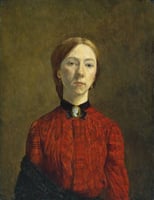
Analisi esperta di Interior with Figures di Gwen John
Stile: Post-Impressionism · Genere: interior
Expert Analysis: "Interior with Figures" by Gwen John
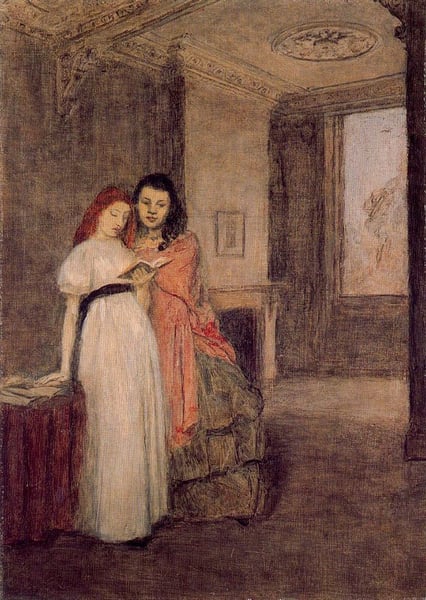
Gwen John’s Interior with Figures (c. 1910s) is a significant work within the Post-Impressionist movement due to its radical quietude and psychological intimacy—a counterpoint to the more flamboyant emotionalism of her contemporaries. As a Post-Impressionist interior scene, the painting exemplifies the movement’s shift from naturalistic representation toward heightened personal expression, but John achieves this through restraint rather than overt distortion or intense color.
Key Significance within Post-Impressionism:
-
Subdued Palette and Formal Economy – Where many Post-Impressionists (e.g., van Gogh, Gauguin) used vibrant, non-naturalistic colors to convey feeling, John employs a muted, almost monochromatic harmony of grays, browns, and soft blues. This limited palette draws attention to the subtle modulation of light and the quiet geometry of the room, aligning her with the introspective strain of Post-Impressionism that prioritized mood over spectacle.
-
Figure and Space as Psychological Construct – The “figures” in the interior are not engaged in dramatic action; they are often solitary or absorbed in silent tasks, their poses echoing the still-life-like arrangement of furniture. John’s interiors anticipate the psychological space of later modernists—where the room becomes a container for loneliness or contemplation. The interaction between the figures and their environment is deliberately ambiguous, inviting the viewer to read the scene as an inward state rather than a mere social vignette.
-
Gendered Perspective and Quiet Resistance – John’s obsessive focus on domestic interiors was unusual for the male-dominated Post-Impressionist canon. Her work quietly subverts the period’s preference for the exotic or the dramatic by elevating the overlooked, private world of women. In this, Interior with Figures is significant as a precursor to feminist art practices that reclaim the domestic sphere as a site of serious artistic investigation.
-
Influence on Intimism – John’s approach shares affinities with the French Intimists (Vuillard, Bonnard), yet her work is more austere. She distills the interior into a near-abstract play of shapes and light, pushing Post-Impressionism toward a meditative stillness that would later influence painters like Édouard Vuillard and, eventually, American modernists such as Georgia O’Keeffe.
In short, Interior with Figures is significant for how it redirects Post-Impressionism’s expressive ambitions inward—using restraint, subtle color, and formal composure to explore the profound quiet of everyday existence. It stands as a masterclass in the power of understatement.
Museum / Gallery
Visivamente simili
20 opere con composizione e palette affini
Portrait of Madame van Rysselberghe
Theo van Rysselberghe
The Staymaker
William Hogarth
Julie Lemmen Sleeping in an Armchair
Georges Lemmen
The Dancing Lesson
Laslett John Pott
Miss Ethel Philip Reading
James McNeill Whistler
The Farewell Note
Alfred Stevens
Jealousy
Tom Roberts
Interior, Young Woman at a Table
William Merritt Chase
Lady in the mirror with a fan
Pericles Pantazis
Symphony in White, No. 2: The Little White Girl
James McNeill Whistler
My Family
Joaquín Sorolla
The Eve of Saint Agnes
John Everett Millais
Three Girls Reading
Edmund Charles Tarbell
A tuesday evening at Madeleine Lemaire's home
Henri Gervex
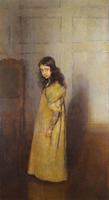
La Petite Fille En Jaune
Antonio de La Gándara
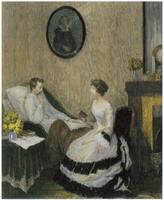
Heinrich Heine and Elise Krinitz
Heinrich Lefler
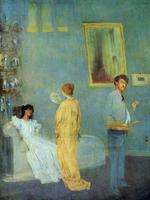
Whistler in his studio
James McNeill Whistler
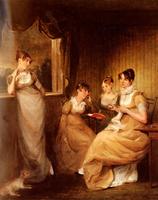
Ladies From The Family Of Mr William Mason Of Colchester
John Constable
Salon
J.M.W. Turner
She is fond of prints
Marià Fortuny