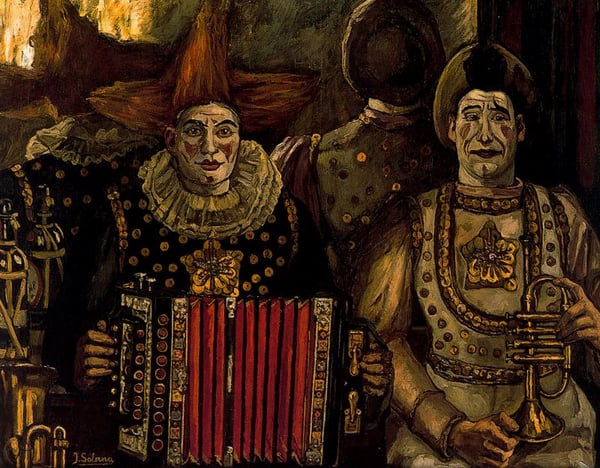
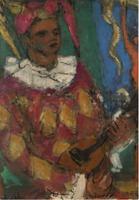
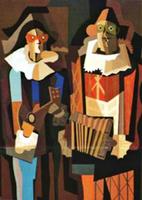
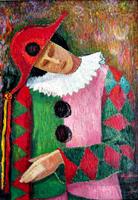
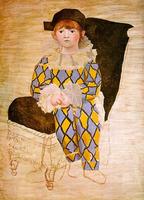
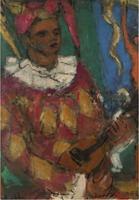
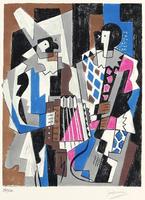
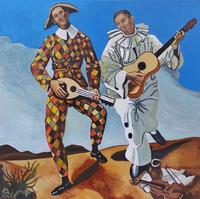
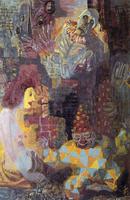
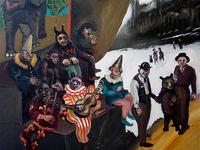
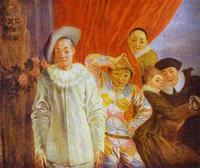
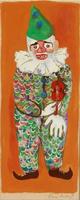
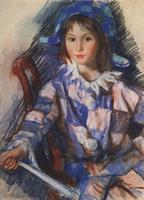
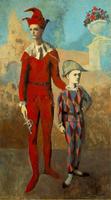
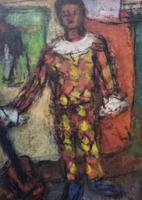
"The Clowns" by José Gutiérrez Solana is a compelling example of early 20th-century Expressionism, rendered through the lens of genre painting. Solana, a Spanish painter deeply influenced by the bleakness of post-Imperial Spain, uses the figure of the clown—a traditional subject of popular entertainment—to explore themes of human suffering, grotesque absurdity, and social decay.
Within the Expressionist style, Solana’s work is significant for its departure from the lyrical, often optimistic treatments of circus performers seen in earlier French Post-Impressionists or in the more decorative Fauves. Instead, he emphasizes a harsh, earthy palette and heavy, almost sculptural brushwork that conveys a sense of entrapment and melancholy. The clowns are not joyful entertainers but rather marginalized, tragic figures, their painted smiles barely masking an underlying despair.
As genre painting, "The Clowns" elevates a scene of everyday street performance into a profound moral commentary. Solana’s gritty realism—rooted in the esperpento tradition of Spanish literature (the grotesque distortion of reality to expose truth)—makes this work a key touchstone: it bridges the raw emotion of Northern European Expressionism with Spain’s own dark, satirical heritage. The painting’s significance lies in its power to transform a lowly theatrical type into a mirror of modern alienation, forcing viewers to confront the pathos lurking behind the mask.