
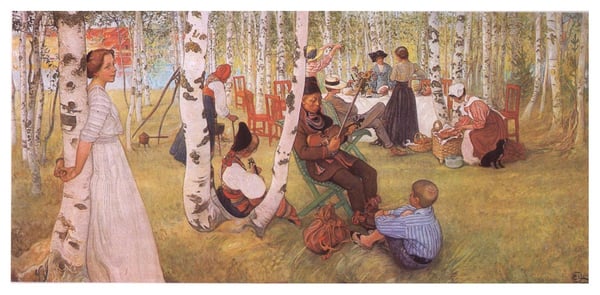
Expert analysis of Carl Larsson’s Breakfast in the Open
Style: Art Nouveau (Modern) · Genre: genre painting
Expert Analysis: "Breakfast in the Open" by Carl Larsson
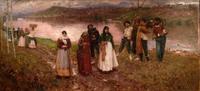
Carl Larsson’s Breakfast in the Open exemplifies the Art Nouveau spirit through its integration of everyday life with organic, decorative harmony. Painted in the late 19th or early 20th century—a period when Larsson was at the peak of his influence in Swedish design and the broader Arts and Crafts movement—this work transforms a simple domestic meal into an idealized vision of family unity and natural tranquility.
Significance within Art Nouveau (Modern)
Larsson’s style here is quintessentially Art Nouveau in its emphasis on flowing, sinuous lines, soft pastel palettes, and a seamless blend of interior and exterior spaces. The outdoor setting—likely the garden of his beloved home in Sundborn—is rendered with a decorative, almost wallpaper-like quality: the foliage, tablecloth, and figures are composed in rhythmic, interlocking patterns that echo the movement’s fascination with organic motifs. Unlike the more ornate, urban Art Nouveau of Mucha or Horta, Larsson’s version is understated and intimate, aligning with the Scandinavian interpretation of the style, which prized cleanliness, light, and domestic comfort.
Genre Painting Reimagined
As a genre scene, Breakfast in the Open elevates a private, transient moment into a national symbol. Larsson’s wife, Karin, and their children appear often in his work, and here they are not merely subjects but embodiments of a wholesome, artistic lifestyle. The painting is significant for its role in shaping the Swedish national identity of the time—promoting values of family, nature, and handcrafted aesthetics that countered rapid industrialization. It also bridges the gap between fine art and applied arts: the composition feels like a pattern for a tapestry or a design for a decorative panel, reflecting Larsson’s belief that art should beautify everyday life.
What Makes It Essential
Breakfast in the Open stands out for its ability to capture the fleeting joy of a shared meal while adhering to the strict formal principles of Art Nouveau—balance, elegance, and organic unity. It remains one of the most beloved examples of how the movement could be domesticated without losing its avant-garde sensibility, influencing generations of interior designers and illustrators. The painting is not just a scene; it is a manifesto for living with art.
Visually similar
20 works with related composition and palette
By the Campfire
Nikolay Bogdanov-Belsky
Gorky Reads Shevchenko's Works to Peasants in the Village of Manuilovtsi
Karpo Trokhymenko
Virtuozo
Nikolay Bogdanov-Belsky
Neiet niemien nenissä
Pekka Halonen
Wayfarer
Mikhail Nesterov
Girlish Bbq
Alexei Korzukhin
Field Party
Iosif Iser
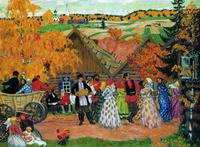
Village Holiday (Autumn holiday in the village)
Boris Kustodiev
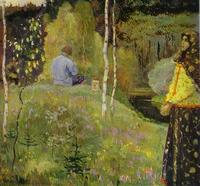
Reedpipe
Mikhail Nesterov
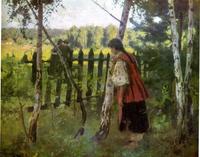
Ревнощі
Микола Пимоненко
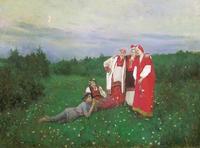
A Northern Idyll
Konstantin Korovin
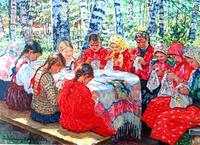
Needlework Classes in a Russian Village
Nikolay Bogdanov-Belsky
Round dance in the village
Aleksey Savrasov
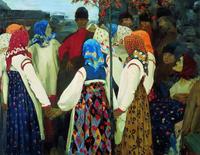
A Young Man Breaking into the Girls Dance, and the Old Women are in Panic
Andrei Ryabushkin
Fair
Boris Kustodiev
Lisbeth at the birch grove
Carl Larsson
The pilgrims resting
Ferdinand Georg Waldmüller
Haymaking
Boris Kustodiev
Noon prayer at harvest
Theodor Christoph Schuz
Along the paternal river
Francesco Paolo Michetti