
Expertenanalyse zu Carl Larssons In the Carpenter Shop
Stil: Art Nouveau (Modern) · Genre: genre painting
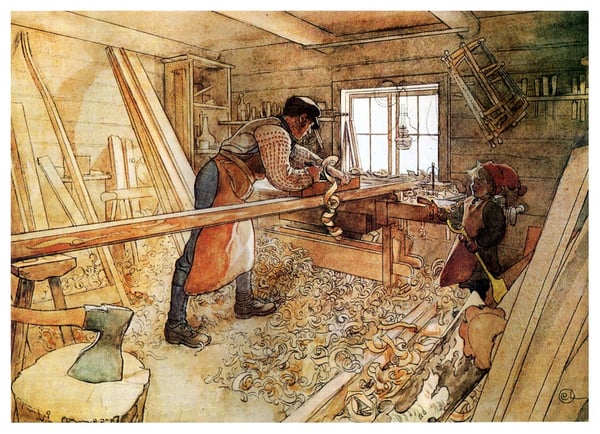
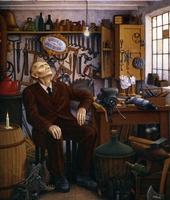
This artwork, "In the Carpenter Shop" by Swedish painter Carl Larsson, is a masterful example of Art Nouveau applied to the genre painting tradition. Created during the artist’s mature period, it exemplifies his unique ability to elevate intimate domestic and labor scenes into celebrations of craftsmanship, family, and natural light—core values of the Arts and Crafts movement that influenced his style.
Significance within Art Nouveau:
Larsson’s work stands apart from the more ornate, decorative side of Art Nouveau (e.g., Mucha’s theatrical posters or Horta’s sinuous interiors). Instead, he focuses on purity of line, harmony of color, and the integration of art with everyday life. In In the Carpenter Shop, the composition is carefully balanced: the vertical lines of the wood planks and tools echo Art Nouveau’s love of rhythmic, organic form, while the soft, diffused light filtering through a window creates a serene, almost spiritual atmosphere. The scene is not merely a documentation of carpentry but a celebration of honest labor and the beauty of handmade objects—a direct response to the industrialization of the late 19th century.
Genre Painting Innovation:
Where traditional genre painting often focused on peasant life or moralizing narratives, Larsson transforms the mundane into the idyllic. The central figures—perhaps his own children or apprentices—interact with the wood and tools in a way that feels both natural and staged. The child’s playfulness contrasts with the adult’s focused work, suggesting a seamless transition between childhood wonder and adult craftsmanship. Larsson’s watercolor technique (common in his most famous works) gives the scene a luminous, fleeting quality, capturing a moment of quiet productivity that feels timeless.
Key Artistic Elements:
- Color Palette: Soft earth tones (ochre, umber, sage green) punctuated by small accents of red or blue, typical of Larsson’s Sunlit interiors. The warm glow evokes the Swedish summer light but also symbolizes the warmth of family and creation.
- Line and Pattern: The grain of the wood, the curve of the carpenter’s plane, and the simple patterned textiles (perhaps a tablecloth or apron) are rendered with fluid, decorative lines—characteristic of Art Nouveau’s emphasis on sinuous, organic motifs.
- Domestic Ideology: Larsson was a pioneer of the “home as art” concept, and this painting embodies his belief that the workshop is an extension of the home. The carpenter’s tools become objects of beauty in themselves, aligning with the Arts and Crafts principle that functional objects deserve aesthetic attention.
Why It Matters:
In the Carpenter Shop is significant because it bridges two movements: the decorative sophistication of Art Nouveau and the democratic, earthy ethos of the Arts and Crafts movement. Larsson’s ability to find grace in a simple workshop—and to make that scene resonate with universal themes of creativity, learning, and domestic peace—marks this work as a key contribution to modern genre painting. It reminds viewers that art does not need grand subjects; it can flourish in the sawdust and sunlight of daily life.
Visuell ähnlich
20 Werke mit ähnlicher Komposition und Farbpalette
A Carpenter's Workshop
Christen Dalsgaard
Joiner's Workshop
Gustav Wentzel
The Carpenter's Shop
Henry Stacy-Marks
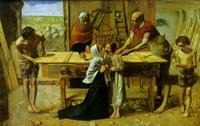
Christ in the House of His Parents
John Everett Millais
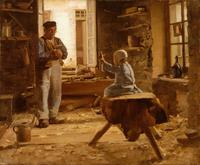
With Dolly at the Sabot-makers
William Brymner
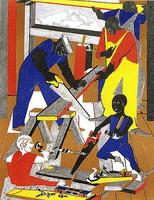
Workshop (Builders #1)
Jacob Lawrence
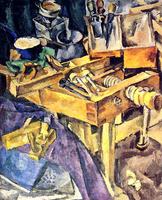
Workbench
Pyotr Konchalovsky
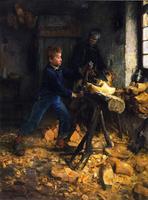
The Young Sabot Maker
Henry Ossawa Tanner
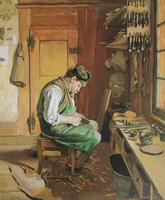
The shoemaker
Ferdinand Hodler
Barn Interior
William Henry Hunt
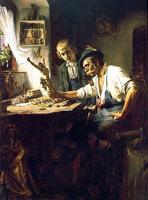
Woodcarver of Obermmergau
Toby Edward Rosenthal
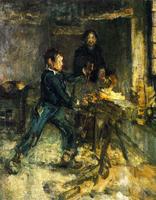
Study for The Young Sabot Maker
Henry Ossawa Tanner
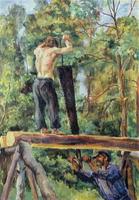
Sawyers
Pyotr Konchalovsky
11. Building the Log Cabin
Francis Davis Millet
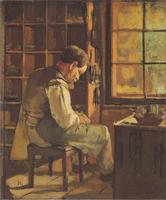
The cobbler by the window
Ferdinand Hodler
School Repairs
Karpo Trokhymenko
News from My Lad
James Campbell
Beneath The Dunes
Jacek Yerka
The Wood Sawyer
Frederick McCubbin
To Each His Own
Jacek Yerka