Analisi esperta di Bishop di Fernando Botero
Stile: Naïve Art (Primitivism) · Genere: portrait
Expert Analysis of Bishop by Fernando Botero
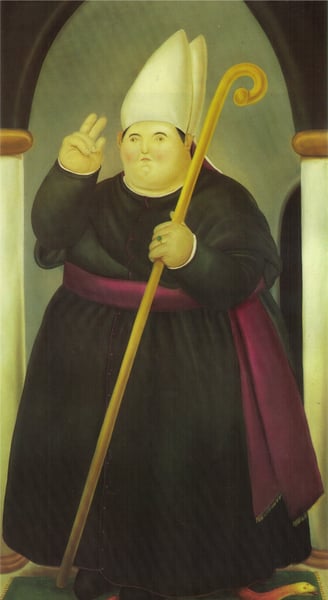
While Fernando Botero is most famous for his distinctive “Boterismo” style—characterized by exaggerated, voluminous forms—the supplied facts categorize this work as Naïve Art (Primitivism) and a portrait. This framing highlights the artist’s deliberate departure from academic realism, embracing a simplified, almost childlike visual language that nonetheless carries sophisticated commentary.
Significance within Naïve Art / Primitivism:
Botero’s Bishop aligns with the Naïve tradition through its flat, frontal composition, bold outlines, and unmodulated color. The figure’s extreme glossolalia—the swelling of the bishop’s face, robes, and mitre—pushes the portrait beyond mere observation into a realm of symbolic exaggeration. This volumetric distortion is Botero’s signature subversion of Renaissance proportion, yet it functions here as a primitivist strategy: reducing a powerful religious figure to a cartoon-like caricature that exposes the absurdity of institutional authority.
Genre and Subversion:
As a portrait, Bishop ostensibly aims to dignify its subject. Instead, Botero uses Naïve art’s perceived “innocence” to critique the Church’s opulence and dogmatism. The bishop’s bloated form—disproportionately large head, tiny hands, and inflated vestments—creates a tension between the sacred (the liturgical dress, the cross) and the absurd (the impossible volume). This is not mockery but a sophisticated visual pun: the bishop’s spiritual weight is rendered as literal, physical bulk, suggesting how power can become self-aggrandizing and grotesque.
Context and Legacy:
Botero’s Bishop is significant because it bridges Primitivism’s raw emotiveness with social satire. Unlike earlier Naïve artists (e.g., Henri Rousseau), Botero intentionally exaggerates to provoke thought rather than naïve wonder. The painting’s flat, unblinking stare and simple outlines recall folk art, yet the precision of the volume—the way the robes seem to inflate like a balloon—reveals Botero’s academic training. This contrast makes the work a key example of how modern Naïve art can use childlike forms to critique adult institutions, cementing Botero’s place as a master of “volumetric primitivism.”
Visivamente simili
20 opere con composizione e palette affini
Nuncio
Fernando Botero
Walk in the Hills
Fernando Botero
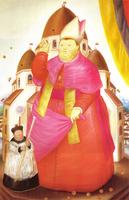
Cardinal
Fernando Botero
Portrait of Cardinal Pompeo Colonna
Sebastiano del Piombo
Bishop Jan Van Malderen
Anthony van Dyck
Bishop Jan Van Malderen
Anthony van Dyck
Portrait of Pope Pius V
Bartolomeo Passerotti
Portrait of Pope Pius V
El Greco
Portrait of Pope Julius II
Raphael
Portrait of the Bishop Modesto Farina
Antonio Paoletti
Portrait of Pope Sixtus IV
Titian
Pope Clement VII
Sebastiano del Piombo
Archbishop Lost in the Woods
Fernando Botero
Promenade
Fernando Botero
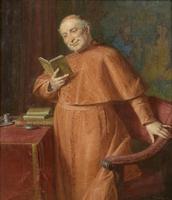
Fascinating reading
Edward Von Grutzner
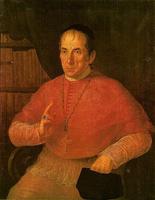
Portrait of Dom Manoel Joaquim Gonçalvez, 5th Bishop of São Paulo
Simplício Rodrigues de Sá
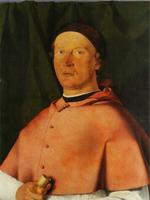
Portrait of Bernardo de' Rossi, Bishop of Trevino
Lorenzo Lotto
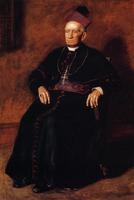
Archbishop William Henry Elder
Thomas Eakins
French priest Pierre-Bienvenu Noailles
Leon Bonnat
Portrait of Pope Pius X
Noè Bordignon